Featured product
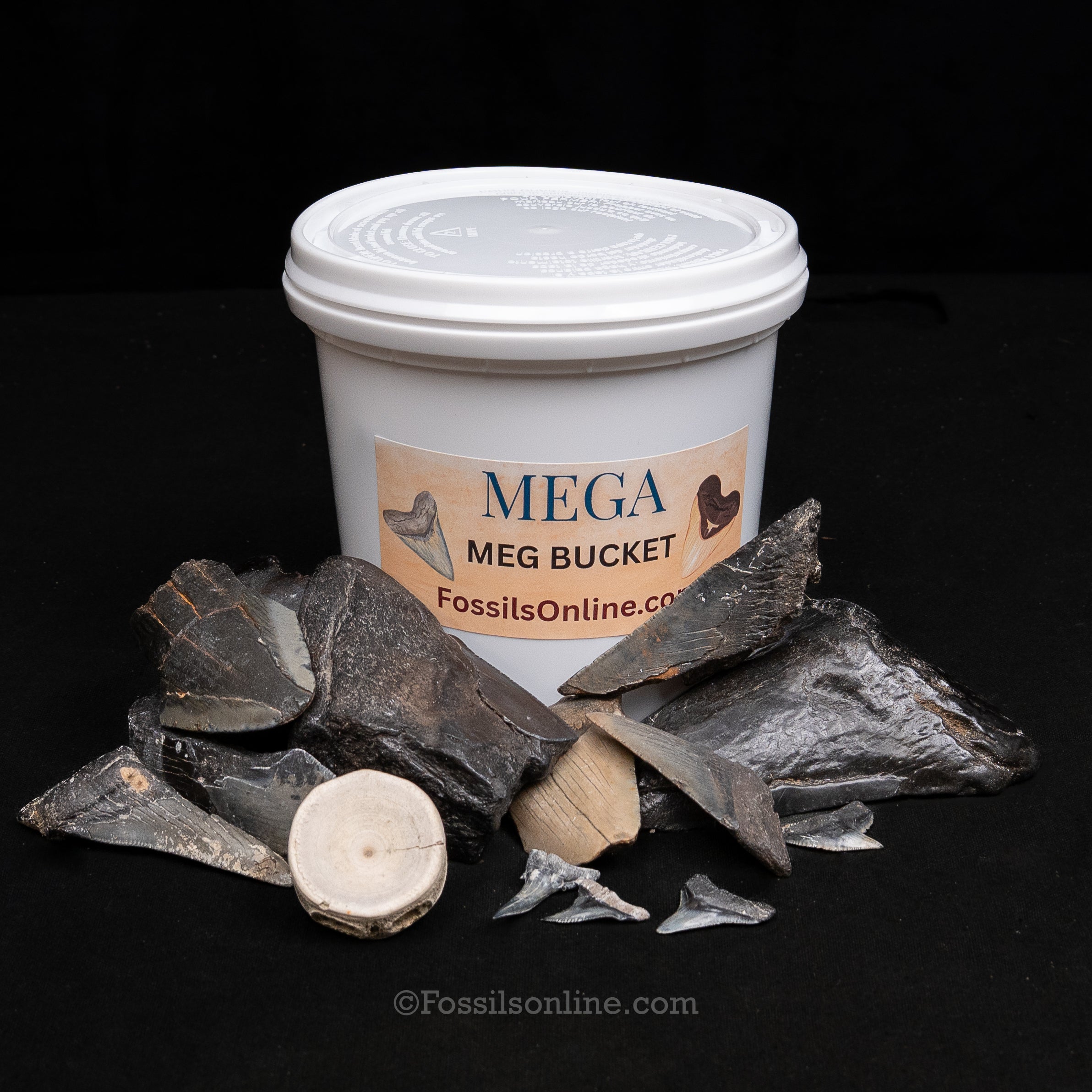
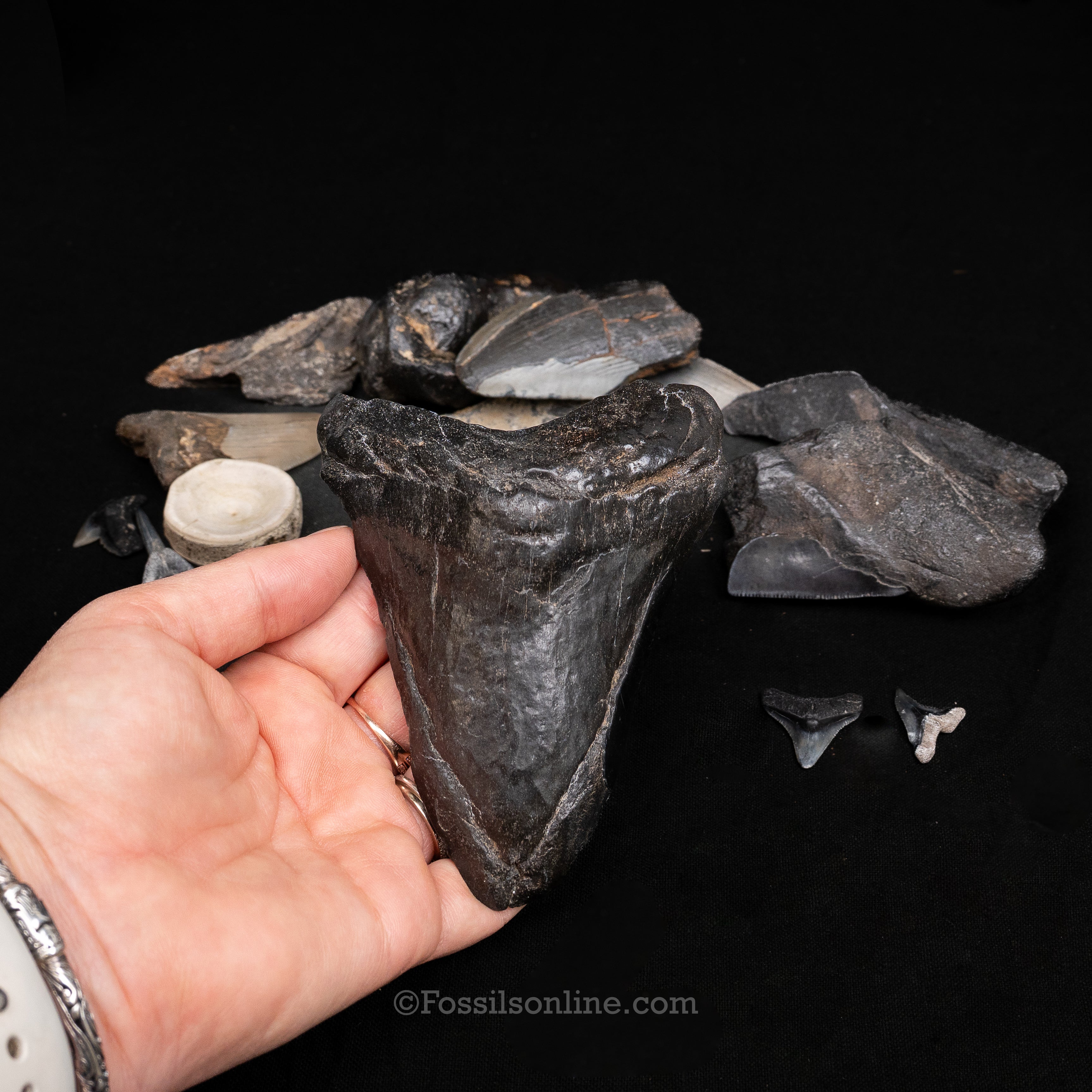
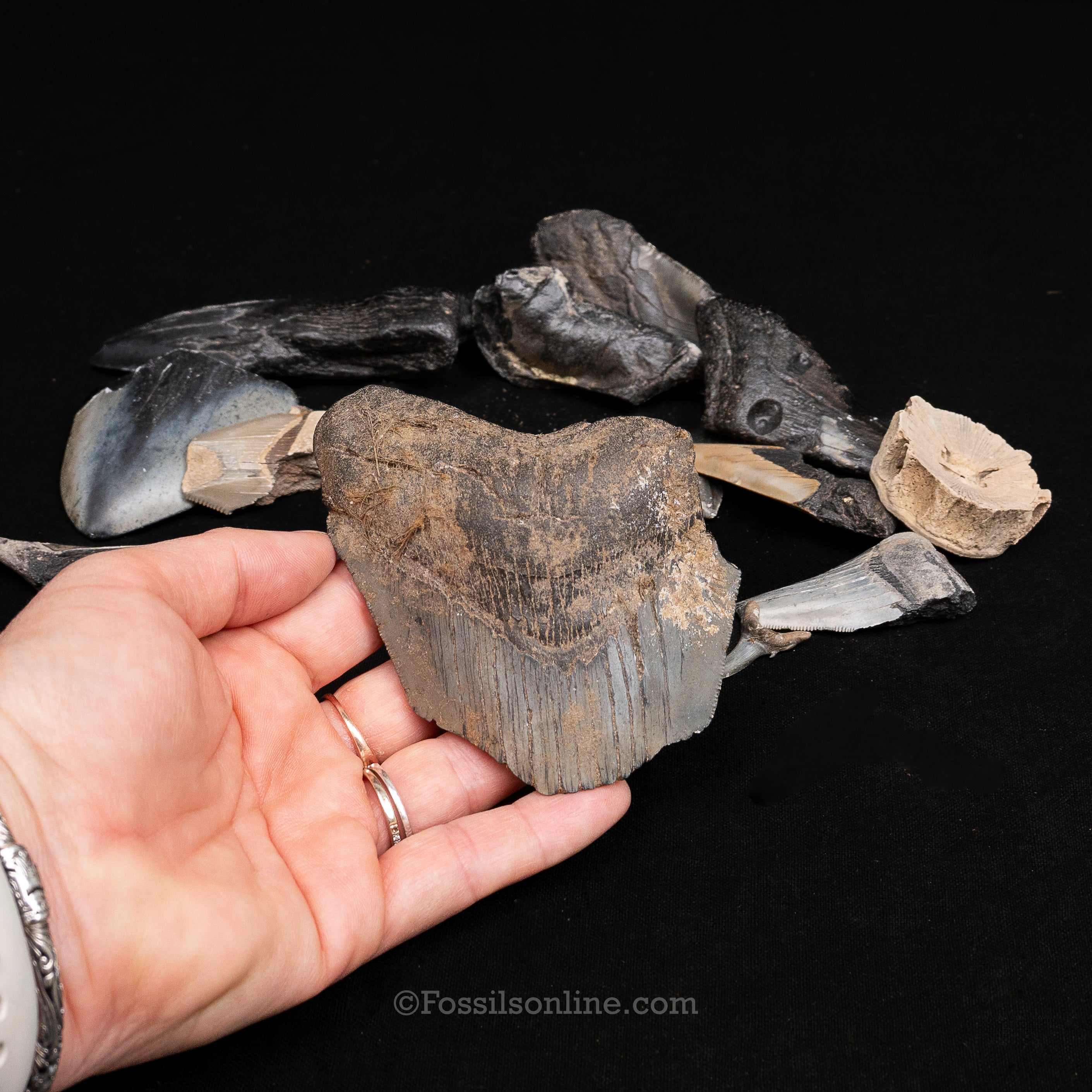
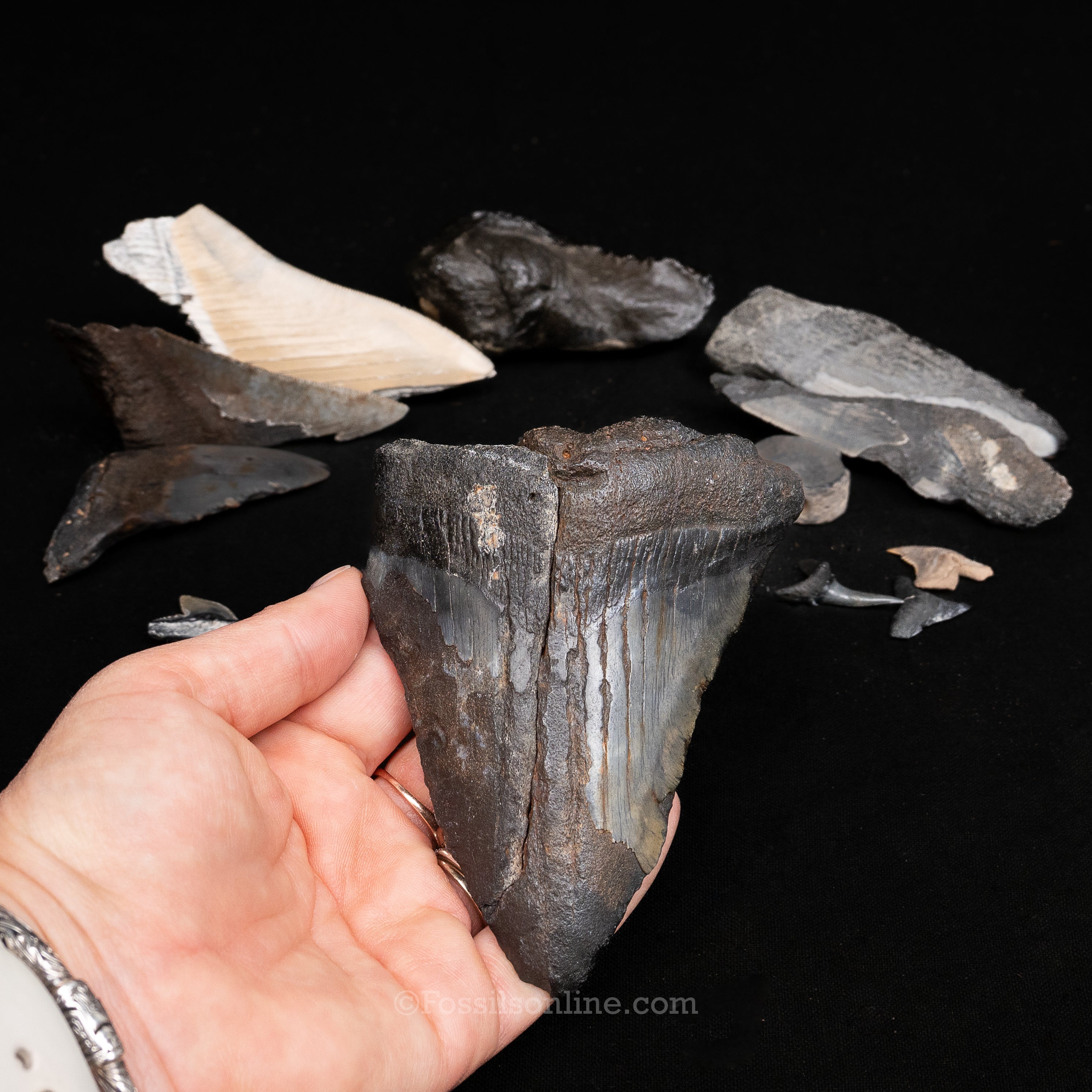
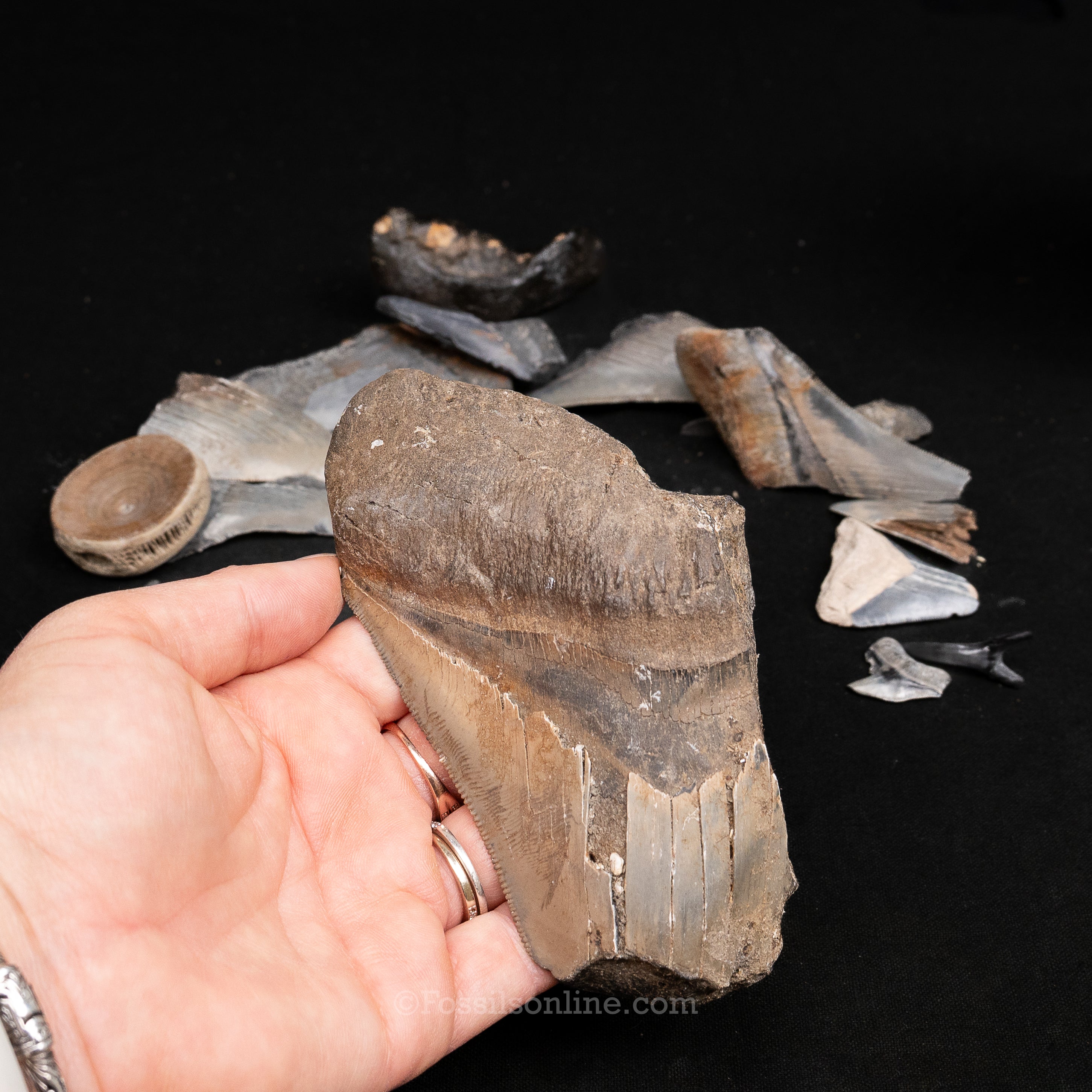
Our MEGA Meg Bucket is a quart sized bucket that contains just over a pound of megalodon teeth, halves and chunks. There are also other fossils and teeth included.
This is what you get inside each quart sized bucket.
A fossil tooth from each of these sharks.
- Bull
- Snaggletooth
- Sand tiger
- Tiger
- All authentic fossil teeth recovered by fossil divers off the coast of Venice, FL.
Also included is a fossil whale ear bone and fossil shark vertebra.
This is a great gift for anyone who loves fossil sharks.
We have a limited number at the moment and are currently working on making more.
There are 4 variations with the largest tooth shown in the picture.
Why so many Megalodon teeth come from offshore North Carolina
The coast of North Carolina is one of the most famous Megalodon tooth localities in the world. Offshore of the modern beaches lies a broad continental shelf cut by ancient river channels and fossil-rich formations such as the Pungo River and Yorktown formations. These layers were laid down in shallow Miocene and Pliocene seas that were perfect habitat for Megalodon and the whales they fed on. As those sediments accumulated, teeth and other hard parts were buried and protected.
Today, strong currents, storms, and natural erosion slowly expose those fossil layers along “the ledges” and other drop-offs in 80–120 feet of water. Commercial fishing trawlers, dredging operations, and scuba divers working these ledges bring Megalodon teeth up from the seafloor. That’s why so many large, heavy, well-preserved Megalodon teeth on the market are labeled “offshore North Carolina.” The combination of the right age rocks, the shark’s former hunting grounds, and modern access by boats makes this area a steady producer of teeth year after year.
One of the big reasons Megalodon teeth are so popular with collectors is that they offer something almost no other “headline” fossil can: they’re both dramatic and surprisingly attainable. You get that museum-style wow factor without needing a museum-sized budget.
Affordability
When most people imagine fossils, they picture full dinosaur skeletons or famous Ice Age mammals—T. rex and Triceratops, sabertooth cats and Mammoths. Those fossils are rarer, difficult to collect, and expensive to prepare and display. Even small pieces of dinosaur bone or teeth from well-known species can be surprisingly costly for their size.
Megalodon teeth, on the other hand, give you huge visual impact for a fraction of the cost. They are instantly recognizable, even to someone who doesn’t know much about fossils. A large Meg tooth sitting on a shelf or desk has serious presence, and yet it is often far more affordable than comparably “famous” material from dinosaurs or Ice Age carnivores. For many collectors, a Megalodon tooth ends up being the most impressive fossil they can own without stepping into museum-level pricing.
Part of this comes down to how sharks live. Megalodon, like modern sharks, constantly shed and replace its teeth throughout its life. A single animal could produce thousands of teeth, and each one of those teeth had a chance to become a fossil. Compare this to ice age mammals that replaced their teeth far less. On top of that, Megalodon teeth are heavily mineralized and built to withstand crushing bites, so they fossilize and survive long-term far better than many delicate bones.
Their ancient habitat also helps. Megalodon lived in warm coastal seas around much of the world. Those marine sediments are now exposed in quarries, riverbanks, and offshore ledges that divers can actually reach. By contrast, the best dinosaur beds or Ice Age carnivore sites are often remote, heavily regulated, government land, or limited in how much material can be collected and sold. The result is that high-quality Megalodon teeth simply enter the collector market more frequently than complete ice age fossils or a nicely preserved dinosaur bone.
All of this puts Megalodon teeth in a sweet spot. They are genuinely rare natural objects, but common enough in the fossil record that collectors can still find good specimens. They belong to one of the most famous predators in Earth’s history, but they are still priced within reach of real-world budgets. For about what you might spend on a small dinosaur bone/ tooth or a single Ice Age bone you can often upgrade to a large, display-worthy Megalodon tooth with real size, weight, and presence.
That combination of fame, size, and attainability is why so many people choose a Megalodon tooth as the centerpiece of their collection. It’s a fossil that looks like it should be behind glass in a museum case—but instead, it can sit in your home or office as a very real, very tangible piece of the largest predatory shark that ever lived.
How Megalodon got so large
Megalodon’s gigantic size is the result of several evolutionary advantages coming together:
Warm-blooded-ish lifestyle (regional endothermy): Evidence from microscopic tooth and scale structures suggests that Megalodon could keep parts of its body warmer than the surrounding water, similar to some modern sharks (like great whites and makos). That warm, high-energy physiology helped it grow fast and power a huge body.
Plenty of big prey: During the Miocene and Pliocene, the oceans were full of whales and other marine mammals. A shark adapted to specialize on large, calorie-rich prey could afford to grow massive—each successful hunt provided a huge energy payoff.
Streamlined body built for cruising: Newer research suggests Megalodon may have had a more elongated, hydrodynamic body shape than the bulky versions often shown in older reconstructions. A sleeker design would reduce drag, making it easier for a huge shark to cruise long distances in search of food.
Why teeth are found, not skeletons
One of the most common questions is: “If Megalodon was so big, why don’t we find full skeletons?” The answer comes down to shark biology and fossilization:
Cartilage doesn’t fossilize well. Shark skeletons are made mostly of cartilage, not solid bone. After the shark dies, that cartilage decays and falls apart quickly, leaving little behind that can mineralize and survive millions of years.
Teeth are built to last. Megalodon teeth are thick, heavily mineralized, and coated in hard enamel. They handle crushing, biting, and even being rolled around on the seafloor far better than soft cartilage ever could.
Sharks constantly shed teeth. Like modern sharks, Megalodon replaced its teeth throughout its life. A single animal could shed thousands of teeth, each one a potential fossil waiting to be buried, preserved, and discovered later.
That’s why teeth are by far the most common Megalodon fossils. Occasionally, vertebrae and other fragments are found, but the teeth are what fill collections, museum exhibits, and jewelry cases around the world.
Megalodon’s disappearance
Megalodon ruled the oceans for roughly 15 million years before disappearing around 3.6 million years ago. Scientists are still debating why it went extinct, but leading ideas include:
Cooling oceans as the climate shifted, which may have reduced suitable warm-water habitat.
Changes in prey, as whale species evolved and some migration patterns shifted.
New competition from emerging predators like early great white sharks and toothed whales (orcas and their relatives), which may have hunted similar prey or even Megalodon juveniles.
Whatever the exact cause, by the time humans ever set foot in North America, Megalodon had been gone for millions of years—leaving its teeth as the main evidence it was ever here.
Color, preservation, and the “look” of North Carolina teeth
Collectors recognize North Carolina teeth at a glance. This is because they exhibit classic coastal colors – creams, tans, light browns, blue-gray or greenish enamel, and darker mineralized roots, caused by the phosphate-rich marine sediments of the Pungo River and Yorktown formations. They also have heavy, solid roots – the teeth often feel dense in the hand, with thick roots and broad crowns.
While many ledge teeth are worn smooth by sand and current, high-grade finds still show crisp, saw-like serrations and a clean cutting edge.
Because these teeth spent millions of years in moving seawater, every specimen carries its own wear pattern, color, and texture. No two are exactly alike.
Featured product
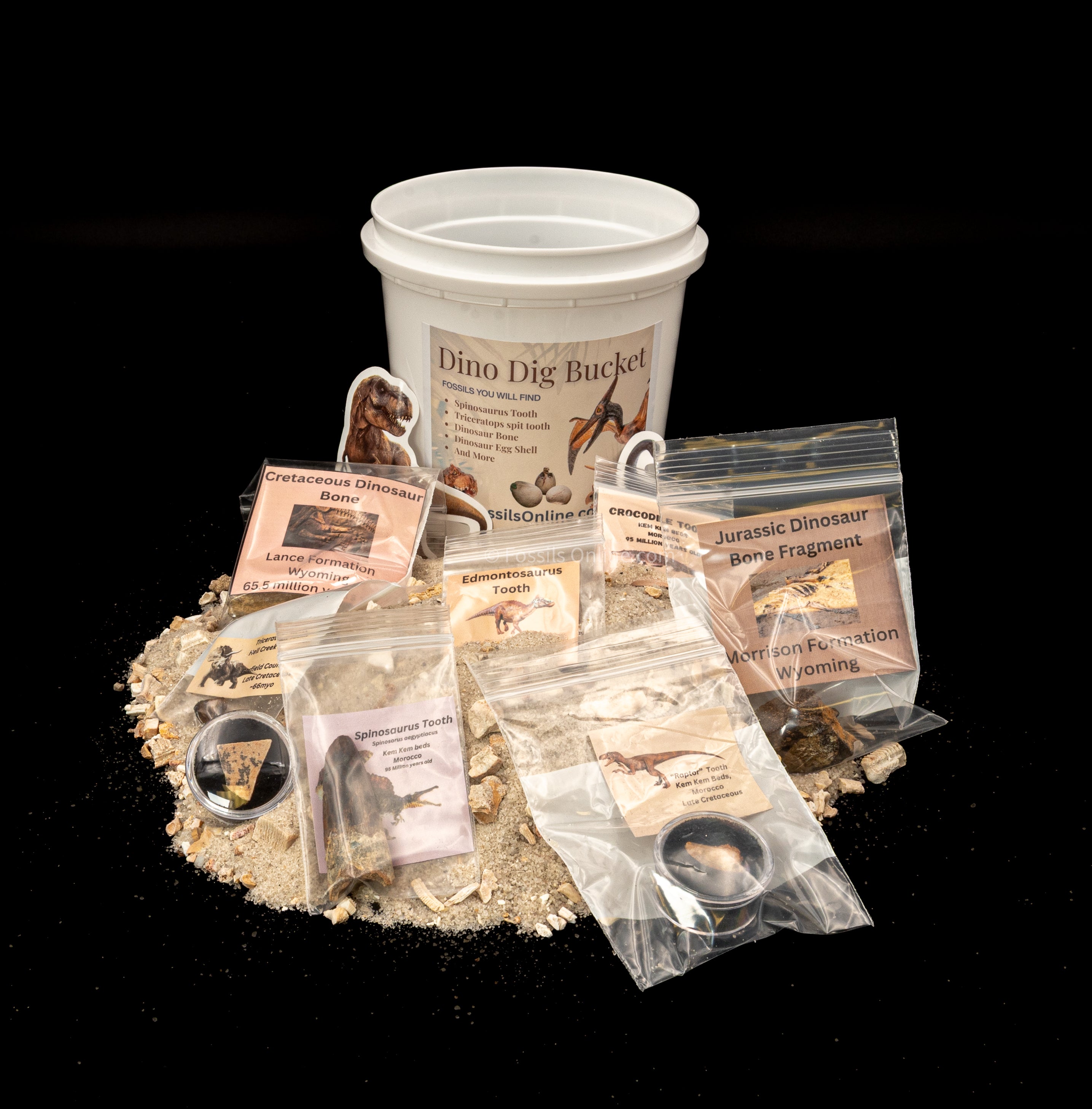
Dig into the prehistoric past with your own hands.
Each Discovery Bucket is filled with real fossil treasures buried in a sand and sediment mix, just waiting to be uncovered. You’ll discover authentic dinosaur bones from the mighty Triceratops and Edmontosaurus, mysterious Spinosaurus teeth from ancient riverbeds, and even fragile pieces of real dinosaur eggshell. Perfect for kids and adults alike, this hands-on experience is both thrilling and educational—giving you a glimpse into the creatures that roamed our planet millions of years ago. Get ready to excavate history.
What's in your bucket?
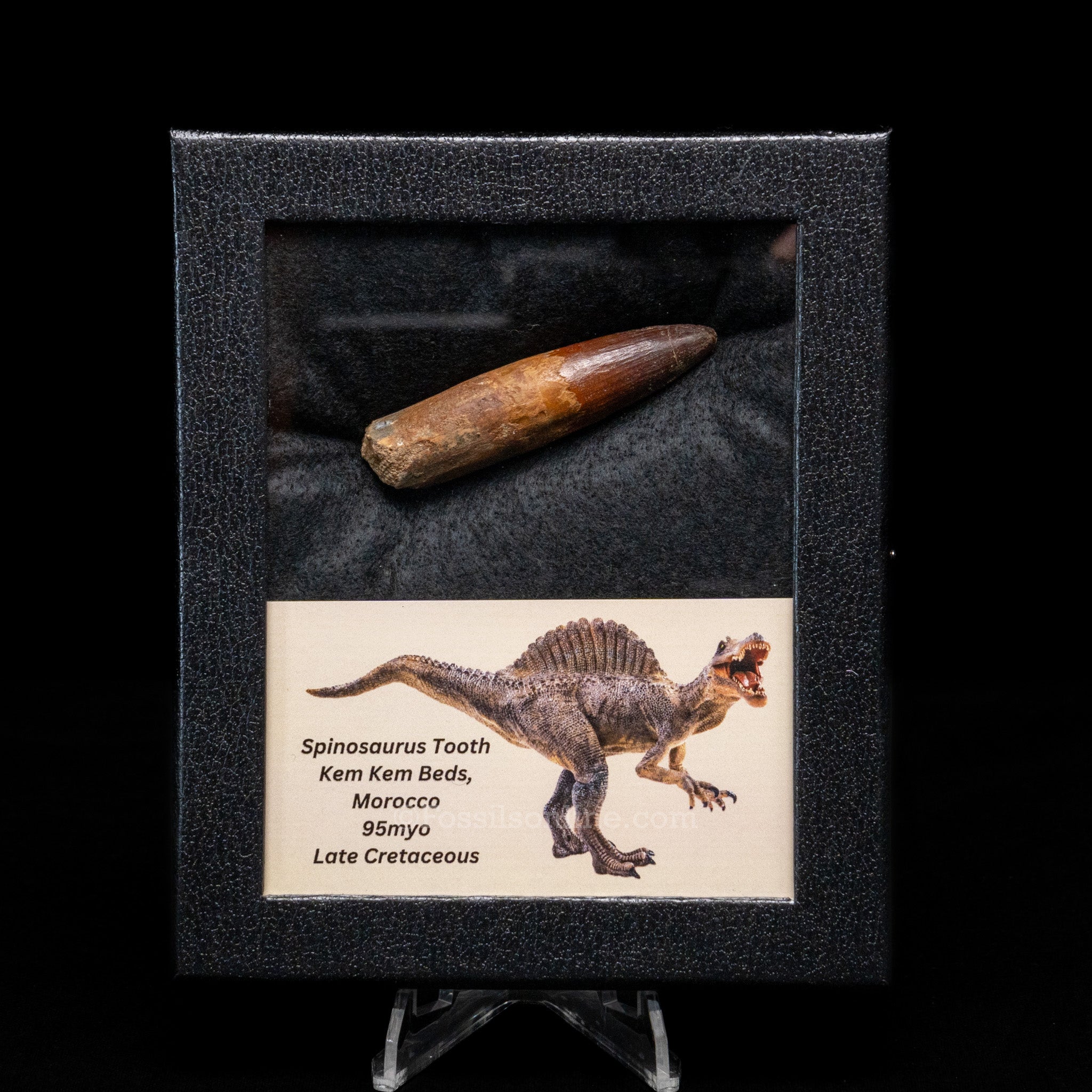
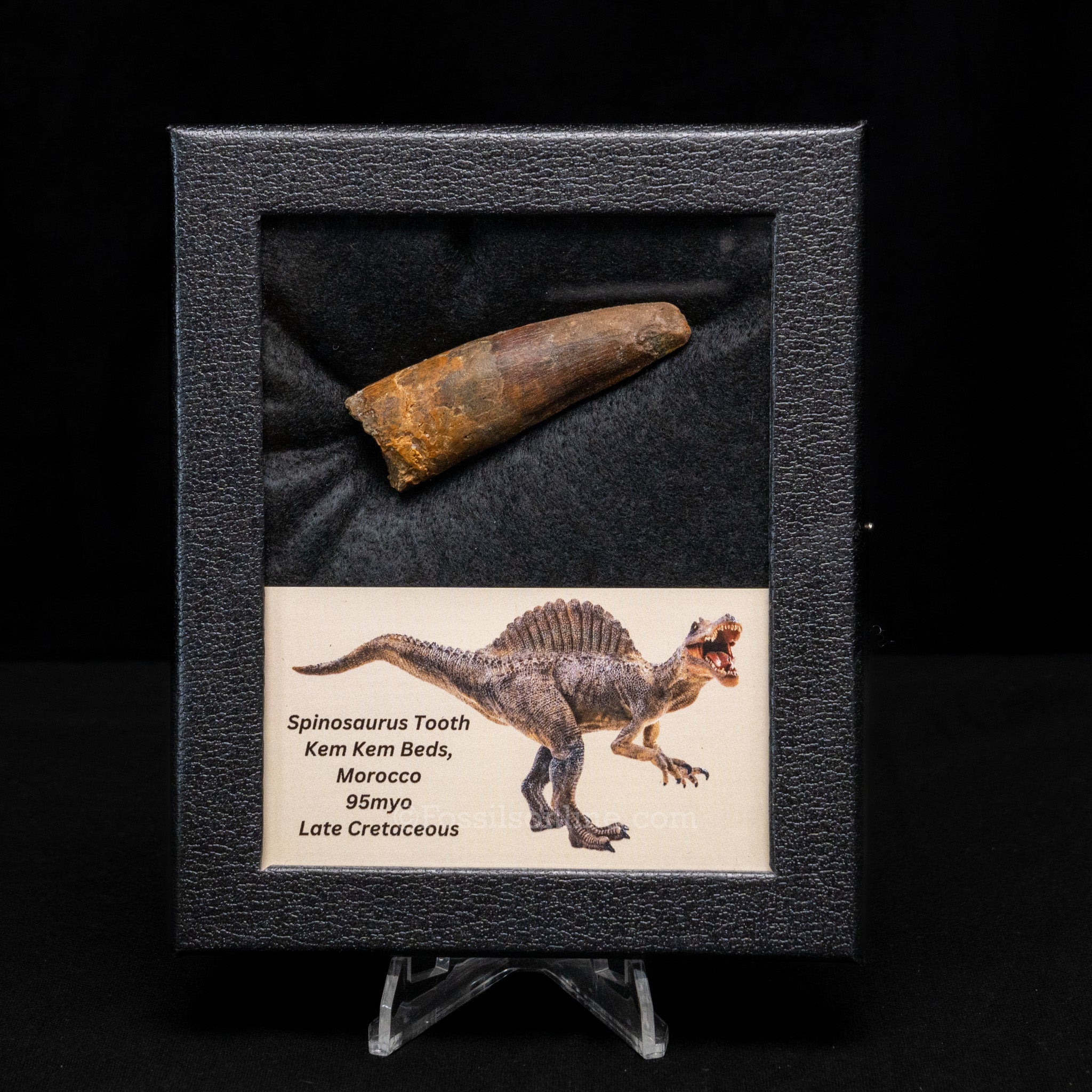
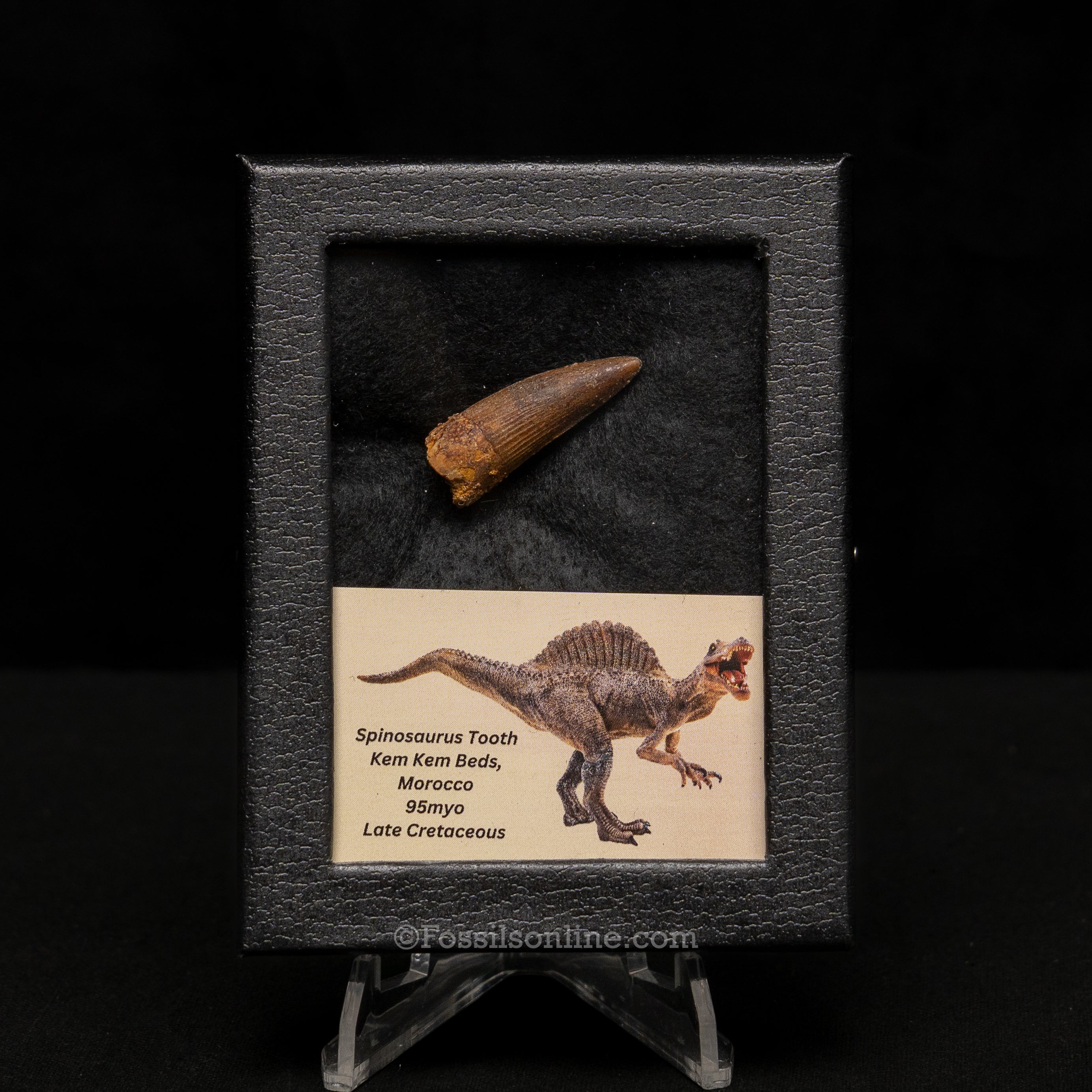
Spinosaurus Tooth-From the Cretaceous period, this predator ruled the river systems of what is now Morocco. Its conical teeth are perfect for catching fish!
Triceratops Tooth-A plant-eating giant with three horns and a massive frill. These fossils come from the Lance Formation of Wyoming.
Edmontosaurus Tooth-A duck-billed herbivore that lived during the Late Cretaceous. These bones were found in North America.
Dinosaur Eggshell Fragment-These delicate pieces are likely from a hadrosaurid or similar species, giving you a glimpse into the earliest stage of a dinosaur’s life.
Crocodile Tooth (Kem Kem Beds)-From the same fossil-rich layers as Spinosaurus, these sharp teeth belonged to prehistoric crocs that shared the landscape with dinosaurs.
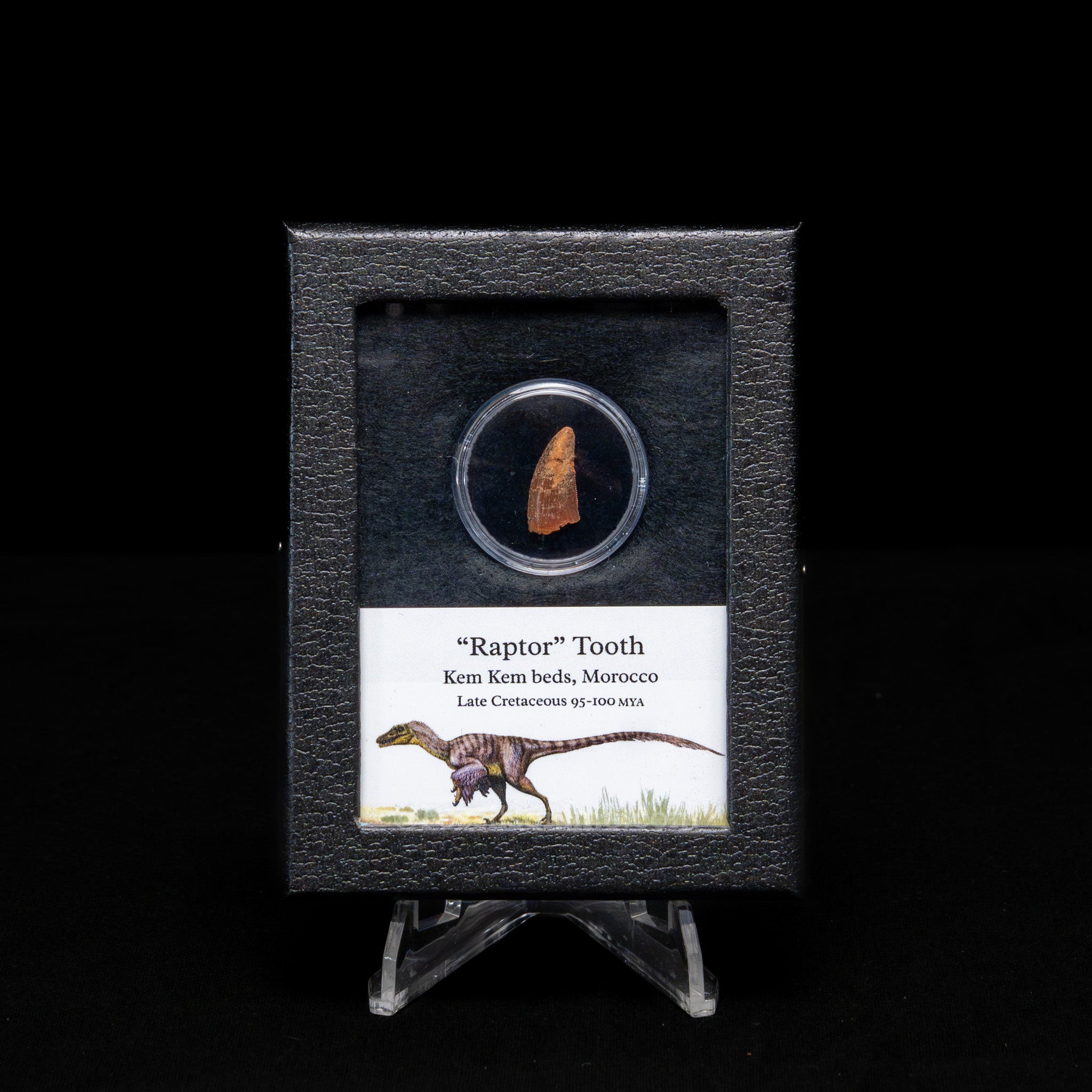
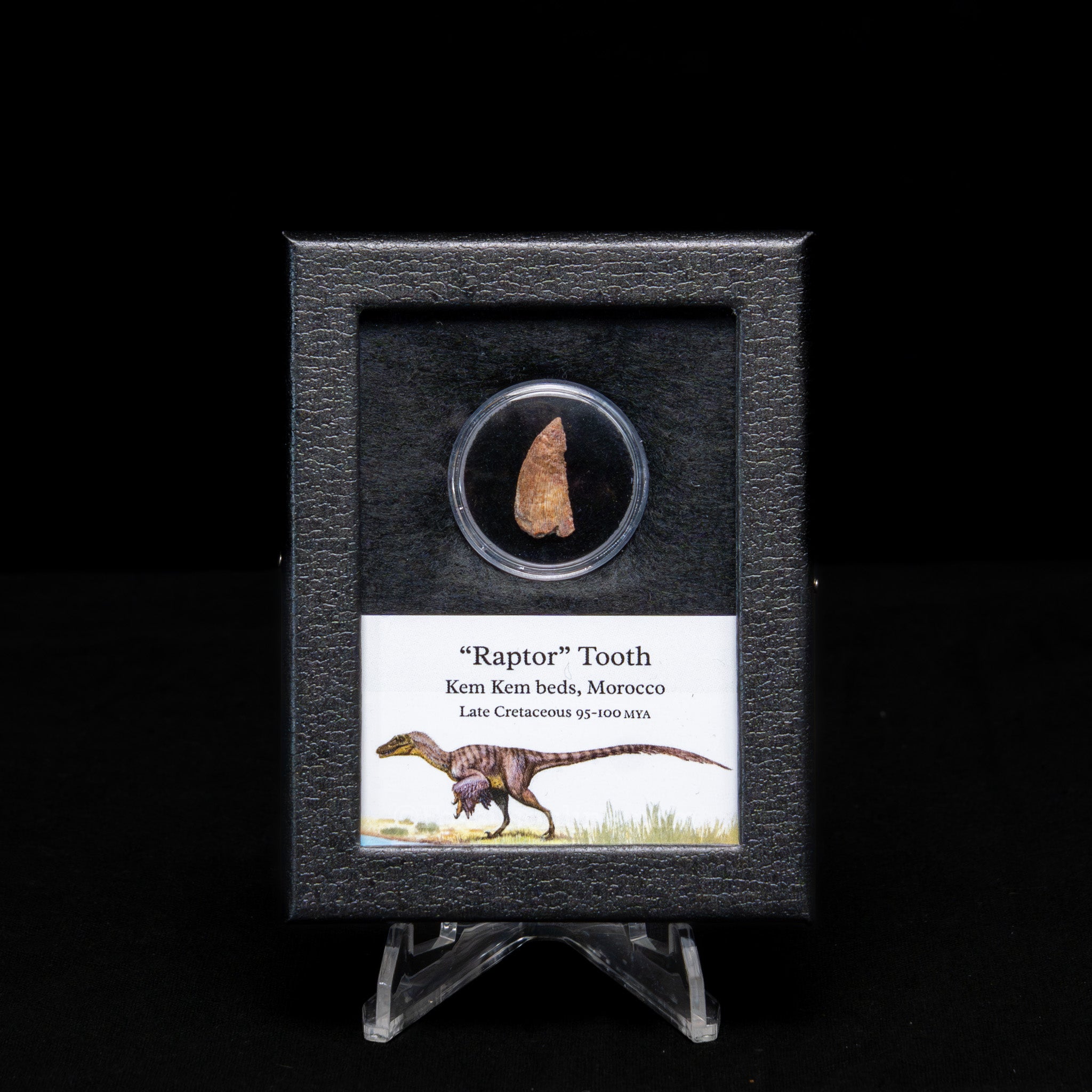
"Raptor" Tooth-A meat-eating dinosaur from North Africa, abelisaurs had short snouts and sharp teeth—this one comes from the Kem Kem Beds.
Jurassic Dinosaur Bone (Morrison Formation, WY)-This fossil comes from one of the most famous dinosaur bonebeds in the world. It may have belonged to a sauropod like Apatosaurus or a predator like Allosaurus.
Cretaceous Dinosaur Bone (Lance Formation, WY)-This fossil fragment is from a dinosaur that lived at the very end of the age of dinosaurs, just before the extinction event
Booklet describing each fossil.
Due to the delicate nature of some of the fossils, we recommend dry sifting rather than using water. To help protect the more fragile pieces, they’ve been individually bagged and labeled.
WELCOME TO
FOSSILS ONLINE
Welcome to Fossils Online. I've been curating fossil specimens, rare shark jaws and quality fossil shark teeth from around the world to share with other fossil enthusiasts since 1998. We pride ourselves in being knowledgeable in all three fields to ensure that you receive accurate descriptions, positive identifications and detailed pictures so you can feel confident that the item you receive will surpass your expectations. As hard as we try to capture every detail, it is impossible to duplicate what you see in person from a photograph. With that said, we know you will be very pleased as all of the items we sell look better in person.
WEEKLY NEW SELECTION

Featured collection

Let customers speak for us
It's the perfect size to use for our mammoth tooth display in our local history museum. It will now stand alone instead of being lost in among other parts of our current exhibit.

It is exactly as pictured. Arrived quickly and packaged well. A wonderful gift to my son.

Fantastic quality, good size, everything I expected. I myself am pretty new to fossils all together but Its always something I've wanted to learn more about. And this was a great introduction!

It was beautiful! You can really appreciate the details


My grand daughter is going to love it and have fun with it

Quality tooth from a 5 star seller.

All right super fast shipping and great product!


It’s for a Christmas present but I know they will love it

These Megalodon tooth stands are the best thing you can get to display your Megalodon teeth. Excellent quality, very solid, and they are affordable.


I gave this to my niece for her 14th birthday after she decided she wants to become a paleontologist. Normally not one to show any emotion, she was completely shocked and amazed! It was well worth every penny and I will absolutely be ordering more in the future!

