

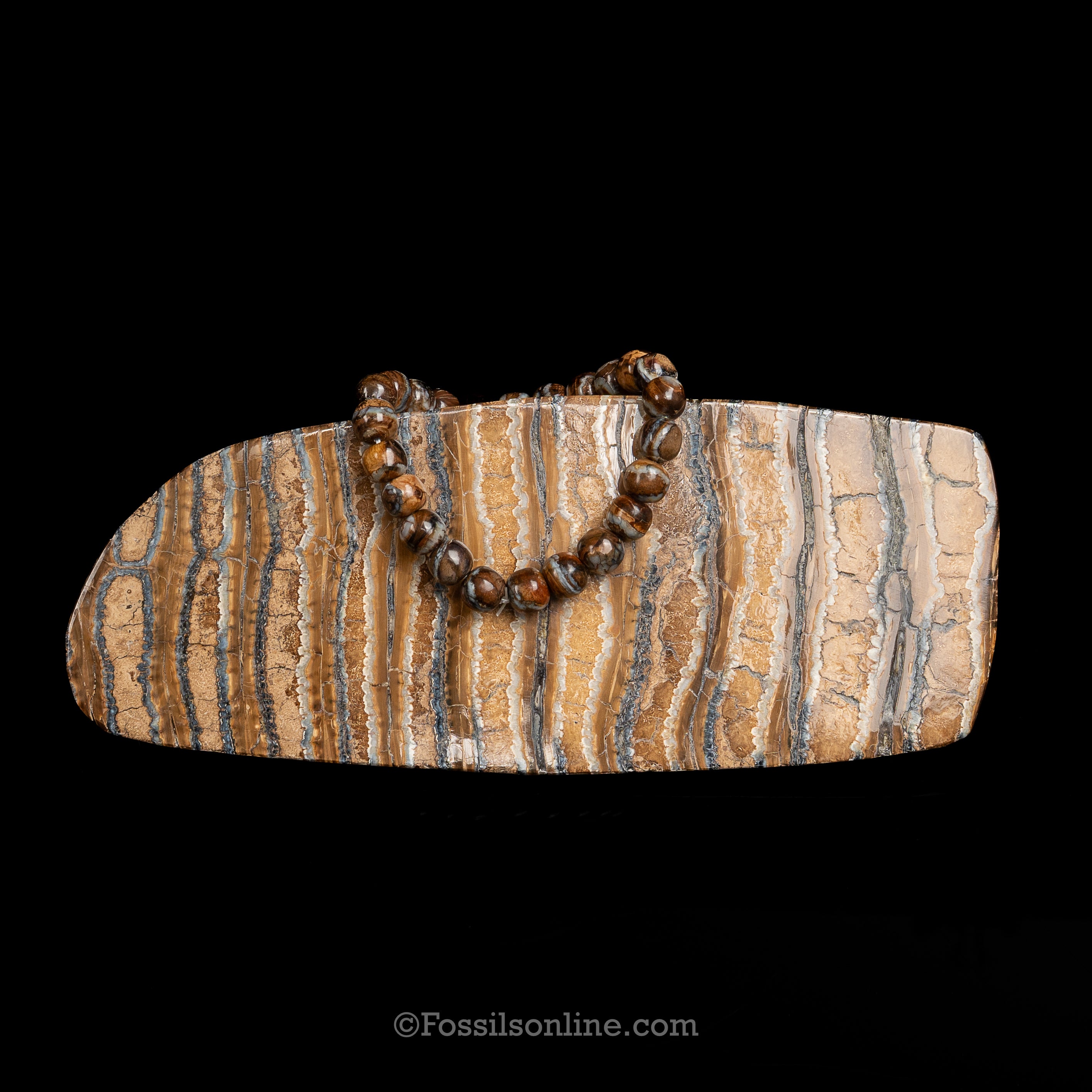
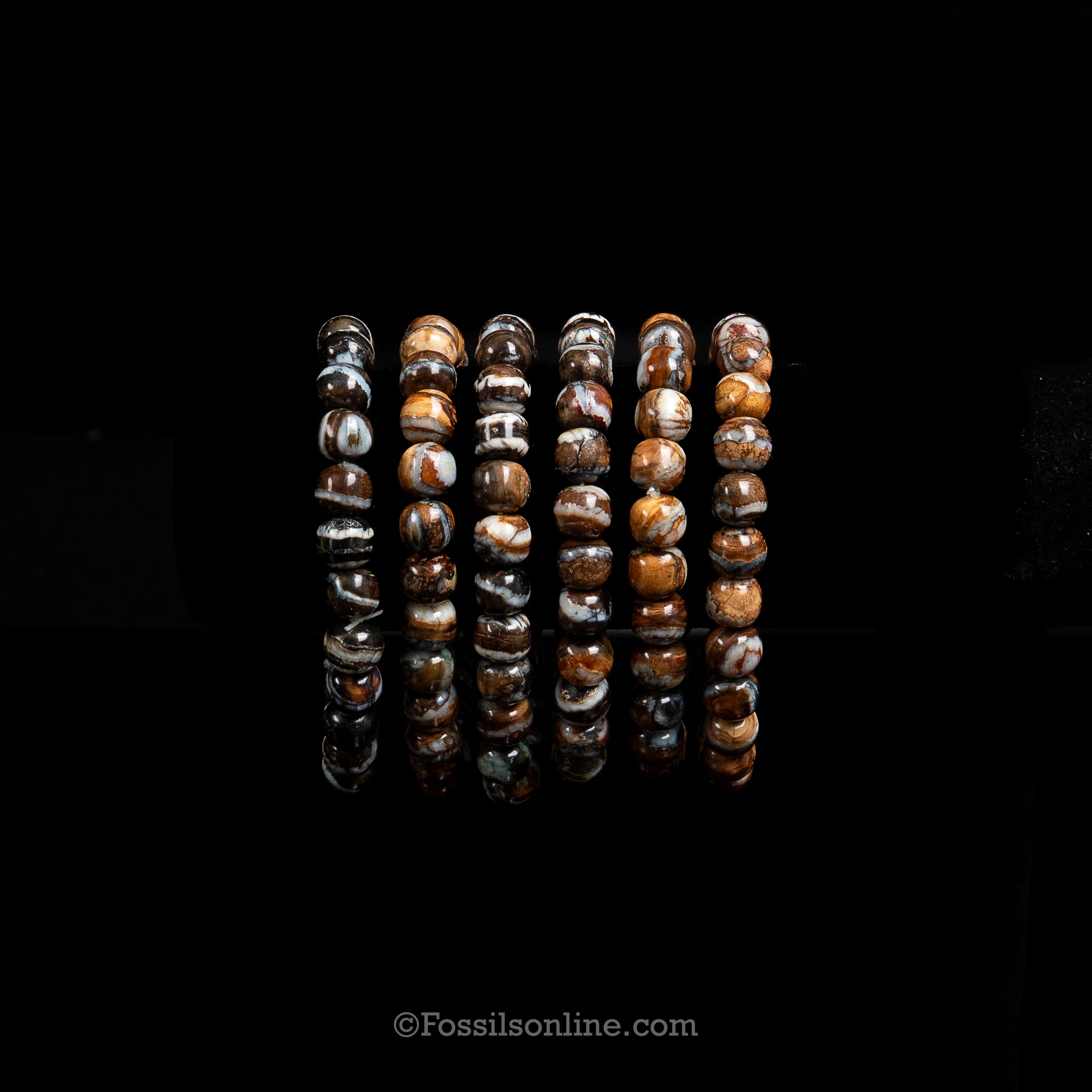


Mammoth tooth beaded bracelet
Each bead in this bracelet was hand carved from genuine Woolly Mammoth tooth recovered from the permafrost of Siberia, making this an extraordinary piece of wearable natural history. The bracelet features 24 individual beads crafted from authentic mammoth tooth, each one displaying the unique layered grain pattern that is characteristic of mammoth tooth material. Measuring 8 inches in diameter, it offers a comfortable fit while showcasing the warm, earthy tones that range from creamy ivory to rich amber ,colors preserved over tens of thousands of years in the Siberian ice. No two bracelets are alike, as the natural variation in color and pattern ensures every piece is a one of a kind artifact from the Pleistocene epoch. A stunning conversation piece for the serious collector, this bracelet connects the wearer to one of the most iconic megafauna of the Ice Age.
You will receive a variation of the bracelet depicted in the picture.
The Woolly Mammoth, a prehistoric mammal famous for its enormous size and shaggy coat, is one of the most iconic creatures of the Ice Age. Its existence spanned a significant period in Earth's history, and its remains have been a subject of great interest and study.
Location and Habitat: Woolly Mammoths primarily roamed across the northern parts of the globe, which included vast regions of what is now Siberia in Russia. Their habitat extended across the mammoth steppe, a massive ecosystem that spanned from Spain across Eurasia to Canada. This environment was cold and dry, offering grasslands that sustained these large herbivores.
Age: The Woolly Mammoth lived during the Pleistocene epoch, approximately from 400,000 to 4,000 years ago. They were most abundant during the last Ice Age, about 110,000 to 12,000 years ago, a period characterized by massive ice sheets and colder global temperatures.
Discovery in Siberia: Siberia has been a key site for the discovery of Woolly Mammoth remains, largely due to the permafrost preserving their bones and tusks. In some rare cases, entire frozen specimens have been found, providing invaluable information about their physical characteristics and living conditions. The first recorded discovery of a frozen mammoth carcass in Siberia dates back to 1799, made by a fisherman on the Siberian coast. Since then, numerous well-preserved specimens have been found, offering insights into their anatomy, diet, and even behavior.
Physical Characteristics: Woolly Mammoths were adapted to the cold environment with a layer of fat, a dense coat of fur, and long, curved tusks that could reach up to 15 feet in length. They stood up to 11 feet tall at the shoulder and weighed up to 6 tons, making them one of the larger mammoth species.
Diet and Extinction: As herbivores, their diet primarily consisted of grasses and other vegetation. The changing climate at the end of the Ice Age, along with human hunting, are believed to have contributed to their extinction.
The Woolly Mammoth's remains in Siberia have not only provided a window into the life of these magnificent beasts but also valuable information about the environment and climate of the Earth during the Ice Age. The discovery of these ancient creatures continues to fascinate scientists and the public alike, deepening our understanding of prehistoric life.
Species
Mammuthus primigenius
AGE
Pleistocene
LOCATION
Siberia
Size
24 beads, 8" diameter
Choose options