

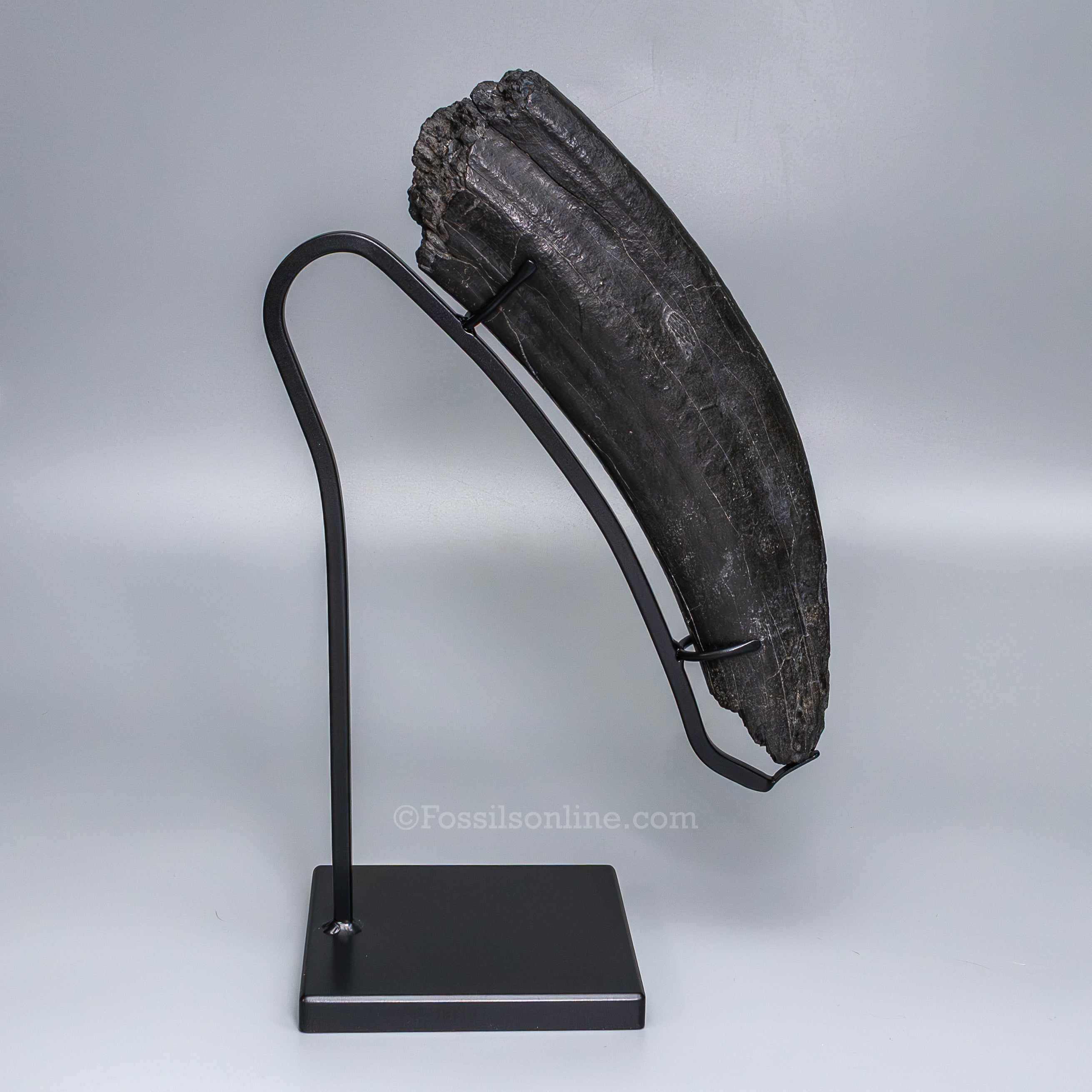
Fossil Walrus Tusk on Display Stand
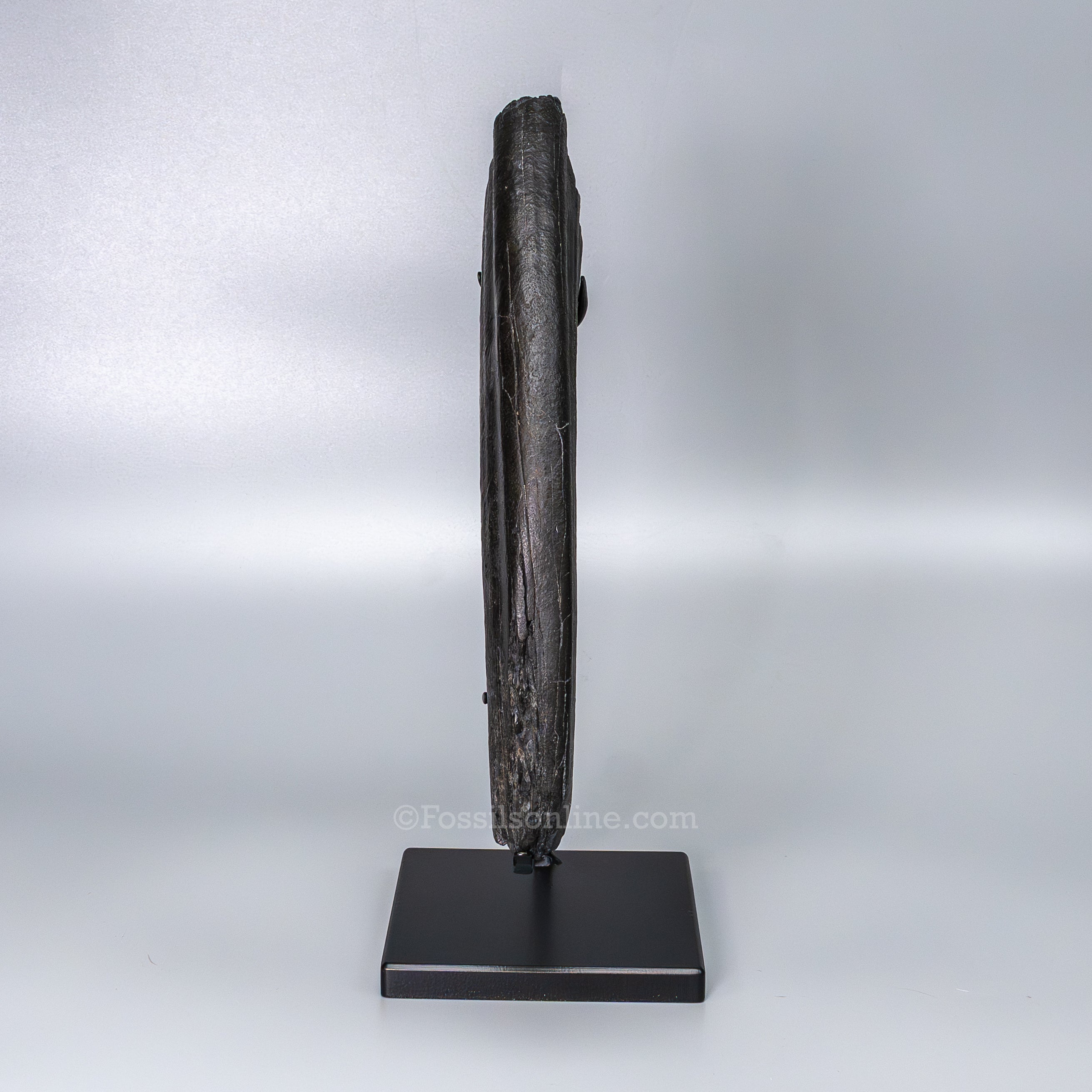
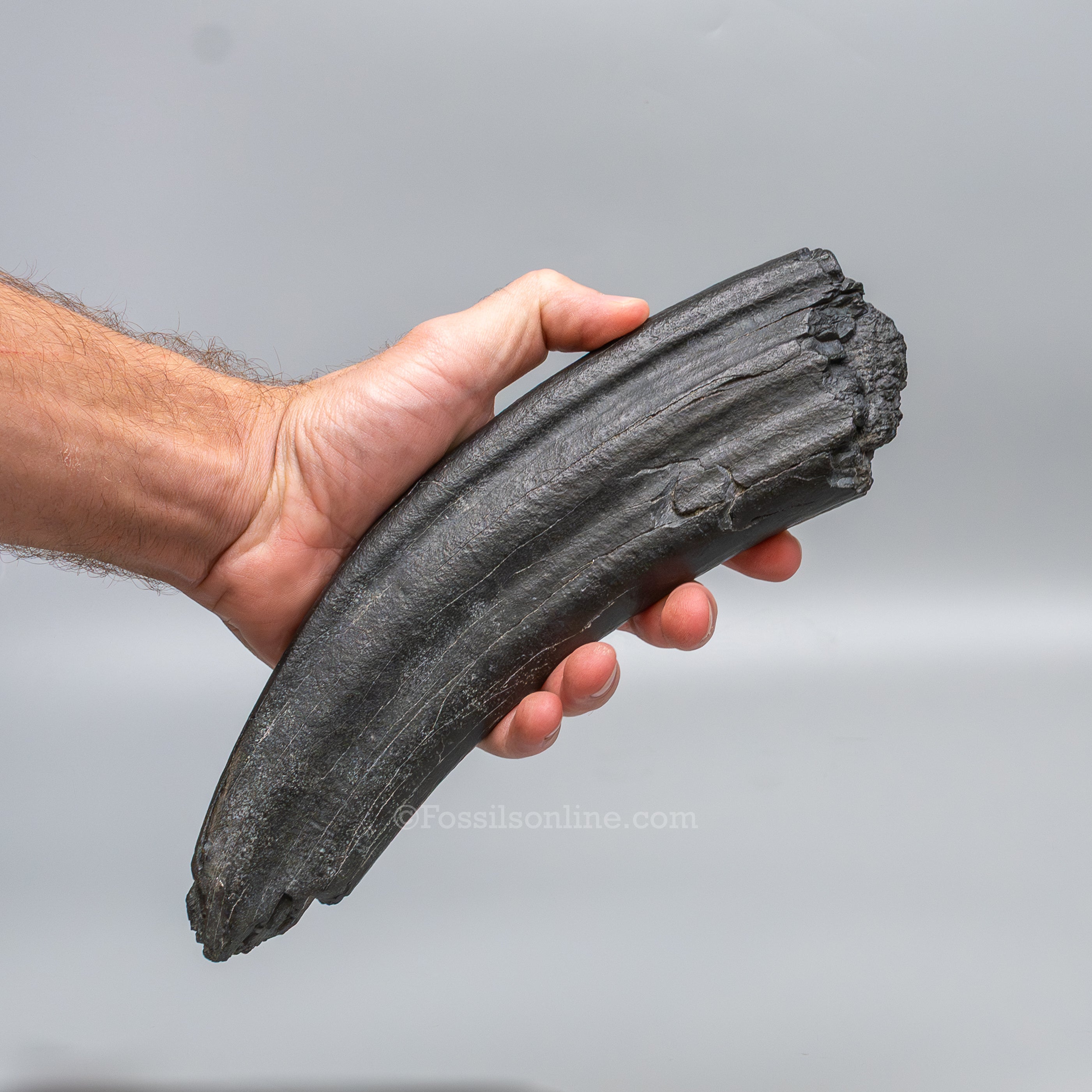
This rare large fossilized walrus tusk comes from a South Carolina river, it's solid and dense with a glossy black shine. it comes on a custom powder coated stand.
Just the tusk measures about 10.25"
Ontocetus emmonsi, often called Emmons’ walrus, was an Ice Age–era walrus that once swam in the warm, shallow seas that covered what is now the Atlantic Coastal Plain. Today its fossils—tusks, jaws, and isolated bones—are rare and highly prized finds from places like South Carolina and Florida.
When Ontocetus Appeared and Disappeared
Ontocetus as a genus originated in the Late Miocene, probably in the western North Pacific, and then spread into the North Atlantic during the Pliocene.
The classic North Atlantic species, Ontocetus emmonsi, is best known from the Pliocene (roughly 5.3–2.6 million years ago), with fossils coming from Pliocene marine deposits in the eastern United States (New Jersey, the Carolinas, Florida), as well as Belgium, the Netherlands, Great Britain, and Morocco.
The youngest known Ontocetus emmonsi comes from the Early Pleistocene of South Carolina—a beautifully preserved tusk from the Austin Sand Pit near Ridgeville, dated to about 2.4 million years old. After this time, Ontocetus disappears from the record in the North Atlantic, and later cold-adapted walruses of the modern genus Odobenus eventually take over northern waters. There’s no clear evidence that Ontocetus and the modern walrus overlapped in the North Atlantic, suggesting separate invasions and no direct competition there.
Where Emmons’ Walrus Lived
Ontocetus emmonsi was a North Atlantic walrus with a surprisingly wide range for an animal we now think of as Arctic:
-
Eastern USA: Pliocene marine formations in New Jersey, North Carolina, South Carolina, and Florida.
-
Europe: Coastal marine deposits around Belgium, the Netherlands, and Great Britain.
-
North Africa: Pliocene deposits in Morocco, indicating walruses once lived along much warmer shores.
These fossils track the flow of the North Atlantic Gyre, a clockwise surface current system. The same currents that move water, nutrients, and plankton also helped distribute marine mammals like Ontocetus around the basin.
Unlike today’s walruses, which are tightly linked to Arctic sea ice, Ontocetus appears to have tolerated cool-temperate to subtropical conditions, happily occupying warmer shelf seas that covered the Carolinas and Florida during the Pliocene.
How Emmons’ walrus Lived
Ontocetus emmonsi belonged to the walrus family Odobenidae, so it would have looked broadly walrus-like: a large, heavy-bodied pinniped with prominent tusks and strong fore flippers used to haul itself onto sandbars and shoals.
As with modern walruses, it likely:
-
Foraged on the seafloor, rooting through sediments for shellfish and other invertebrates.
-
Used suction feeding, powerful lips, and a sensitive muzzle to extract prey.
-
Lived in coastal herds, moving along shorelines and sandbars as conditions changed.
Tusks in Ontocetus show the same globular dentine characteristic of true walruses, confirming it as a member of the odobenine lineage.
Over an individual’s lifetime, tusks and teeth recorded growth, wear, and age—juveniles would have had smaller, less robust tusks and a more complete set of cheek teeth, while mature adults carried heavy, curved tusks and reduced dentition adapted for their specialized feeding style.
How Emmons’ walrus Differs from the Modern Walrus
The only living walrus is Odobenus rosmarus, confined today to cold Arctic and sub-Arctic waters. Ontocetus emmonsi was similar in some ways, but there are important differences:
-
Size and build: Studies suggest Ontocetus was slightly larger on average than the modern walrus, a substantial pinniped even by today’s standards.
-
Climate tolerance: While modern walruses are strongly tied to ice-edge habitats, Ontocetus seems to have had broader climatic tolerances, living in warm-temperate and even subtropical seas along the Atlantic Coastal Plain and North Africa.
-
Geographic range: The modern walrus is strictly Northern Hemisphere high-latitude. Ontocetus also lived in the Northern Hemisphere, but its range extended much farther south into areas like South Carolina, Georgia and Florida where no walruses live today.
-
Dentition and skull: Extinct ontocetines show differences in jaw and tooth structure compared with Odobenus, reflecting different details in how they fed. Some related Ontocetus species show convergent adaptations toward modern-walrus feeding, but with their own twist on skull and jaw proportions.
In short, if you saw Ontocetus emmonsi alive, you’d recognize it as a “walrus,” but its preferred environment and some aspects of its anatomy would feel more like a warm-water cousin of the modern Arctic species.
Why Walrus Fossils (and Ontocetus) Are Rare
Compared to shark teeth or whale bones, walrus fossils are genuinely uncommon, and Ontocetus is no exception:
-
Narrow habitat window
Walruses—living or extinct—tend to hug specific coastal, shallow-marine environments. Their remains are concentrated in a few fossil-bearing formations rather than spread across every marine basin. Emmons’ walrus is mostly limited to particular Pliocene and early Pleistocene formations in the North Atlantic region. -
Shorter time range in the Atlantic
Ontocetus emmonsi had a limited time window in the North Atlantic (mainly Pliocene into earliest Pleistocene), then disappears. That naturally restricts the number of fossils that can exist compared to groups that persisted for tens of millions of years in the same region. -
Preservation challenges
Pinniped bones and tusks are less durable than dense shark teeth and are more easily broken, scattered, or dissolved before burial. The deposits that do preserve walruses—shell beds, nearshore sands, or heavily worked pits—are limited in extent and often exposed only during mining or construction. -
Historical confusion and reclassification
For decades, some fossil walrus remains were misidentified as other marine mammals or scattered into multiple “species” and genera. Only relatively recent taxonomic work pulled many of those pieces back together under Ontocetus emmonsi, which means the recognized record is more limited and carefully curated.
Because of all this, a well-preserved Ontocetus tusk or jaw from South Carolina or Florida is not something you see every day. Each piece represents a rare intersection of the right animal, the right environment, and just the right preservation conditions millions of years ago.
Why Collectors Love Ontocetus emmonsi Fossils
For collectors, material from Ontocetus hits a sweet spot:
-
It tells a surprising story—walruses in warm Pliocene seas over what is now the Carolinas, Florida, and even North Africa.
-
It represents an extinct branch of the walrus family tree, separate from the modern Arctic species.
-
The fossils themselves—especially tusk sections—often show beautiful preservation, with rich colors, growth rings, and a distinctive cross-section that clearly marks them as walrus.
-
Each find is genuinely uncommon, especially from well-documented localities such as South Carolina pit sites and Florida Pliocene formations.
Owning an Ontocetus emmonsi tusk is like owning a piece of a now lost warm-water ecosystem from the North Atlantic, a reminder that even very “Arctic” animals can have deep evolutionary roots in climates and coastlines that look nothing like the world we see today.
Species
Ontocetus emmonsi
AGE
Pliocene-Pleistocene
LOCATION
North Carolina River
Size
12"x5"x4.5" on stand
Choose options