Three Toed Horse Tooth
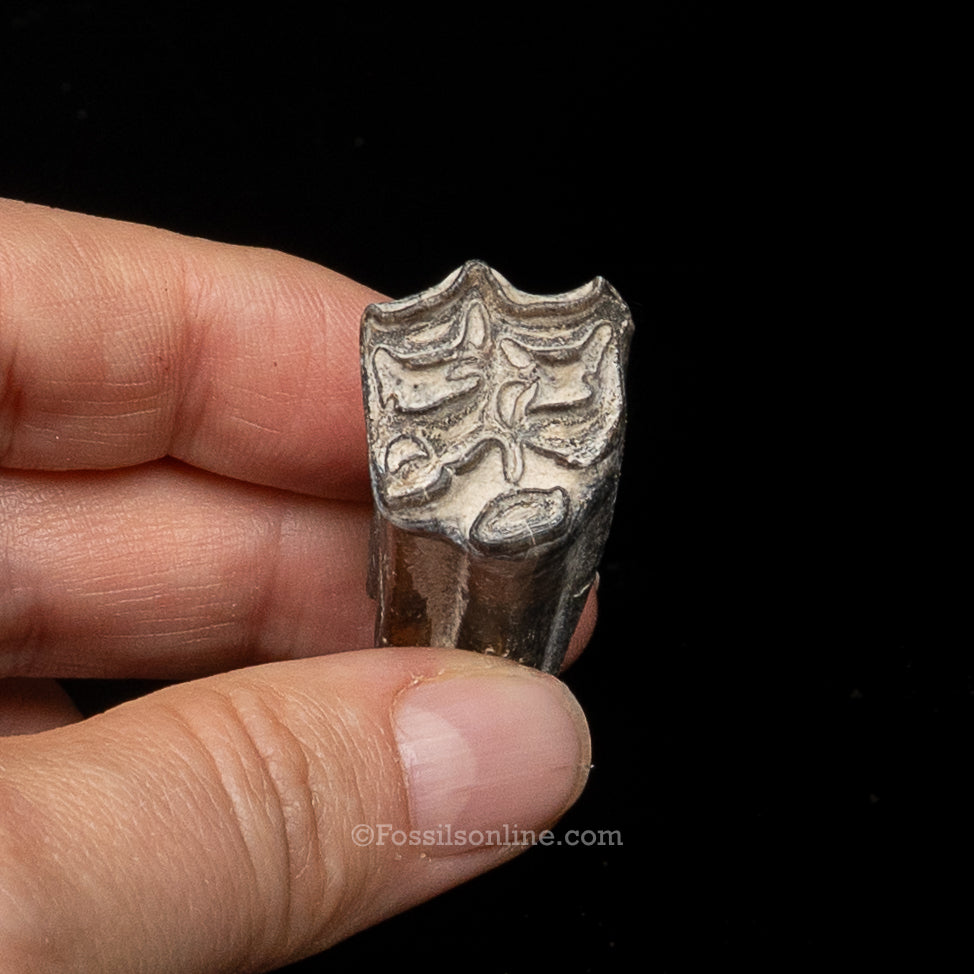
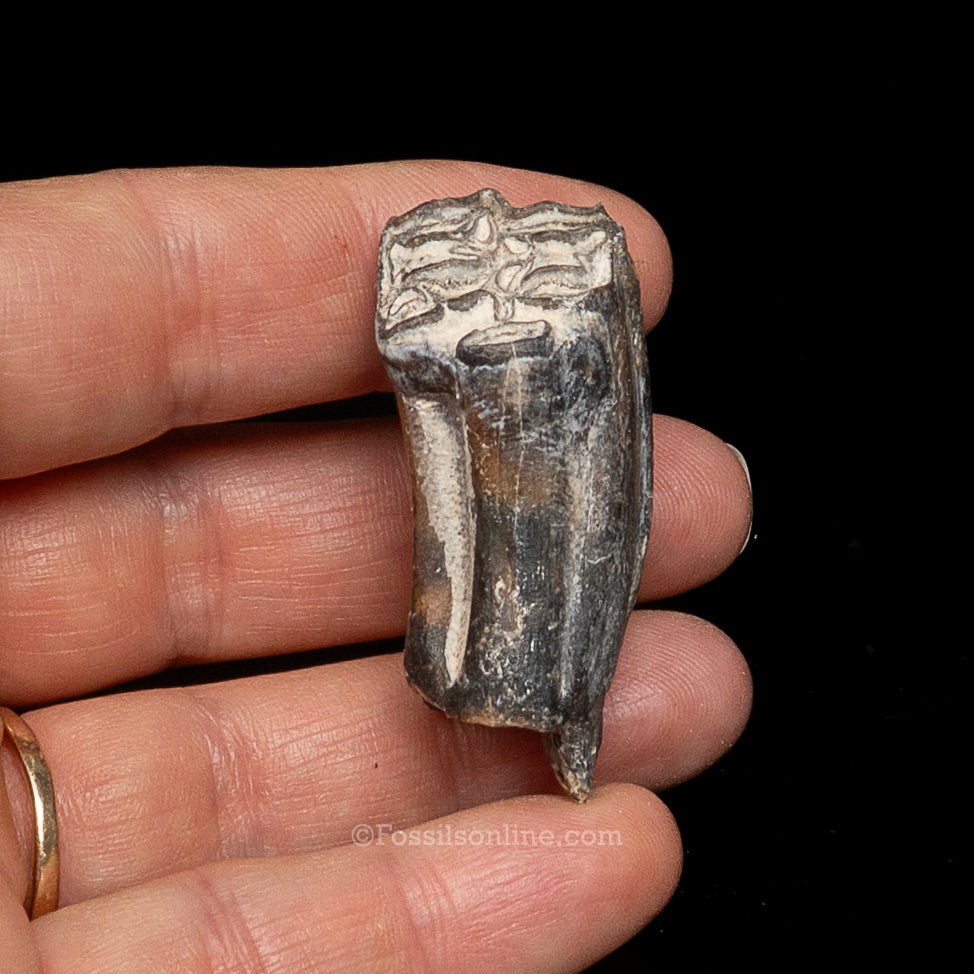
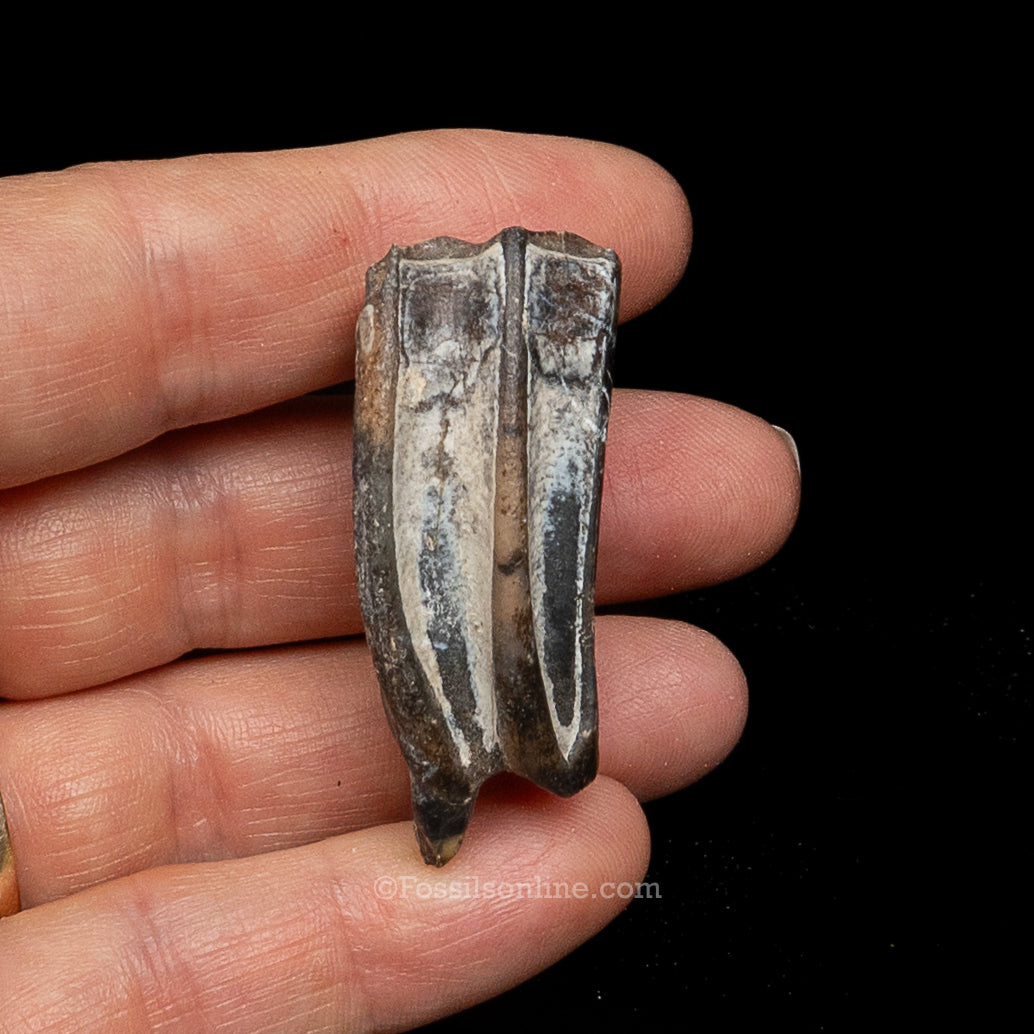
This Nannippus tooth from Nebraska's Late Miocene fossil beds is a beauty — warm brown tones with creamy white contrast from natural mineralization that makes it as visually appealing as it is scientifically interesting. Nannippus was a small, lightly built three-toed horse that browsed and grazed across North America's expanding grasslands before the modern single-toed Equus came to dominate. Excellent enamel and root detail round out a specimen that punches well above its size.
Three-toed horses like Nannippus roamed the vast grasslands and savannas of Late Miocene North America, feeding on a mix of grasses and low browse across the expanding plains that were reshaping the continent's ecosystems between roughly 10 and 5 million years ago. Their high-crowned hypsodont teeth — like this one — were a direct adaptation to that abrasive mixed diet. They shared their world with an impressive cast of contemporaries: early camels, primitive pronghorns, rhinoceroses, the massive bone-crushing dog Epicyon, and the sabertooth-like predator Barbourofelis. Nebraska in particular was a hotspot of Miocene diversity, preserving entire ecosystems in volcanic ash deposits that captured this lost world in remarkable detail.
Nannippus was one of several hipparionine horses thriving simultaneously during the Late Miocene, alongside relatives like Neohipparion and Cormohipparion. Each occupied slightly different ecological niches across the landscape, varying in size, tooth morphology, and preferred habitat. Nannippus was among the smallest of the group, weighing roughly 75 to 90 kilograms — closer in size to a large sheep than a modern horse — and its gracile build suggests agility was its primary defense. Despite its modest size, it was a remarkably successful genus, persisting well into the Pliocene before finally disappearing from the fossil record.
The story of three-toed horses is really the story of North America's grasslands. As the continent dried and cooled through the Miocene, forests gave way to open plains, and horses evolved alongside that transformation — developing longer legs for running, deeper-rooted teeth for processing abrasive vegetation, and leaner builds suited to covering vast open terrain. Nannippus and its kin represent the peak of that diversity, a moment in deep time when North America supported more genera of horse simultaneously than anywhere on Earth before or since.
Teeth are among the most informative elements a fossil horse can preserve. The complex enamel folding, crown height, and wear patterns visible in specimens like this one have allowed paleontologists to reconstruct diet, age at death, and even seasonal feeding behavior. For collectors, a well-preserved hipparionine tooth offers a direct window into one of the most dynamic chapters in mammalian evolution — small enough to hold in your hand, significant enough to anchor any Miocene fossil collection.
This Nannippus tooth from Nebraska's Late Miocene fossil beds is a beauty — warm brown tones with creamy white contrast from natural mineralization that makes it as visually appealing as it is scientifically interesting. Nannippus was a small, lightly built three-toed horse that browsed and grazed across North America's expanding grasslands before the modern single-toed Equus came to dominate. Excellent enamel and root detail round out a specimen that punches well above its size.
Three-toed horses like Nannippus roamed the vast grasslands and savannas of Late Miocene North America, feeding on a mix of grasses and low browse across the expanding plains that were reshaping the continent's ecosystems between roughly 10 and 5 million years ago. Their high-crowned hypsodont teeth — like this one — were a direct adaptation to that abrasive mixed diet. They shared their world with an impressive cast of contemporaries: early camels, primitive pronghorns, rhinoceroses, the massive bone-crushing dog Epicyon, and the sabertooth-like predator Barbourofelis. Nebraska in particular was a hotspot of Miocene diversity, preserving entire ecosystems in volcanic ash deposits that captured this lost world in remarkable detail.
Nannippus was one of several hipparionine horses thriving simultaneously during the Late Miocene, alongside relatives like Neohipparion and Cormohipparion. Each occupied slightly different ecological niches across the landscape, varying in size, tooth morphology, and preferred habitat. Nannippus was among the smallest of the group, weighing roughly 75 to 90 kilograms — closer in size to a large sheep than a modern horse — and its gracile build suggests agility was its primary defense. Despite its modest size, it was a remarkably successful genus, persisting well into the Pliocene before finally disappearing from the fossil record.
The story of three-toed horses is really the story of North America's grasslands. As the continent dried and cooled through the Miocene, forests gave way to open plains, and horses evolved alongside that transformation — developing longer legs for running, deeper-rooted teeth for processing abrasive vegetation, and leaner builds suited to covering vast open terrain. Nannippus and its kin represent the peak of that diversity, a moment in deep time when North America supported more genera of horse simultaneously than anywhere on Earth before or since.
Teeth are among the most informative elements a fossil horse can preserve. The complex enamel folding, crown height, and wear patterns visible in specimens like this one have allowed paleontologists to reconstruct diet, age at death, and even seasonal feeding behavior. For collectors, a well-preserved hipparionine tooth offers a direct window into one of the most dynamic chapters in mammalian evolution — small enough to hold in your hand, significant enough to anchor any Miocene fossil collection.
AGE
Late Miocene
Size
1.70"
Choose options