Tar Pit Fossil Dire Wolf Wrist Bone
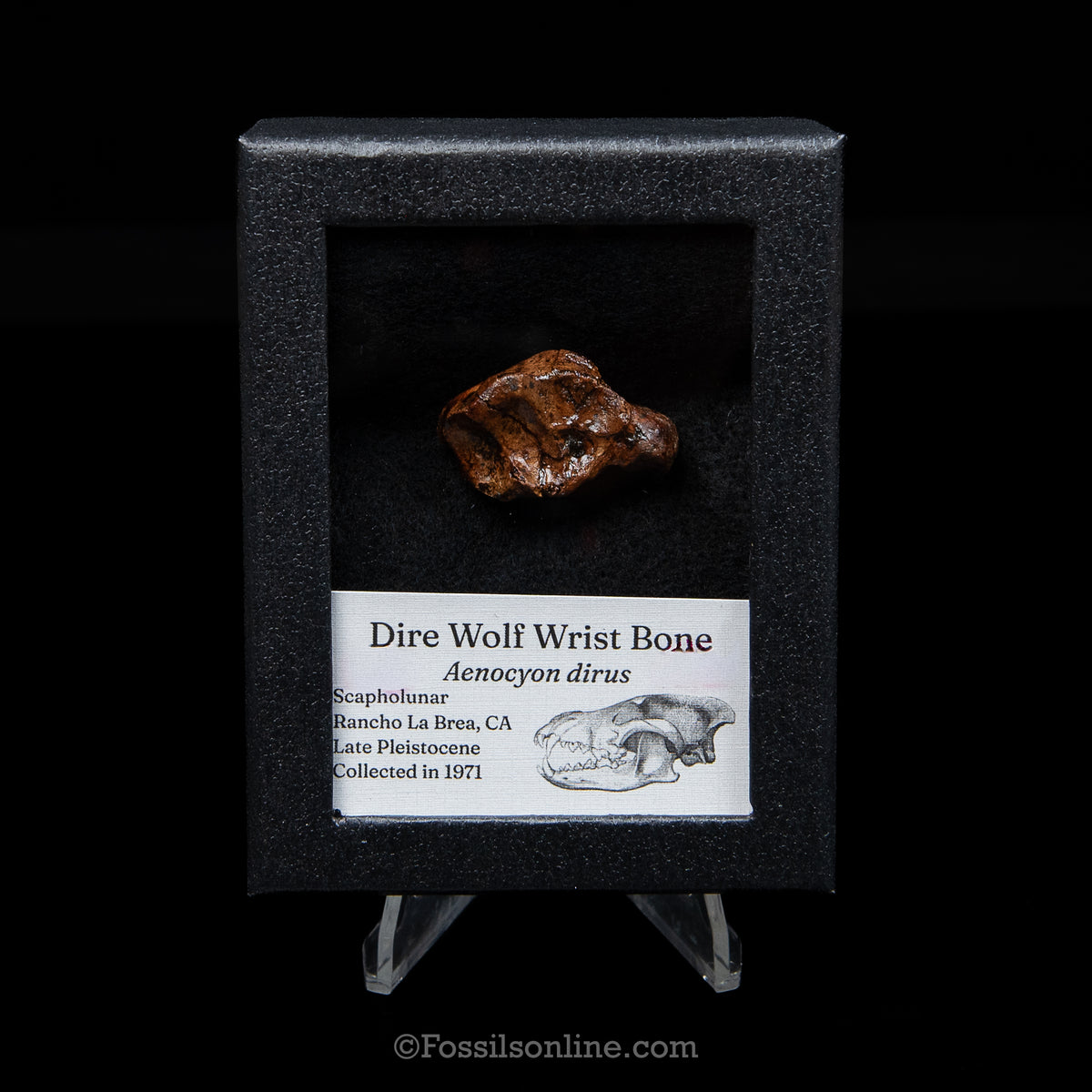
This is a genuine scapholunar (wrist bone) from a Dire Wolf, dating to the Late Pleistocene, and was recovered from Rancho La Brea in Los Angeles, California, in 1971. In dire wolves and other carnivores, two wrist bones fuse into a single scapholunar, which supports the front limb while running and gripping prey. The bone has a rich dark golden brown coloration and has been glued back together in a few places.
Presented in a 4" × 3" display case.
Dire wolves (Aenocyon dirus) were formidable predators of the Pleistocene epoch, roaming North America in packs. Rancho La Brea has produced more dire wolf fossils than any other site in the world, with remains of over 4,000 individuals recovered from its asphalt seeps. These wolves were likely drawn in while hunting animals already trapped in the sticky asphalt, which then preserved their remains for tens of thousands of years. This makes the dire wolf one of the most iconic and extensively studied Ice Age carnivores.
Obtaining tar pit fossils is nearly impossible today, unless from an old collection or from private property.
Species
Aenocyon dirus
AGE
Late Pleistocene
LOCATION
Rancho LaBrea, CA
Size
1.34"x .75
Choose options