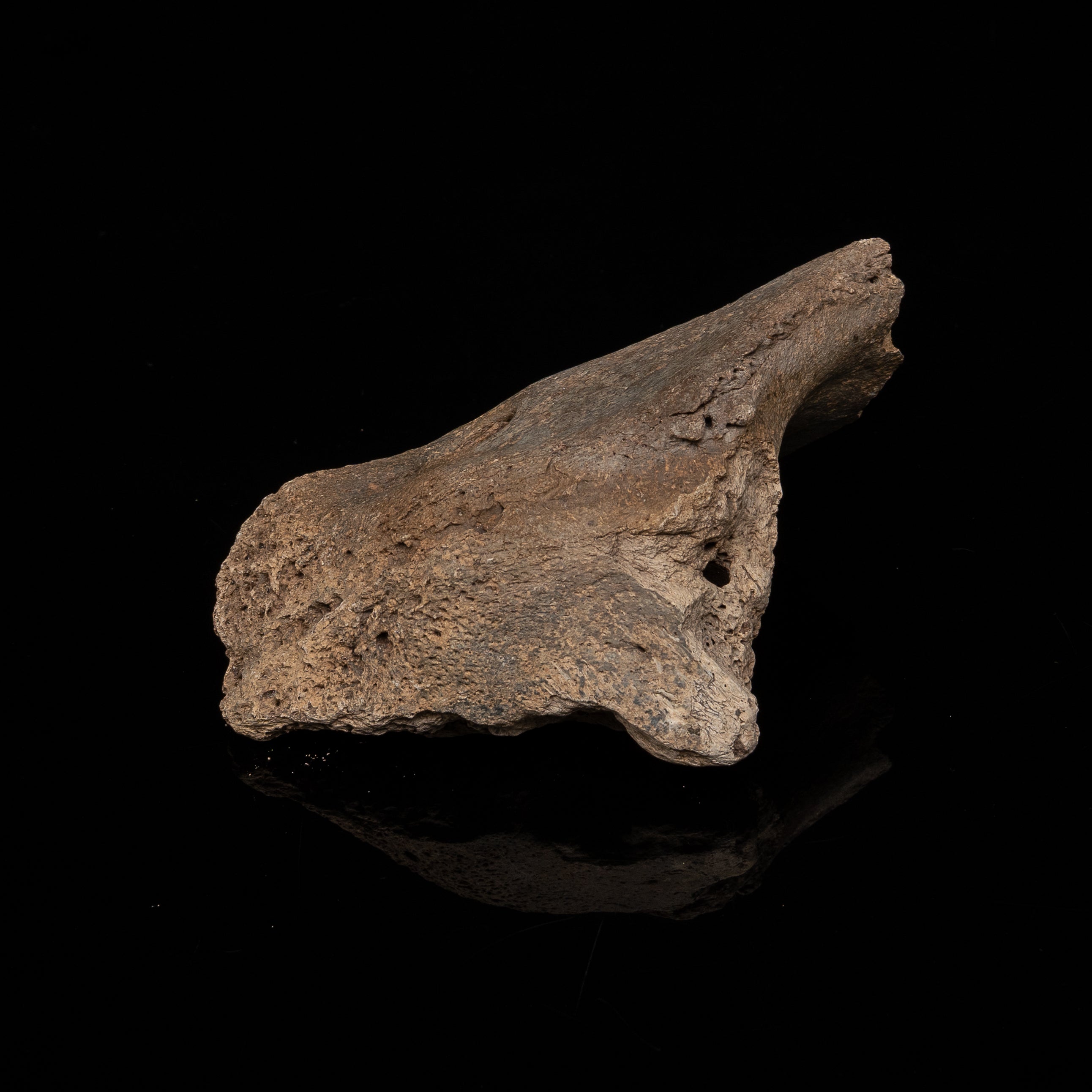
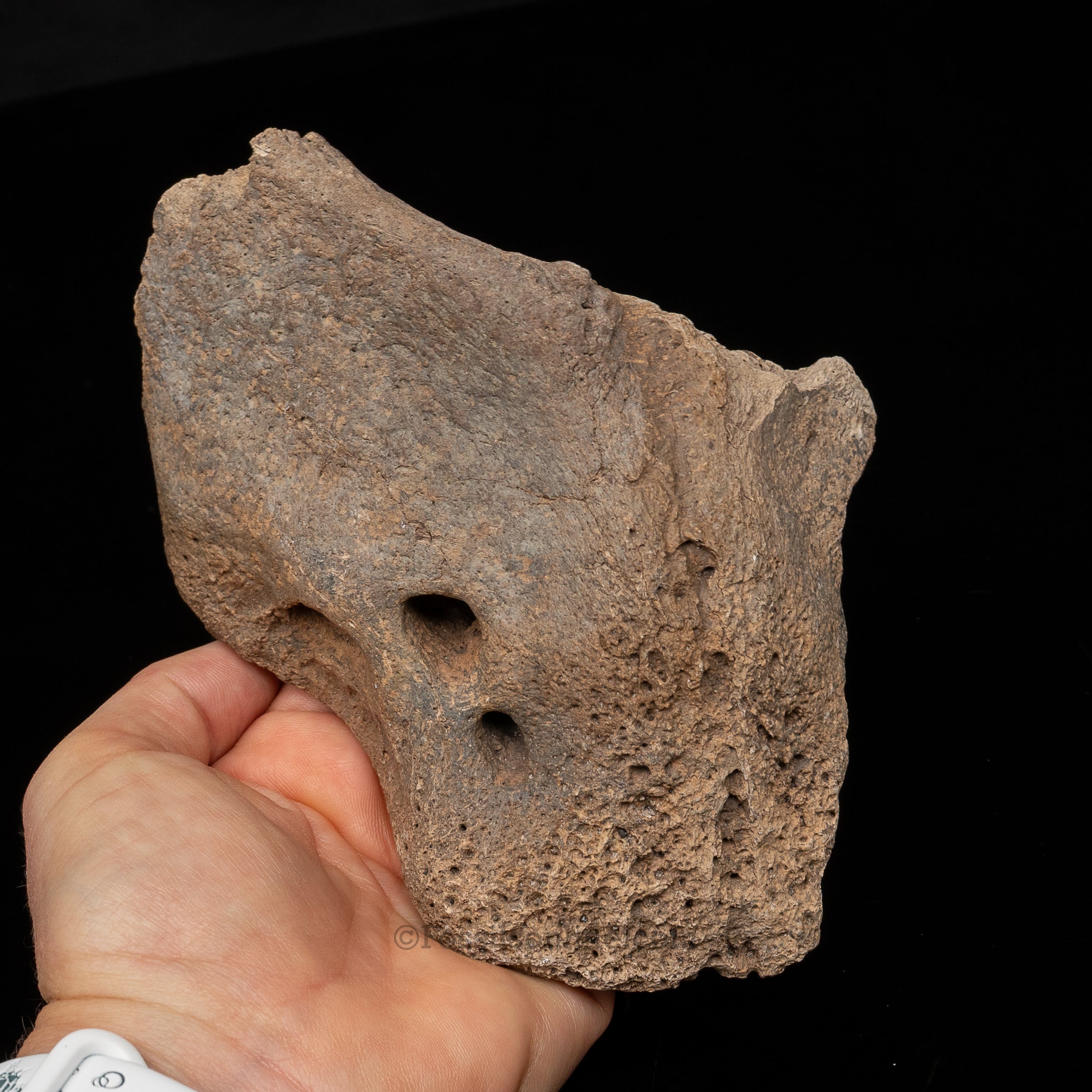
Sloth mandibular symphysis
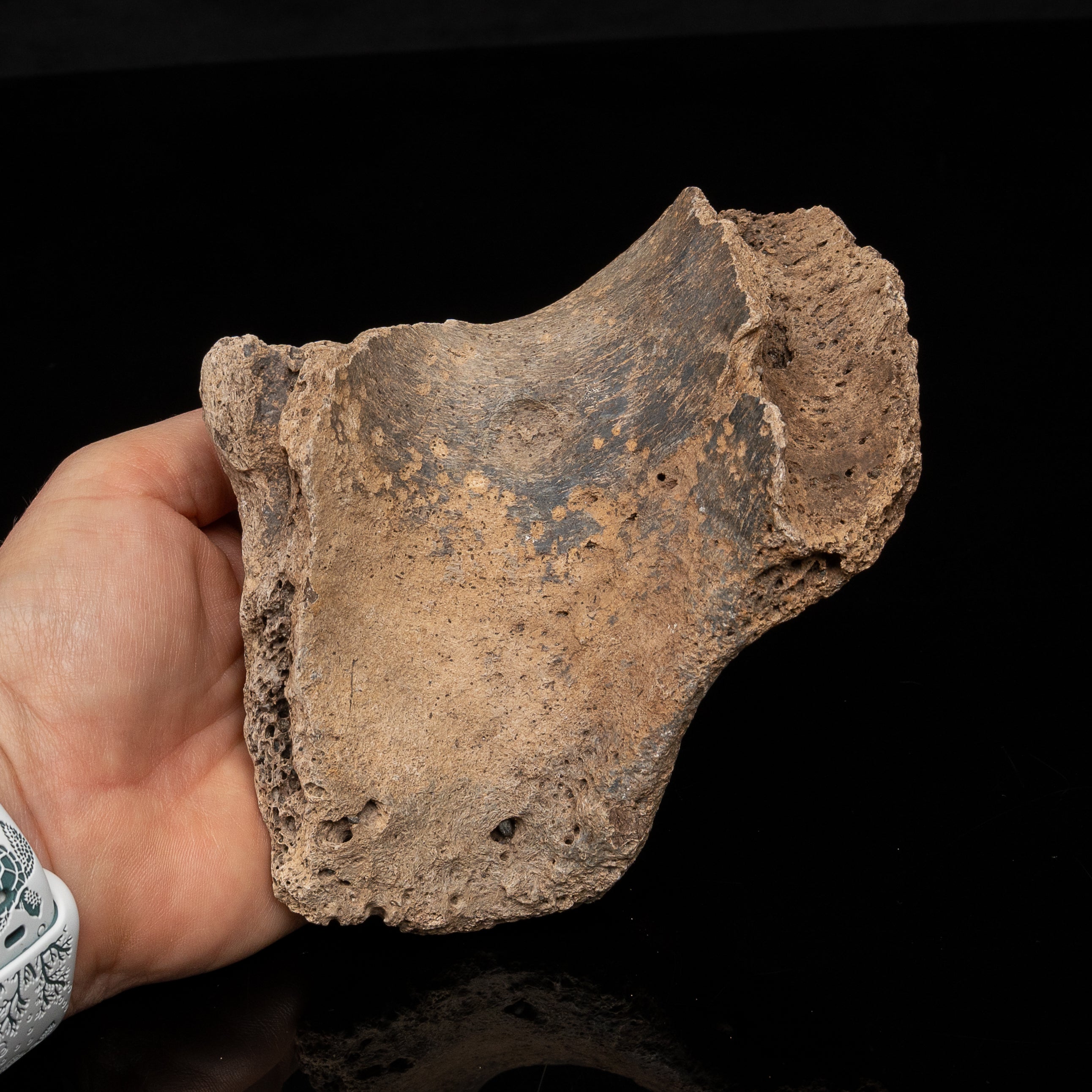
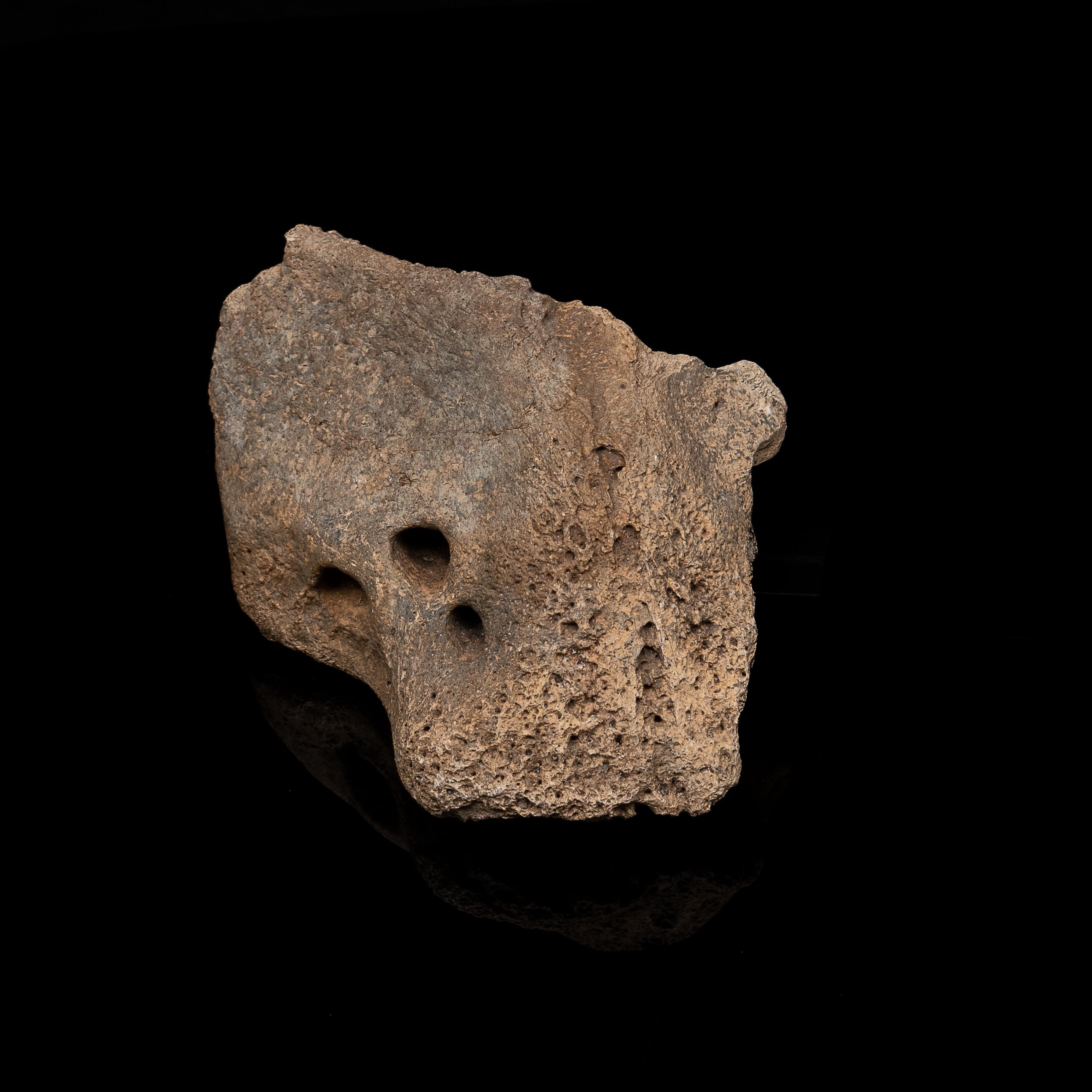
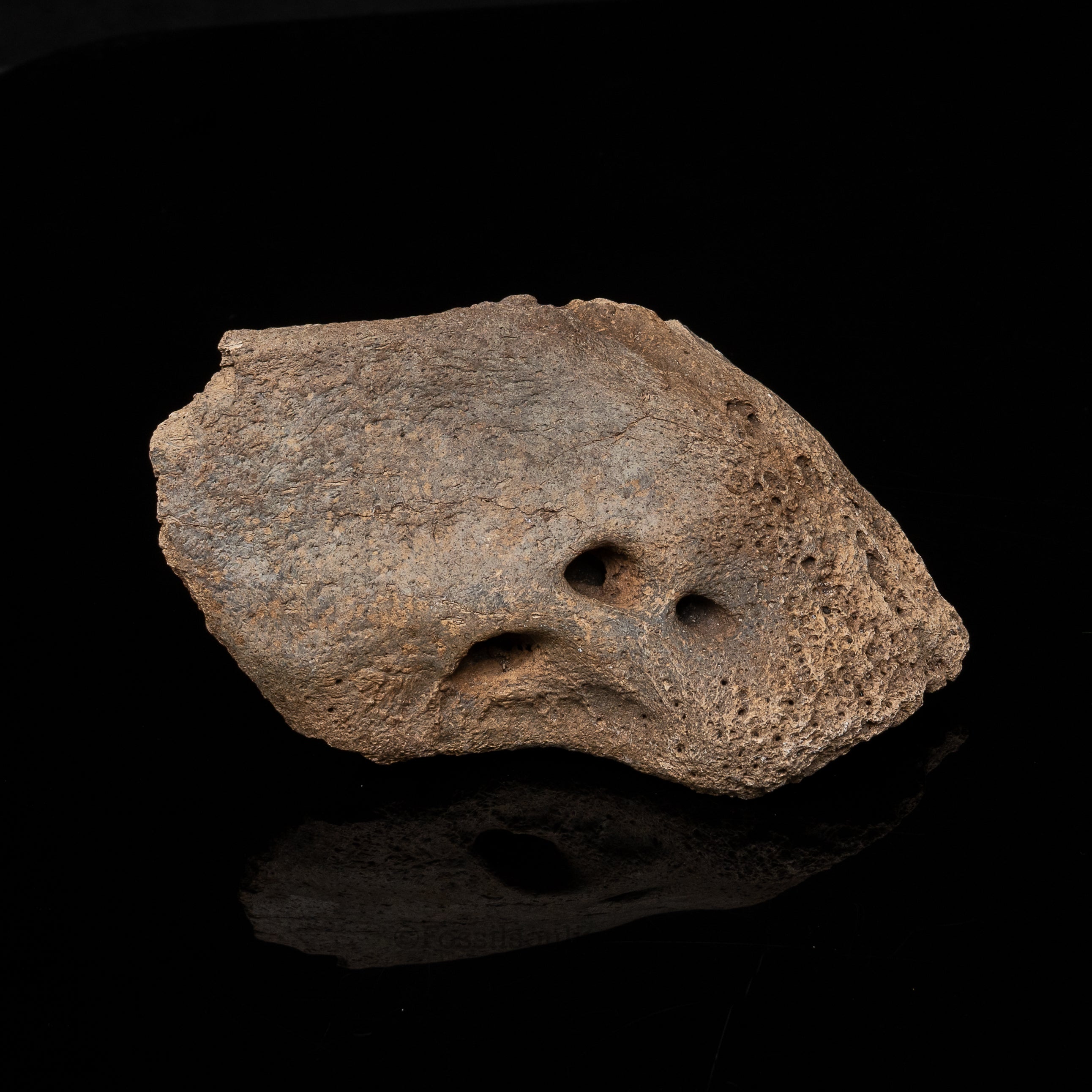
This is a genuine fossil mandibular symphysis — the chin region of the lower jaw — from Harlan's ground sloth, Paramylodon harlani. This the portion between the mandibles. The specimen is incomplete, The alveoli for the tooth on one side is mostly intact.
A great addition to any Ice Age megafauna collection.
Paramylodon was a genus of ground sloth, part of the diverse group of extinct sloths known as the Mylodontidae. Here are the details about its era, location, and habitat:
-
Era: Paramylodon lived during the Pleistocene epoch. The Pleistocene is a period in Earth's history that lasted from about 2.58 million to 11,700 years ago. This epoch was characterized by a series of glacial events and the appearance and development of early humans.
-
Location: The remains of Paramylodon have been predominantly found in North America. Its fossils have been unearthed in various parts of the United States, including California, Texas, and Florida. These findings suggest that Paramylodon had a widespread distribution across North America during its time.
-
Habitat: Paramylodon likely inhabited a range of environments. Given the diversity of climates and ecological settings during the Pleistocene, it's probable that this ground sloth lived in varied habitats including forests, grasslands, and possibly near water sources. The Pleistocene was a time of significant climatic fluctuations, with periods of glaciation and interglacial warmth, which would have influenced the habitats available to Paramylodon.
Paramylodon, like other ground sloths, was a large, heavily built animal. Its diet was herbivorous, and it likely fed on a variety of plant materials, utilizing its robust, clawed limbs for foraging. The changing climates of the Pleistocene would have impacted its food sources and habitat, influencing its distribution and survival.
This is a genuine fossil mandibular symphysis — the chin region of the lower jaw — from Harlan's ground sloth, Paramylodon harlani. This the portion between the mandibles. The specimen is incomplete, The alveoli for the tooth on one side is mostly intact.
A great addition to any Ice Age megafauna collection.
Paramylodon was a genus of ground sloth, part of the diverse group of extinct sloths known as the Mylodontidae. Here are the details about its era, location, and habitat:
-
Era: Paramylodon lived during the Pleistocene epoch. The Pleistocene is a period in Earth's history that lasted from about 2.58 million to 11,700 years ago. This epoch was characterized by a series of glacial events and the appearance and development of early humans.
-
Location: The remains of Paramylodon have been predominantly found in North America. Its fossils have been unearthed in various parts of the United States, including California, Texas, and Florida. These findings suggest that Paramylodon had a widespread distribution across North America during its time.
-
Habitat: Paramylodon likely inhabited a range of environments. Given the diversity of climates and ecological settings during the Pleistocene, it's probable that this ground sloth lived in varied habitats including forests, grasslands, and possibly near water sources. The Pleistocene was a time of significant climatic fluctuations, with periods of glaciation and interglacial warmth, which would have influenced the habitats available to Paramylodon.
Paramylodon, like other ground sloths, was a large, heavily built animal. Its diet was herbivorous, and it likely fed on a variety of plant materials, utilizing its robust, clawed limbs for foraging. The changing climates of the Pleistocene would have impacted its food sources and habitat, influencing its distribution and survival.
Species
Paramylodon harlani
AGE
Pleistocene
Size
4.5"x5.5"
Choose options