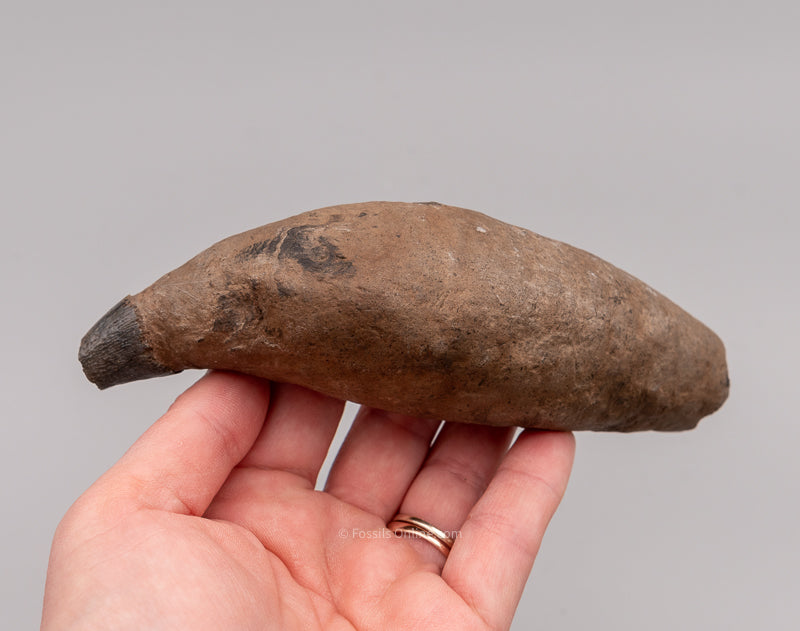
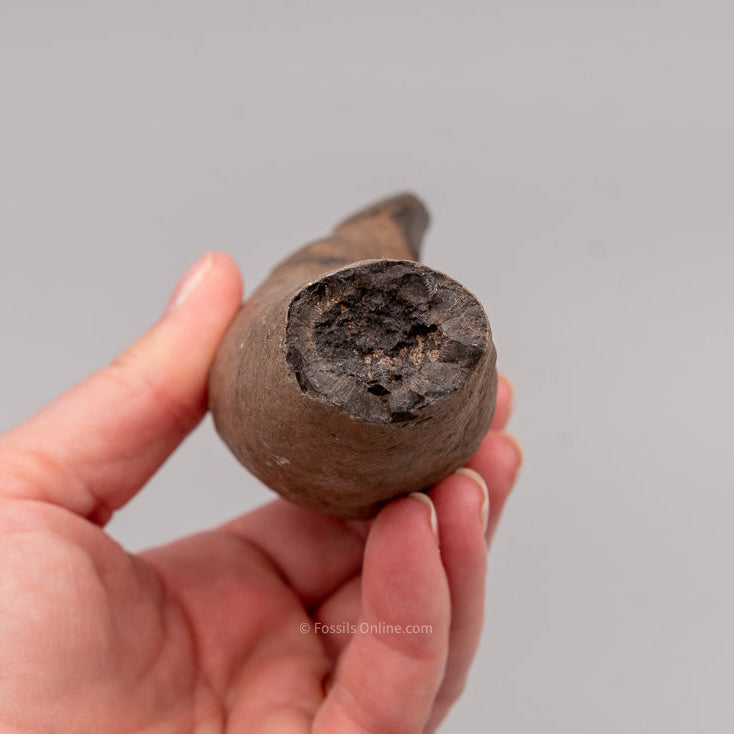
South Carolina River Fossil Whale Tooth 5.71"
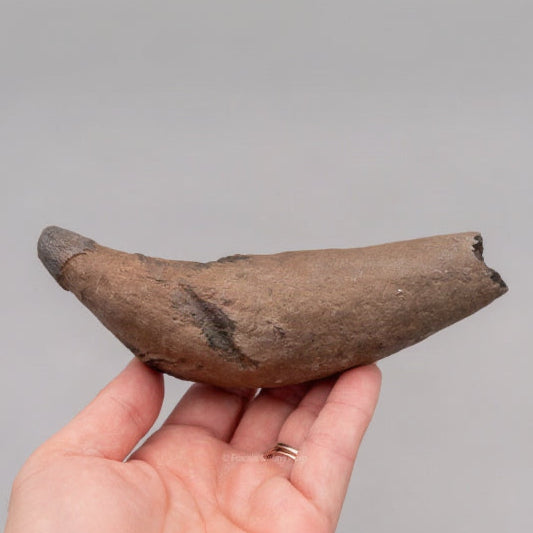
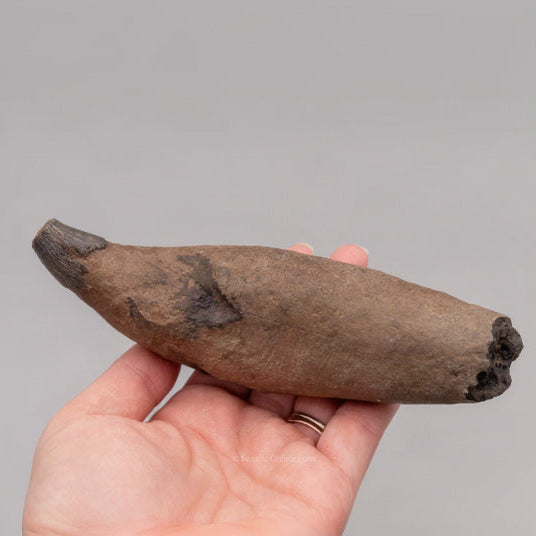
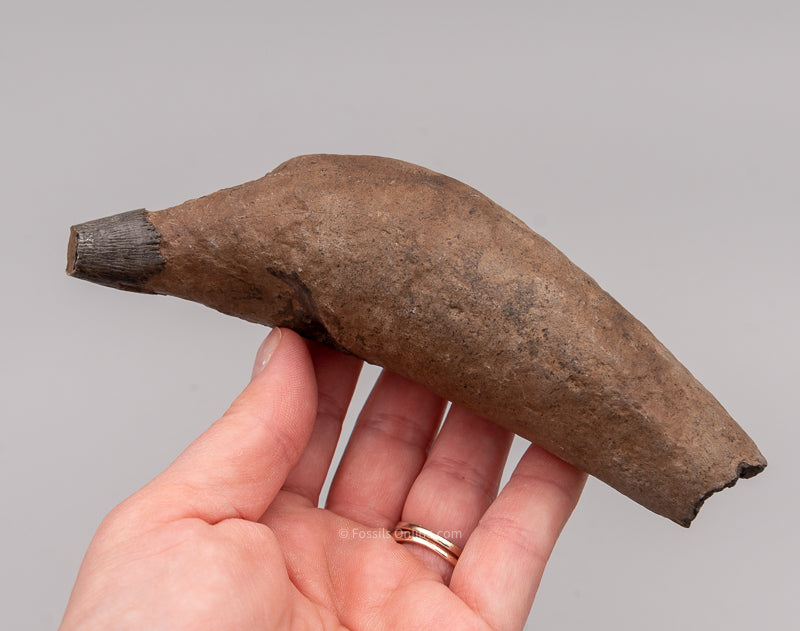
Nice fossil tooth recovered from a South Carolina river. This large 5.71" tooth displays a distinct bite mark, likely from a scavenging or predatory encounter during the animal's life, adding real prehistoric character to the piece. Naturally preserved with authentic fossilized texture and coloration. A great addition to any fossil collection or a unique gift for collectors and shark/whale tooth enthusiasts alike.
100% genuine fossil, one of a kind.
Display stand is available for purchase.
During the Miocene, roughly 5 to 23 million years ago, the shallow seas covering what is now South Carolina supported one of the richest concentrations of marine mammal fossils in North America. Early baleen whales and toothed whales, along with dolphins and porpoises, filled these coastal waters alongside large predatory sharks such as Otodus megalodon and other Carcharocles species. Fossil evidence from South Carolina's river systems, including the Cooper, Ashley, and Wando, has even helped scientists identify early echolocating whales, some of the oldest known examples of this trait in the fossil record. Shark bite marks preserved on whale fossils from this period offer direct evidence of the predator-prey and scavenging interactions that shaped these ancient marine ecosystems. Specimens like this one provide a rare, physical connection to that prehistoric world.
Nice fossil tooth recovered from a South Carolina river. This large 5.71" tooth displays a distinct bite mark, likely from a scavenging or predatory encounter during the animal's life, adding real prehistoric character to the piece. Naturally preserved with authentic fossilized texture and coloration. A great addition to any fossil collection or a unique gift for collectors and shark/whale tooth enthusiasts alike.
100% genuine fossil, one of a kind.
Display stand is available for purchase.
During the Miocene, roughly 5 to 23 million years ago, the shallow seas covering what is now South Carolina supported one of the richest concentrations of marine mammal fossils in North America. Early baleen whales and toothed whales, along with dolphins and porpoises, filled these coastal waters alongside large predatory sharks such as Otodus megalodon and other Carcharocles species. Fossil evidence from South Carolina's river systems, including the Cooper, Ashley, and Wando, has even helped scientists identify early echolocating whales, some of the oldest known examples of this trait in the fossil record. Shark bite marks preserved on whale fossils from this period offer direct evidence of the predator-prey and scavenging interactions that shaped these ancient marine ecosystems. Specimens like this one provide a rare, physical connection to that prehistoric world.
AGE
Miocene
LOCATION
South Carolina
Size
5.71"
Choose options