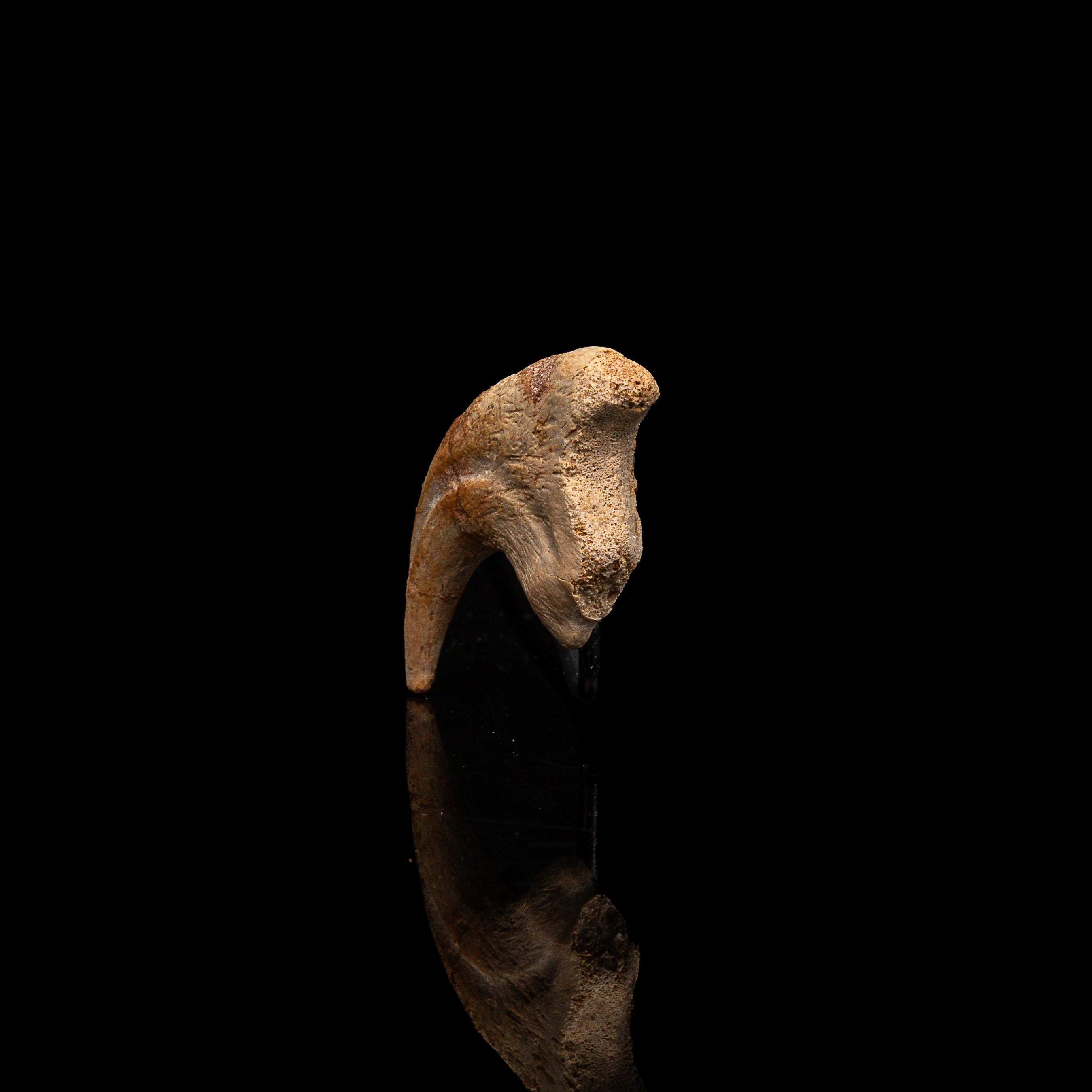
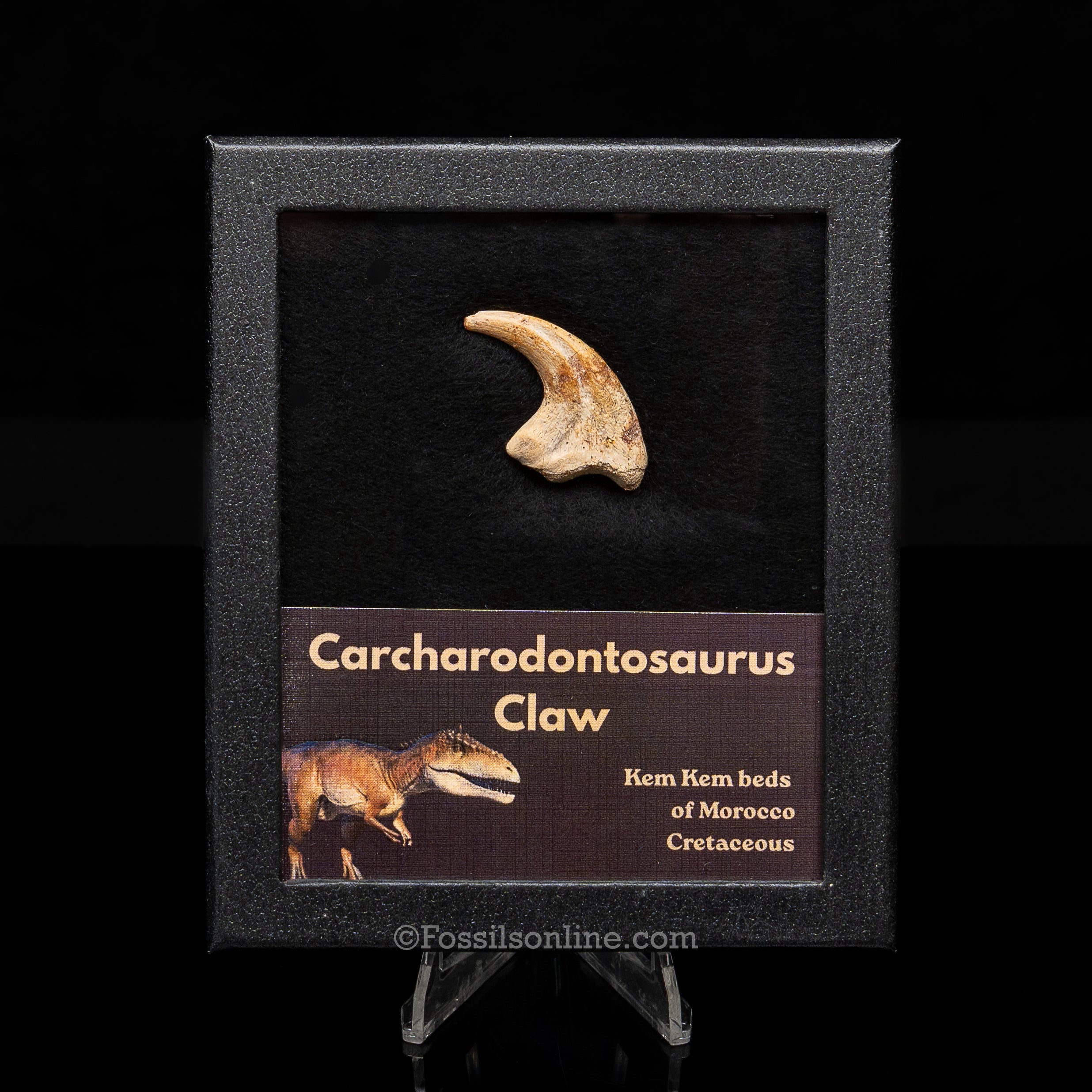
RARE Carcharodontosaurus Claw
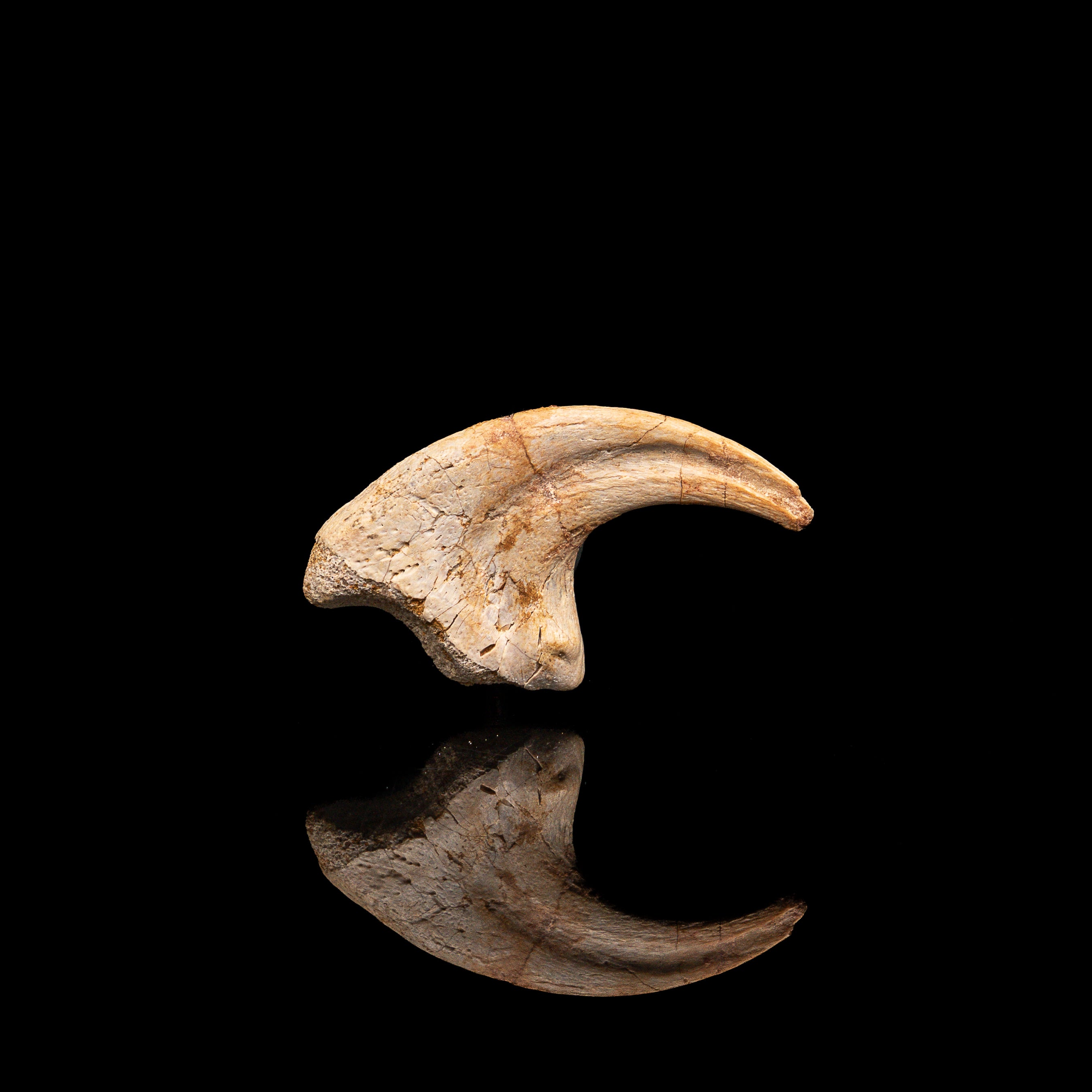
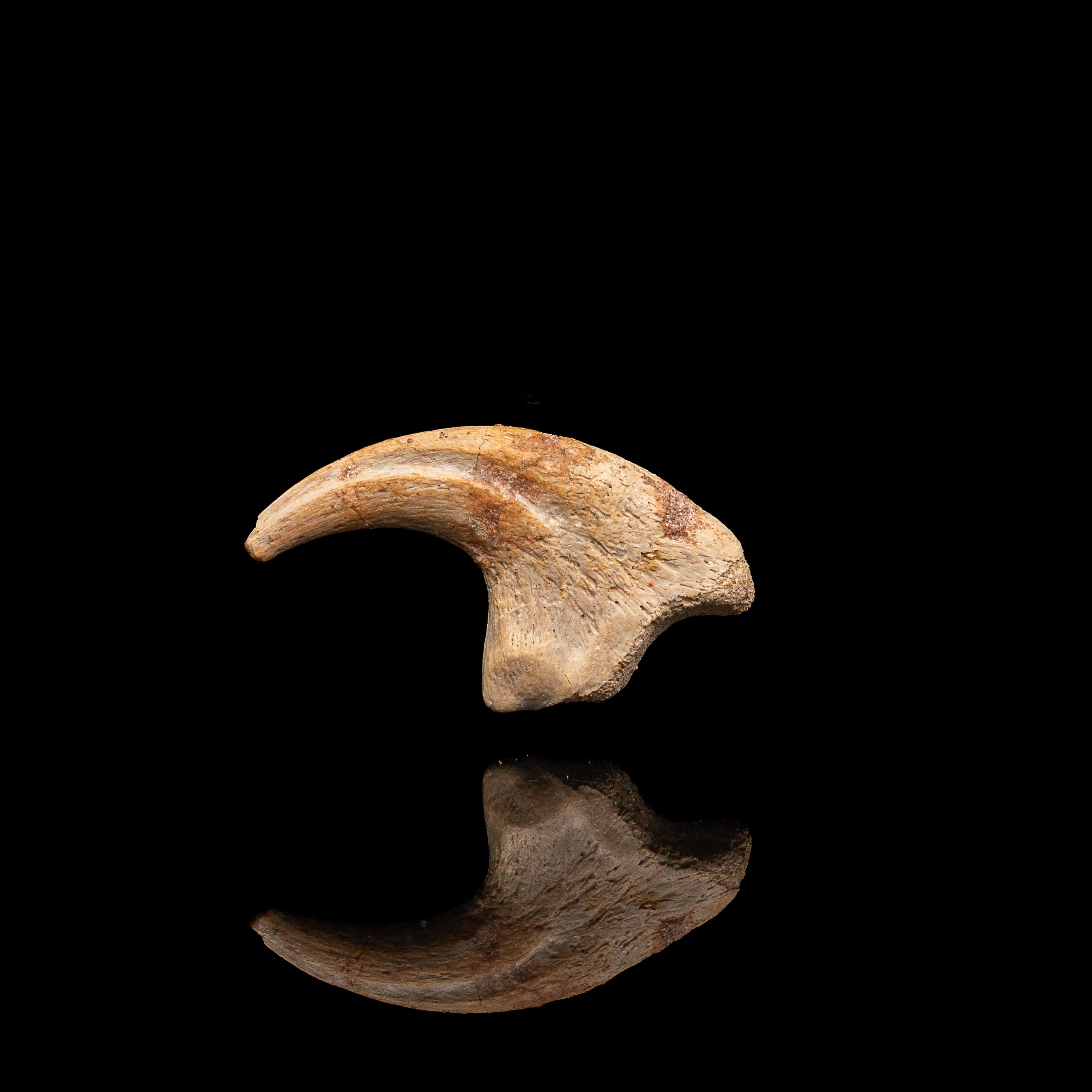
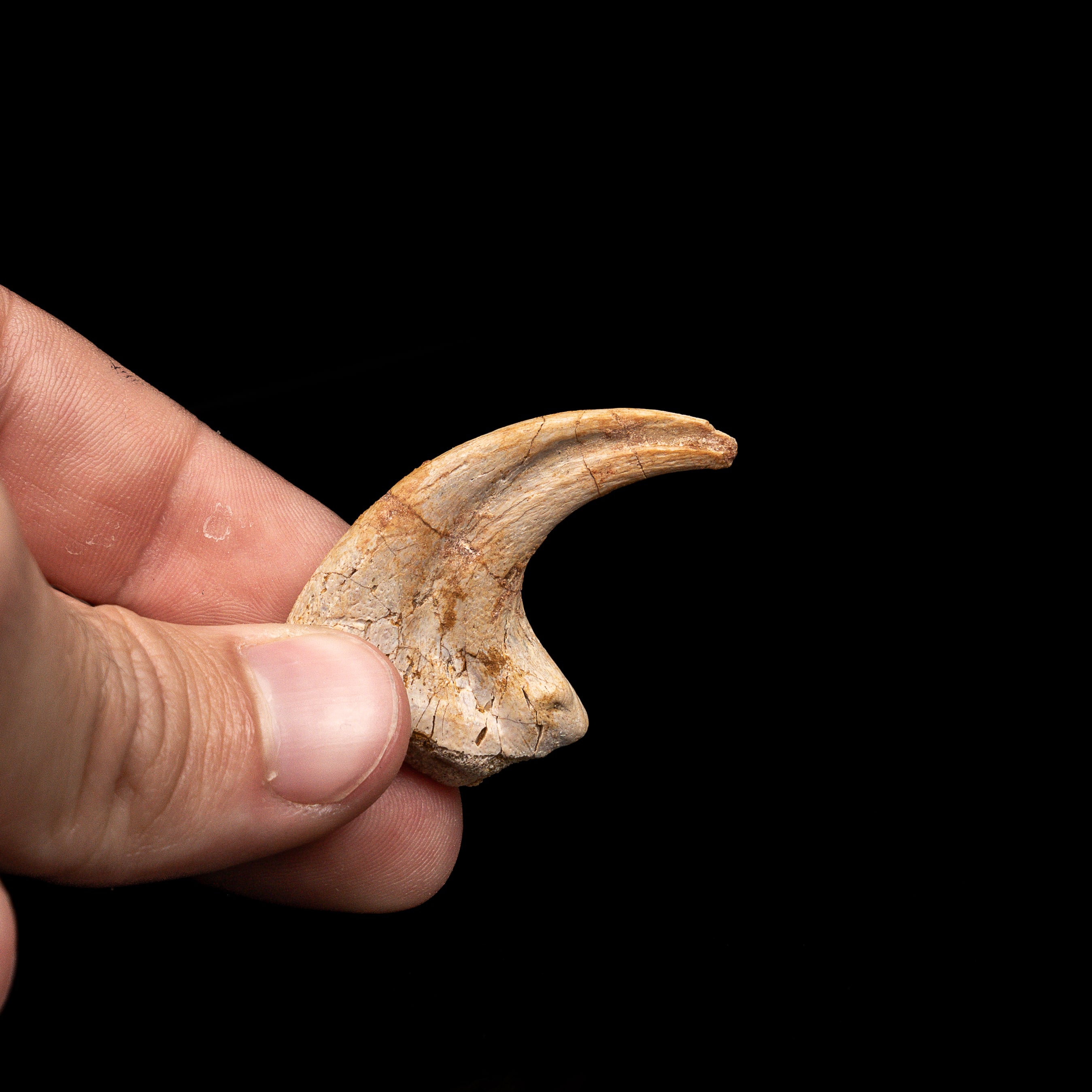
Beautiful Carcharodontosaurid (likely charcarodontosaurus) claw from the Kem Kem beds of Morocco. It has no restoration, but it has been repaired. claws from any dinosaur, especially theropods are very rare as they tend to not survive long enough to be fossilized, and dinosaurs only have one set of claws through out its life, unlike teeth that constantly replace.
Presented in a 6" × 5" display case.
Carcharodontosaurus saharicus
Discovery & Naming
The story of Carcharodontosaurus is one of the most dramatic rediscoveries in the history of paleontology. The animal was first described in 1931 by French paleontologists Charles Depéret and Justin Savornin, based on fragmentary teeth and bones recovered from Algeria. They initially assigned the material to the genus Megalosaurus, a then-common "wastebasket taxon" into which many large theropod fragments were dumped. It wasn't until 1931 that Ernst Stromer von Reichenbach formally erected the genus Carcharodontosaurus and the species saharicus, naming it for the striking similarity between its serrated teeth and those of the modern great white shark — Carcharodon carcharias.
Stromer, a brilliant Bavarian paleontologist, had recovered extraordinary dinosaur material from Egypt's Bahariya Oasis in the early 20th century, including holotype specimens that were transported to the Paleontological Collection of the Bavarian State Collection in Munich. Tragically, on the night of April 24–25, 1944, Allied bombing raids destroyed the museum, incinerating Stromer's irreplaceable specimens — including the original Carcharodontosaurus material. For decades, the animal existed in the scientific literature based largely on descriptions, drawings, and a handful of teeth.
The modern renaissance of Carcharodontosaurus came in 1995 and 1996, when paleontologist Paul Sereno led expeditions into the Kem Kem region of Morocco and Algeria. His team uncovered a massive partial skull and associated bones — new, complete enough to formally redescribe the genus and species. Sereno's Carcharodontosaurus saharicuswas suddenly thrust into the spotlight as one of the largest predatory dinosaurs ever found, sparking fierce debate with Tyrannosaurus rex fans worldwide. A second species, Carcharodontosaurus iguidensis, was described in 2007 by Brusatte and Sereno from Niger, based on a partial skull differing in subtle cranial features.
Classification & Evolutionary Context
Carcharodontosaurus belongs to the family Carcharodontosauridae, within the larger clade Allosauroidea — making it more closely related to Allosaurus of the Jurassic than to the tyrannosaurs that would dominate later. Carcharodontosaurids were the apex predators of the middle Cretaceous across Gondwana, the ancient southern supercontinent. Close relatives include Giganotosaurus carolinii from South America, Mapusaurus roseae also from Argentina, and Tyrannotitan chubutensis from Patagonia.
The geographic distribution of these closely related giants across what are now Africa and South America is powerful evidence for the lingering land connections — or at least island-hopping dispersal routes — that persisted between those continents well into the Cretaceous. The carcharodontosaurids essentially filled the ecological niche of apex predator across the Southern Hemisphere during a period when tyrannosaurs were still relatively small and ecologically minor players in the Northern Hemisphere.
Size & Physical Description
Carcharodontosaurus was an animal of breathtaking scale. Conservative estimates based on skull and femur proportions place adults at 12 to 13 meters (40–44 feet) in length, with body masses estimated between 6 and 15 metric tonsdepending on the study and the soft tissue reconstruction methodology used. Some speculative estimates push larger, though the fossil record is incomplete enough that extreme size claims should be treated cautiously.
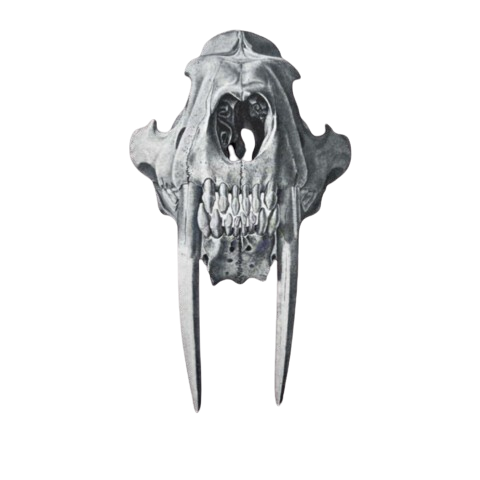
The skull was enormous — estimated at roughly 1.6 meters (5.2 feet) in length — long, narrow, and fenestrated with large openings that reduced weight while maintaining structural integrity. Unlike the deep, wide, bone-crushing skull of T. rex, the skull of Carcharodontosaurus was more elongated and laterally compressed, suggesting a different predatory strategy based more on slicing flesh than pulverizing bone.
The teeth are the animal's most iconic feature and the source of its name. Each tooth was large, blade-like, and heavily serrated on both the front (mesial) and rear (distal) edges, bearing fine denticles that functioned like the cutting edge of a steak knife. These teeth were not designed to crush or grip and hold — they were designed to slice through flesh with tremendous efficiency. Shed teeth are by far the most common Carcharodontosaurus fossils found in the Kem Kem Beds, and their size, shape, and serration pattern make them recognizable at a glance to experienced collectors.
The forelimbs were proportionally shorter than the hindlimbs but still functional and well-muscled, tipped with three-fingered hands bearing large, recurved ungual claws. These claws — the same elements that make such prized collector specimens — were robust, laterally compressed, and sharply pointed. Whether used primarily in prey capture, grappling, or both remains a matter of paleontological discussion. The hindlimbs were powerfully built, suggesting a large but capable locomotor system. Carcharodontosaurus was almost certainly not a sprinter, but its sheer mass and stride length would have made it a formidable pursuit predator over short distances.
The overall body plan followed the classic large theropod blueprint: bipedal, with a massive head counterbalanced by a long, heavy tail, relatively short forelimbs, and robust hindlimbs. A covering of simple filamentous integument has been proposed for some large theropods, though no direct skin impressions are known for Carcharodontosaurus specifically.
Geological Setting — The Kem Kem Beds
Carcharodontosaurus lived approximately 95 to 100 million years ago during the Cenomanian stage of the Late Cretaceous. The world it inhabited was dramatically different from today. The Sahara, now one of the most inhospitable deserts on Earth, was then a lush, sprawling river delta system — a vast network of waterways, floodplains, and coastal swamps teeming with life.
The Kem Kem Beds (also called the Kem Kem Group, comprising the Ifezouane and Aoufous Formations) of southeastern Morocco and adjacent Algeria preserve one of the most remarkable and unusual dinosaur ecosystems ever discovered. What makes this fauna so extraordinary is the apparent density of large apex predators. In addition to Carcharodontosaurus, the same beds have yielded Spinosaurus aegyptiacus — possibly the largest predatory dinosaur of all time — as well as the abelisaurid Rugops primus and the large dromaeosaurid Deltadromeus agilis. The sheer number of large carnivores in this one formation has puzzled paleontologists for decades.
The current leading hypothesis is that this ecosystem was extraordinarily productive, supported by a rich aquatic food web. Spinosaurus, with its fish-adapted skull and dense bones suited to buoyancy control, was primarily a piscivore — essentially a giant, specialized fish-eater occupying a different ecological niche from Carcharodontosaurus, which was more likely targeting the large sauropod dinosaurs also known from the formation, including Rebbachisaurus garasbaeand the massive titanosaur Paralititan stromeri. Rather than competing directly, these giants may have partitioned the ecosystem by prey type, habitat preference, and hunting strategy.
The Kem Kem also preserves enormous coelacanths, giant sawfish, crocodylomorphs of staggering size such as Elosuchus, and a diversity of pterosaurs — painting a picture of a world absolutely dominated by large reptiles at every trophic level.
Predatory Behavior & Ecology
Reconstructing the behavior of an extinct animal is inherently speculative, but the anatomy of Carcharodontosaurusoffers strong clues. The long, blade-toothed skull points toward a slashing, flesh-gouging attack style — biting deeply into prey and pulling back to cause massive hemorrhagic wounds, rather than the grip-and-shake or bone-crushing strategies seen in other large predators. Some researchers have compared this strategy to that of a giant, terrestrial shark — a rapid, devastating bite followed by withdrawal as the prey weakened from blood loss.
The forelimb claws, large and recurved, may have served a grappling function — hooking into prey to stabilize it during a bite or to pull it off balance. The hands of large theropods like Carcharodontosaurus were not trivial accessories; muscular reconstructions suggest a strong grip with the capacity to inflict serious wounds independently.
Primary prey almost certainly included the large sauropod dinosaurs sharing the Kem Kem ecosystem. Attacking an animal potentially many times your own body mass requires either ambush tactics, targeting juveniles or weakened individuals, or cooperative behavior. There is no direct evidence for pack hunting in Carcharodontosaurus, though the related South American carcharodontosaurid Mapusaurus has been found in multi-individual bone assemblages, raising the possibility that social or at minimum tolerant group behavior existed in the family.
Carcharodontosaurus vs. T. rex
Few comparisons in paleontology generate more passionate debate. Both animals occupied the role of apex macropredator on their respective continents, but they were separated by roughly 25 to 30 million years — Carcharodontosaurus flourishing in the Cenomanian (~95–100 Ma) while T. rex appeared only in the Maastrichtian (~68–66 Ma). They never coexisted.
In terms of raw length, Carcharodontosaurus and Giganotosaurus may edge out T. rex, with some estimates giving them a slight advantage in total body length. However, T. rex had a dramatically more robust build — a deeper, wider skull, far more powerful bite force (estimated at 35,000–57,000 newtons versus a much lower estimate for carcharodontosaurids), smaller but thicker teeth better suited to bone-crushing, and proportionally more powerful hindlimbs. T. rex was also likely smarter by dinosaur standards, with a proportionally larger brain and more developed olfactory systems.
In terms of skull length, carcharodontosaurids hold the edge — Giganotosaurus had an estimated skull of approximately 1.8 meters, slightly longer than the largest known T. rex skulls. But skull length and overall combat effectiveness are not the same thing. Most paleontologists view the two animals as apex predators of comparable but differently optimized capability, shaped by the specific ecosystems and prey animals they evolved alongside.
Fossil Record & Collectibility
Carcharodontosaurus fossils are found almost exclusively in the Kem Kem Beds of Morocco and Algeria, with the referred second species C. iguidensis known from Niger. The most commonly recovered elements by far are isolated teeth, which are shed naturally throughout an animal's life and are thus far more abundant than skeletal material. Kem Kem teeth range from small juveniles to massive adult specimens exceeding 10 centimeters in crown length, and their shark-like profile makes them instantly recognizable.
Skeletal material is considerably rarer. Isolated vertebrae, limb bone fragments, and ungual claws (claw bones) do appear in the commercial fossil market from Morocco, though large, complete elements are uncommon. Claw unguals, when they do surface, are among the most visually dramatic and scientifically interesting specimens available to private collectors — combining rarity, size, and immediate visual impact in a single piece.
The Kem Kem Beds have been legally and commercially mined for fossils for decades, and Moroccan fossil exports operate under a well-established legal framework. Carcharodontosaurus material from Morocco is legal to buy, sell, and own in the United States and the vast majority of other countries, making these specimens fully accessible to the private collector market.
Cultural Legacy
Carcharodontosaurus entered mainstream consciousness in the mid-1990s alongside Giganotosaurus, both animals briefly threatening T. rex's long-held title of "largest predatory dinosaur." Though the debate has never been fully settled — and likely never will be given the fragmentary nature of the fossil record — the publicity generated enormous public interest in the animal and helped fuel the commercial fossil market for North African theropod material.
Today, Carcharodontosaurus appears in documentaries, books, video games, and museum exhibits worldwide. Its combination of extreme size, striking teeth, fascinating ecosystem, and evocative name — "shark-toothed lizard of the Sahara" — ensures it remains one of the most compelling dinosaurs in the popular imagination and one of the crown jewels of any serious theropod fossil collection.
Beautiful Carcharodontosaurid (likely charcarodontosaurus) claw from the Kem Kem beds of Morocco. It has no restoration, but it has been repaired. claws from any dinosaur, especially theropods are very rare as they tend to not survive long enough to be fossilized, and dinosaurs only have one set of claws through out its life, unlike teeth that constantly replace.
Presented in a 6" × 5" display case.
Carcharodontosaurus saharicus
Discovery & Naming
The story of Carcharodontosaurus is one of the most dramatic rediscoveries in the history of paleontology. The animal was first described in 1931 by French paleontologists Charles Depéret and Justin Savornin, based on fragmentary teeth and bones recovered from Algeria. They initially assigned the material to the genus Megalosaurus, a then-common "wastebasket taxon" into which many large theropod fragments were dumped. It wasn't until 1931 that Ernst Stromer von Reichenbach formally erected the genus Carcharodontosaurus and the species saharicus, naming it for the striking similarity between its serrated teeth and those of the modern great white shark — Carcharodon carcharias.
Stromer, a brilliant Bavarian paleontologist, had recovered extraordinary dinosaur material from Egypt's Bahariya Oasis in the early 20th century, including holotype specimens that were transported to the Paleontological Collection of the Bavarian State Collection in Munich. Tragically, on the night of April 24–25, 1944, Allied bombing raids destroyed the museum, incinerating Stromer's irreplaceable specimens — including the original Carcharodontosaurus material. For decades, the animal existed in the scientific literature based largely on descriptions, drawings, and a handful of teeth.
The modern renaissance of Carcharodontosaurus came in 1995 and 1996, when paleontologist Paul Sereno led expeditions into the Kem Kem region of Morocco and Algeria. His team uncovered a massive partial skull and associated bones — new, complete enough to formally redescribe the genus and species. Sereno's Carcharodontosaurus saharicuswas suddenly thrust into the spotlight as one of the largest predatory dinosaurs ever found, sparking fierce debate with Tyrannosaurus rex fans worldwide. A second species, Carcharodontosaurus iguidensis, was described in 2007 by Brusatte and Sereno from Niger, based on a partial skull differing in subtle cranial features.
Classification & Evolutionary Context
Carcharodontosaurus belongs to the family Carcharodontosauridae, within the larger clade Allosauroidea — making it more closely related to Allosaurus of the Jurassic than to the tyrannosaurs that would dominate later. Carcharodontosaurids were the apex predators of the middle Cretaceous across Gondwana, the ancient southern supercontinent. Close relatives include Giganotosaurus carolinii from South America, Mapusaurus roseae also from Argentina, and Tyrannotitan chubutensis from Patagonia.
The geographic distribution of these closely related giants across what are now Africa and South America is powerful evidence for the lingering land connections — or at least island-hopping dispersal routes — that persisted between those continents well into the Cretaceous. The carcharodontosaurids essentially filled the ecological niche of apex predator across the Southern Hemisphere during a period when tyrannosaurs were still relatively small and ecologically minor players in the Northern Hemisphere.
Size & Physical Description
Carcharodontosaurus was an animal of breathtaking scale. Conservative estimates based on skull and femur proportions place adults at 12 to 13 meters (40–44 feet) in length, with body masses estimated between 6 and 15 metric tonsdepending on the study and the soft tissue reconstruction methodology used. Some speculative estimates push larger, though the fossil record is incomplete enough that extreme size claims should be treated cautiously.
The skull was enormous — estimated at roughly 1.6 meters (5.2 feet) in length — long, narrow, and fenestrated with large openings that reduced weight while maintaining structural integrity. Unlike the deep, wide, bone-crushing skull of T. rex, the skull of Carcharodontosaurus was more elongated and laterally compressed, suggesting a different predatory strategy based more on slicing flesh than pulverizing bone.
The teeth are the animal's most iconic feature and the source of its name. Each tooth was large, blade-like, and heavily serrated on both the front (mesial) and rear (distal) edges, bearing fine denticles that functioned like the cutting edge of a steak knife. These teeth were not designed to crush or grip and hold — they were designed to slice through flesh with tremendous efficiency. Shed teeth are by far the most common Carcharodontosaurus fossils found in the Kem Kem Beds, and their size, shape, and serration pattern make them recognizable at a glance to experienced collectors.
The forelimbs were proportionally shorter than the hindlimbs but still functional and well-muscled, tipped with three-fingered hands bearing large, recurved ungual claws. These claws — the same elements that make such prized collector specimens — were robust, laterally compressed, and sharply pointed. Whether used primarily in prey capture, grappling, or both remains a matter of paleontological discussion. The hindlimbs were powerfully built, suggesting a large but capable locomotor system. Carcharodontosaurus was almost certainly not a sprinter, but its sheer mass and stride length would have made it a formidable pursuit predator over short distances.
The overall body plan followed the classic large theropod blueprint: bipedal, with a massive head counterbalanced by a long, heavy tail, relatively short forelimbs, and robust hindlimbs. A covering of simple filamentous integument has been proposed for some large theropods, though no direct skin impressions are known for Carcharodontosaurus specifically.
Geological Setting — The Kem Kem Beds
Carcharodontosaurus lived approximately 95 to 100 million years ago during the Cenomanian stage of the Late Cretaceous. The world it inhabited was dramatically different from today. The Sahara, now one of the most inhospitable deserts on Earth, was then a lush, sprawling river delta system — a vast network of waterways, floodplains, and coastal swamps teeming with life.
The Kem Kem Beds (also called the Kem Kem Group, comprising the Ifezouane and Aoufous Formations) of southeastern Morocco and adjacent Algeria preserve one of the most remarkable and unusual dinosaur ecosystems ever discovered. What makes this fauna so extraordinary is the apparent density of large apex predators. In addition to Carcharodontosaurus, the same beds have yielded Spinosaurus aegyptiacus — possibly the largest predatory dinosaur of all time — as well as the abelisaurid Rugops primus and the large dromaeosaurid Deltadromeus agilis. The sheer number of large carnivores in this one formation has puzzled paleontologists for decades.
The current leading hypothesis is that this ecosystem was extraordinarily productive, supported by a rich aquatic food web. Spinosaurus, with its fish-adapted skull and dense bones suited to buoyancy control, was primarily a piscivore — essentially a giant, specialized fish-eater occupying a different ecological niche from Carcharodontosaurus, which was more likely targeting the large sauropod dinosaurs also known from the formation, including Rebbachisaurus garasbaeand the massive titanosaur Paralititan stromeri. Rather than competing directly, these giants may have partitioned the ecosystem by prey type, habitat preference, and hunting strategy.
The Kem Kem also preserves enormous coelacanths, giant sawfish, crocodylomorphs of staggering size such as Elosuchus, and a diversity of pterosaurs — painting a picture of a world absolutely dominated by large reptiles at every trophic level.
Predatory Behavior & Ecology
Reconstructing the behavior of an extinct animal is inherently speculative, but the anatomy of Carcharodontosaurusoffers strong clues. The long, blade-toothed skull points toward a slashing, flesh-gouging attack style — biting deeply into prey and pulling back to cause massive hemorrhagic wounds, rather than the grip-and-shake or bone-crushing strategies seen in other large predators. Some researchers have compared this strategy to that of a giant, terrestrial shark — a rapid, devastating bite followed by withdrawal as the prey weakened from blood loss.
The forelimb claws, large and recurved, may have served a grappling function — hooking into prey to stabilize it during a bite or to pull it off balance. The hands of large theropods like Carcharodontosaurus were not trivial accessories; muscular reconstructions suggest a strong grip with the capacity to inflict serious wounds independently.
Primary prey almost certainly included the large sauropod dinosaurs sharing the Kem Kem ecosystem. Attacking an animal potentially many times your own body mass requires either ambush tactics, targeting juveniles or weakened individuals, or cooperative behavior. There is no direct evidence for pack hunting in Carcharodontosaurus, though the related South American carcharodontosaurid Mapusaurus has been found in multi-individual bone assemblages, raising the possibility that social or at minimum tolerant group behavior existed in the family.
Carcharodontosaurus vs. T. rex
Few comparisons in paleontology generate more passionate debate. Both animals occupied the role of apex macropredator on their respective continents, but they were separated by roughly 25 to 30 million years — Carcharodontosaurus flourishing in the Cenomanian (~95–100 Ma) while T. rex appeared only in the Maastrichtian (~68–66 Ma). They never coexisted.
In terms of raw length, Carcharodontosaurus and Giganotosaurus may edge out T. rex, with some estimates giving them a slight advantage in total body length. However, T. rex had a dramatically more robust build — a deeper, wider skull, far more powerful bite force (estimated at 35,000–57,000 newtons versus a much lower estimate for carcharodontosaurids), smaller but thicker teeth better suited to bone-crushing, and proportionally more powerful hindlimbs. T. rex was also likely smarter by dinosaur standards, with a proportionally larger brain and more developed olfactory systems.
In terms of skull length, carcharodontosaurids hold the edge — Giganotosaurus had an estimated skull of approximately 1.8 meters, slightly longer than the largest known T. rex skulls. But skull length and overall combat effectiveness are not the same thing. Most paleontologists view the two animals as apex predators of comparable but differently optimized capability, shaped by the specific ecosystems and prey animals they evolved alongside.
Fossil Record & Collectibility
Carcharodontosaurus fossils are found almost exclusively in the Kem Kem Beds of Morocco and Algeria, with the referred second species C. iguidensis known from Niger. The most commonly recovered elements by far are isolated teeth, which are shed naturally throughout an animal's life and are thus far more abundant than skeletal material. Kem Kem teeth range from small juveniles to massive adult specimens exceeding 10 centimeters in crown length, and their shark-like profile makes them instantly recognizable.
Skeletal material is considerably rarer. Isolated vertebrae, limb bone fragments, and ungual claws (claw bones) do appear in the commercial fossil market from Morocco, though large, complete elements are uncommon. Claw unguals, when they do surface, are among the most visually dramatic and scientifically interesting specimens available to private collectors — combining rarity, size, and immediate visual impact in a single piece.
The Kem Kem Beds have been legally and commercially mined for fossils for decades, and Moroccan fossil exports operate under a well-established legal framework. Carcharodontosaurus material from Morocco is legal to buy, sell, and own in the United States and the vast majority of other countries, making these specimens fully accessible to the private collector market.
Cultural Legacy
Carcharodontosaurus entered mainstream consciousness in the mid-1990s alongside Giganotosaurus, both animals briefly threatening T. rex's long-held title of "largest predatory dinosaur." Though the debate has never been fully settled — and likely never will be given the fragmentary nature of the fossil record — the publicity generated enormous public interest in the animal and helped fuel the commercial fossil market for North African theropod material.
Today, Carcharodontosaurus appears in documentaries, books, video games, and museum exhibits worldwide. Its combination of extreme size, striking teeth, fascinating ecosystem, and evocative name — "shark-toothed lizard of the Sahara" — ensures it remains one of the most compelling dinosaurs in the popular imagination and one of the crown jewels of any serious theropod fossil collection.
Species
Carcharodontosaurus sp.
AGE
Cretaceous
LOCATION
Kem Kem Basin, Morocco
FORMATION
Kem Kem Beds
Size
1.86"
Choose options