





Megalodon Med Case
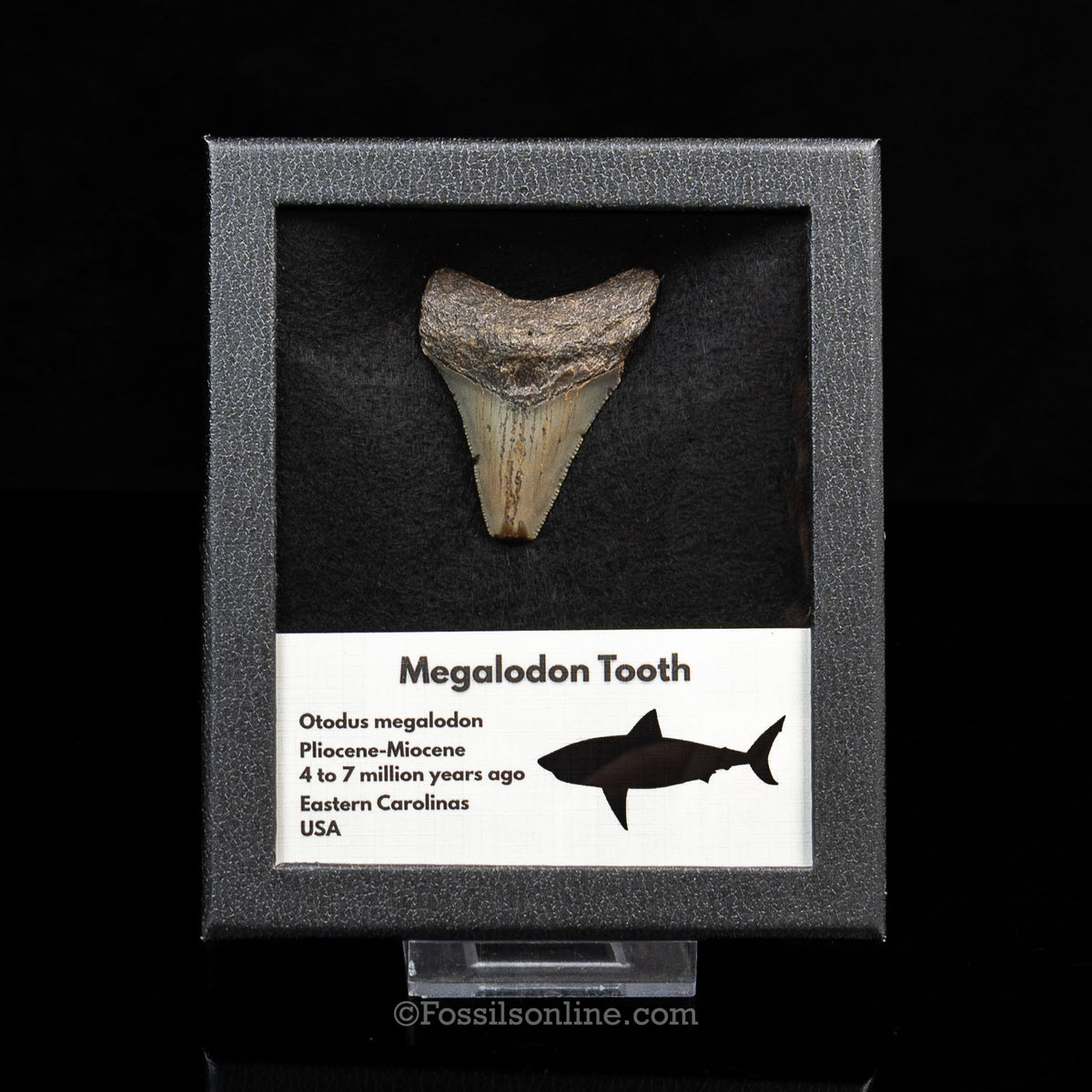
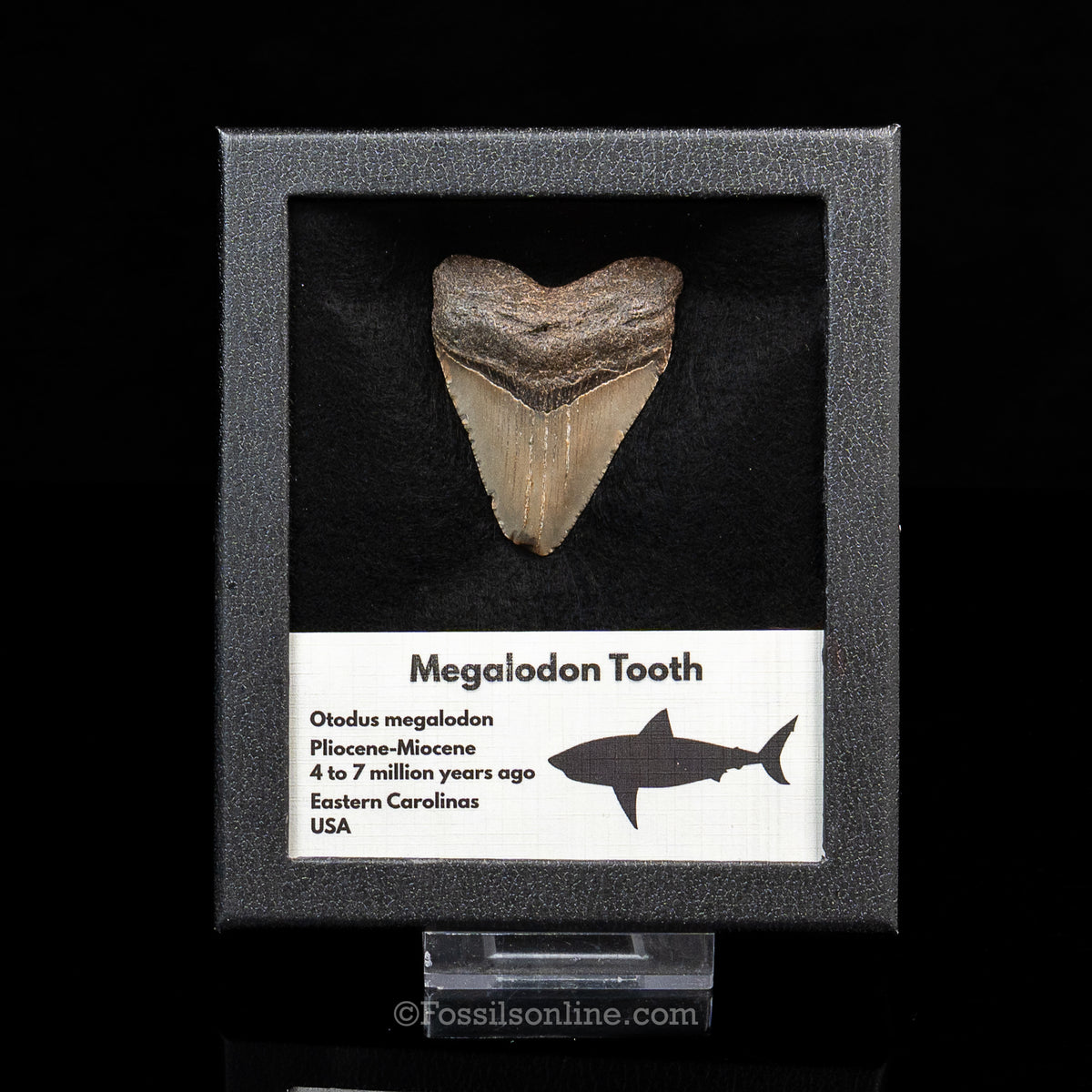
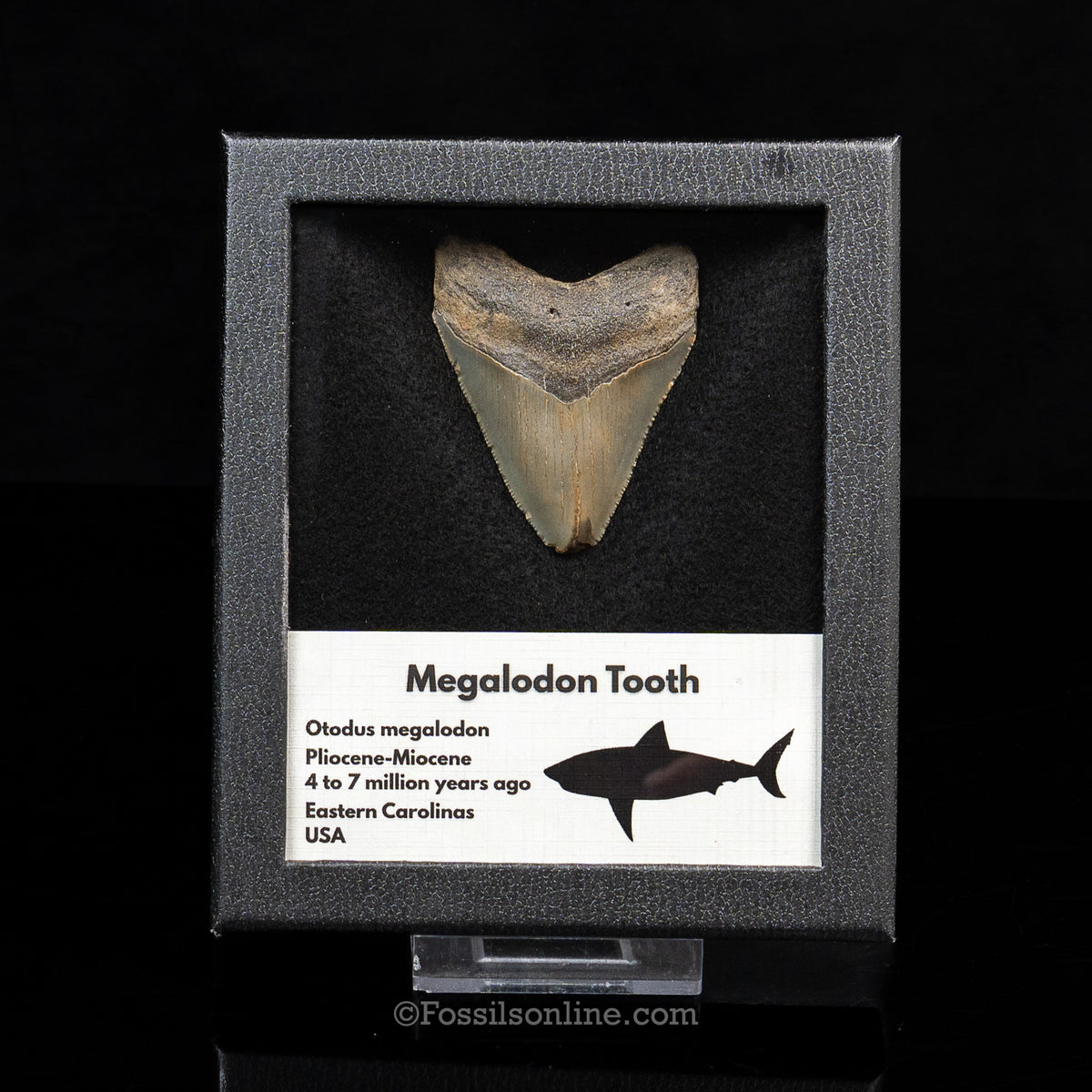
Megalodon teeth from Eastern USA (North and South Carolinas) , ranging from 2 to 2¾ inches, displayed n a 5x6 case. They're not perfect specimens, but that's part of the charm, these are real fossils, and they offer an affordable way to own a tooth from one of the most formidable predators that ever lived.
Megalodon Teeth from Offshore North Carolina and the South Carolina Coast
The Atlantic shelf off the Carolinas contains well known Megalodon fossil deposits. During the Miocene and Pliocene, warm, shallow seas covered this stretch of coast and supported whales, dolphins, seals and other marine mammals that Megalodon hunted. As those animals died and sediments built up on the seafloor, teeth were buried, mineralized and preserved in layers that now lie beneath the ocean bottom from Cape Hatteras to the Lowcountry.
Off North Carolina, divers working the ledges and hard bottom offshore of Wilmington, Cape Fear and Cape Lookout recover teeth from fossil layers exposed by ocean currents. Along the South Carolina coast, waves, storms and beach renourishment projects move fossils from nearshore deposits onto beaches such as Edisto, Folly and Hunting Island, while offshore divers work the same layers further out.
Why collectors look for Carolina Megalodon teeth
Size: Offshore North Carolina is known for producing large Megalodon teeth. Deep water helps protect teeth from the tumbling and wear common closer to shore.
Recovery: Many offshore teeth are recovered by divers working ocean ledges in currents and limited visibility.
Coastal finds: South Carolina beaches have long been popular with collectors searching the surf line for shark teeth.
State fossil: North Carolina named the Megalodon tooth its official state fossil in 2013.
Size, preservation, and appearance
Offshore North Carolina teeth are often large and heavily built, and many keep serrations, root lobes and enamel in good condition. South Carolina coastal teeth usually range from small to medium, and beach finds often show natural wear from waves and sand. Offshore South Carolina teeth can be larger and better preserved than beach material.
Offshore North Carolina teeth commonly have bluish gray to black crowns with darker roots. South Carolina coastal teeth range from black and charcoal gray to brown, depending on the sediments they were buried in. Roots are typically dense and mineralized. Each tooth is a natural fossil, so size, color and condition vary from piece to piece. Individual listings show the actual specimen.
Choose options