Mastodon Tusk Tip
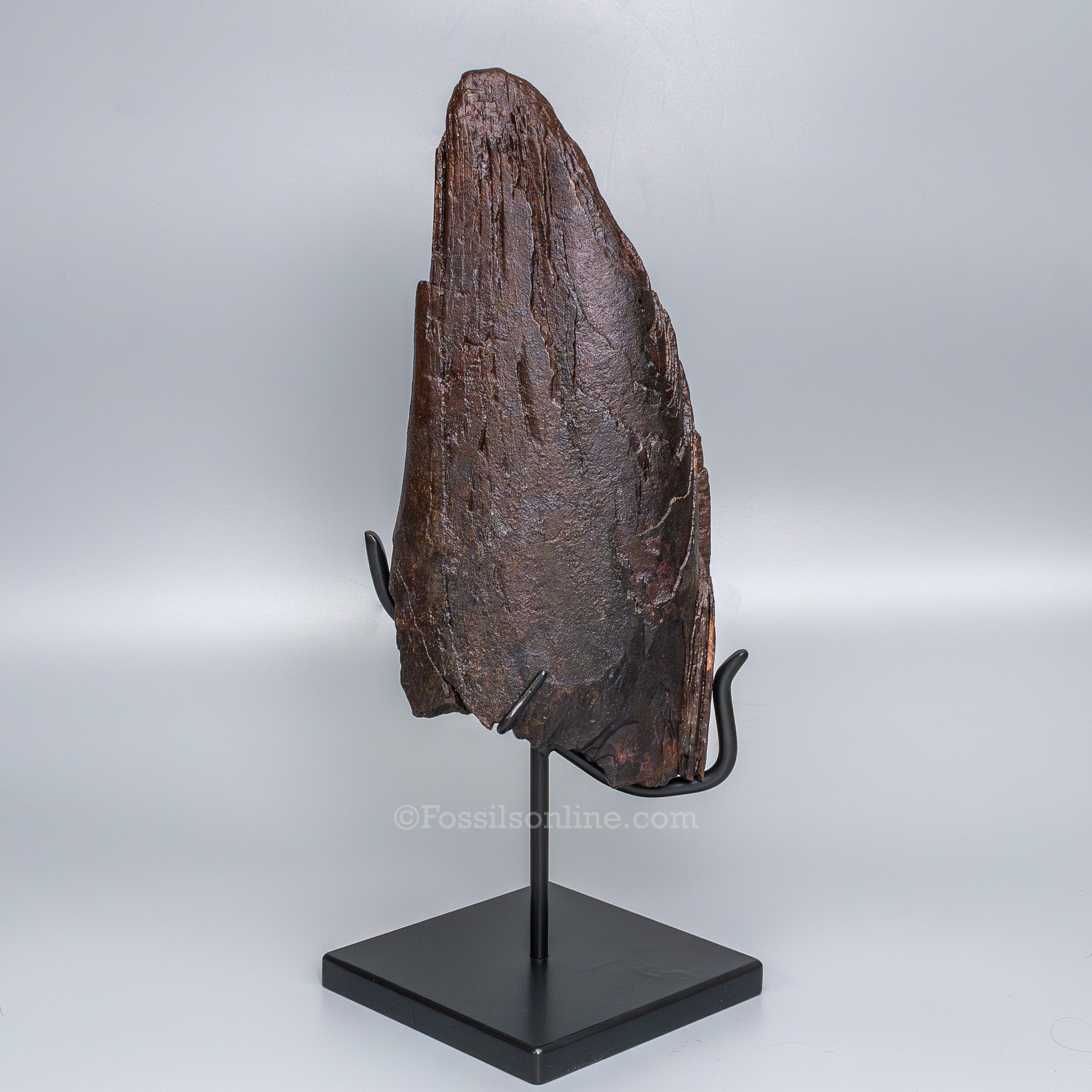
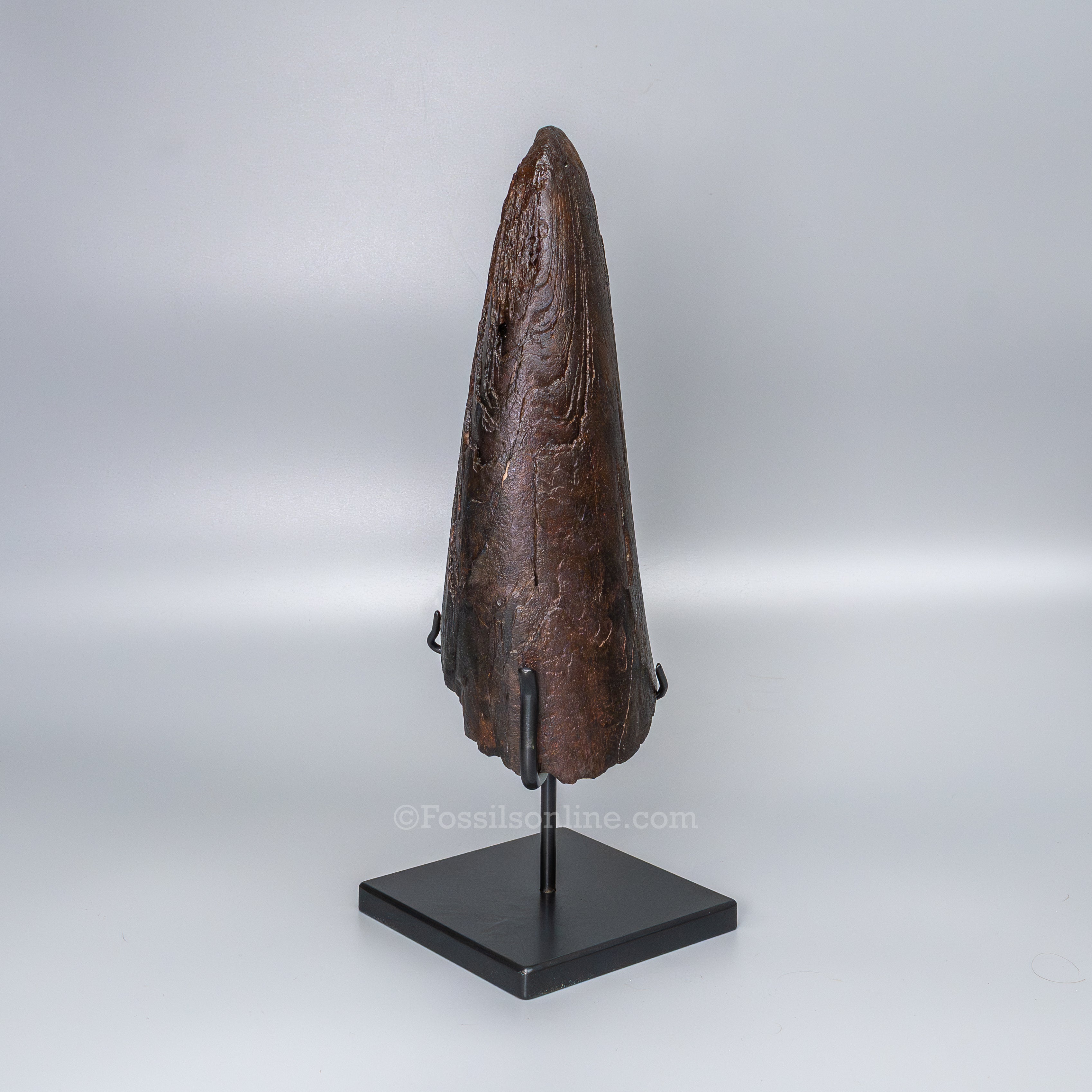
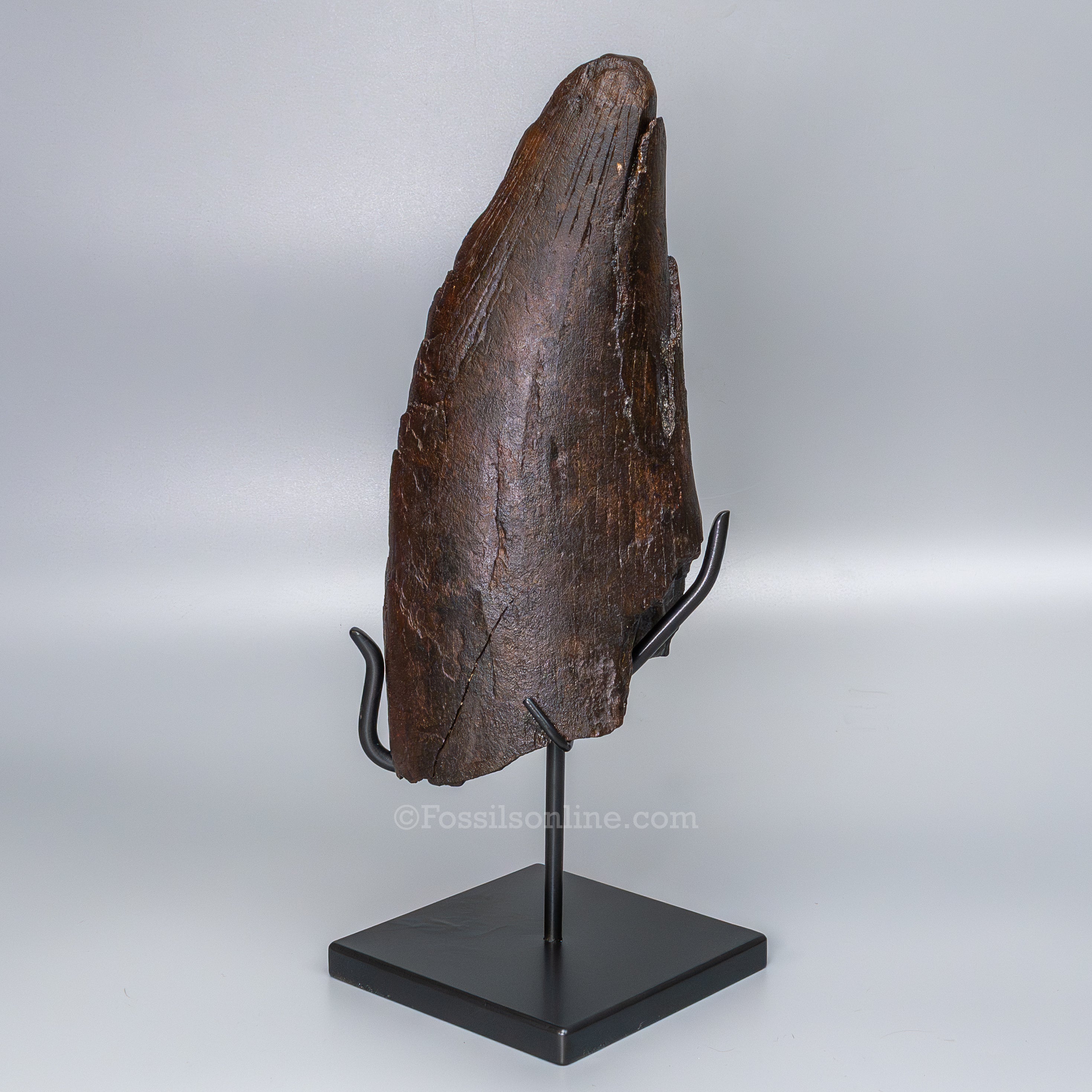
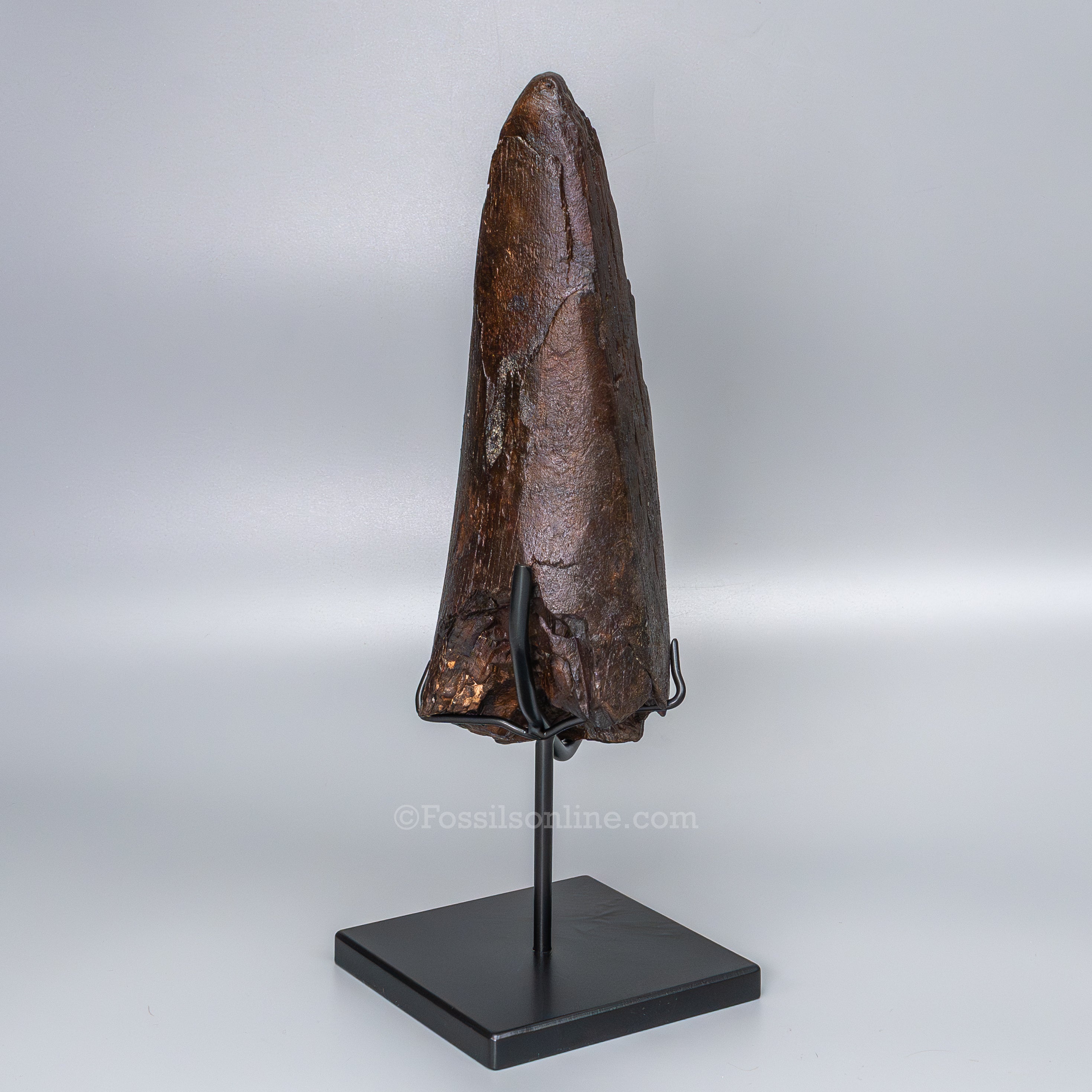
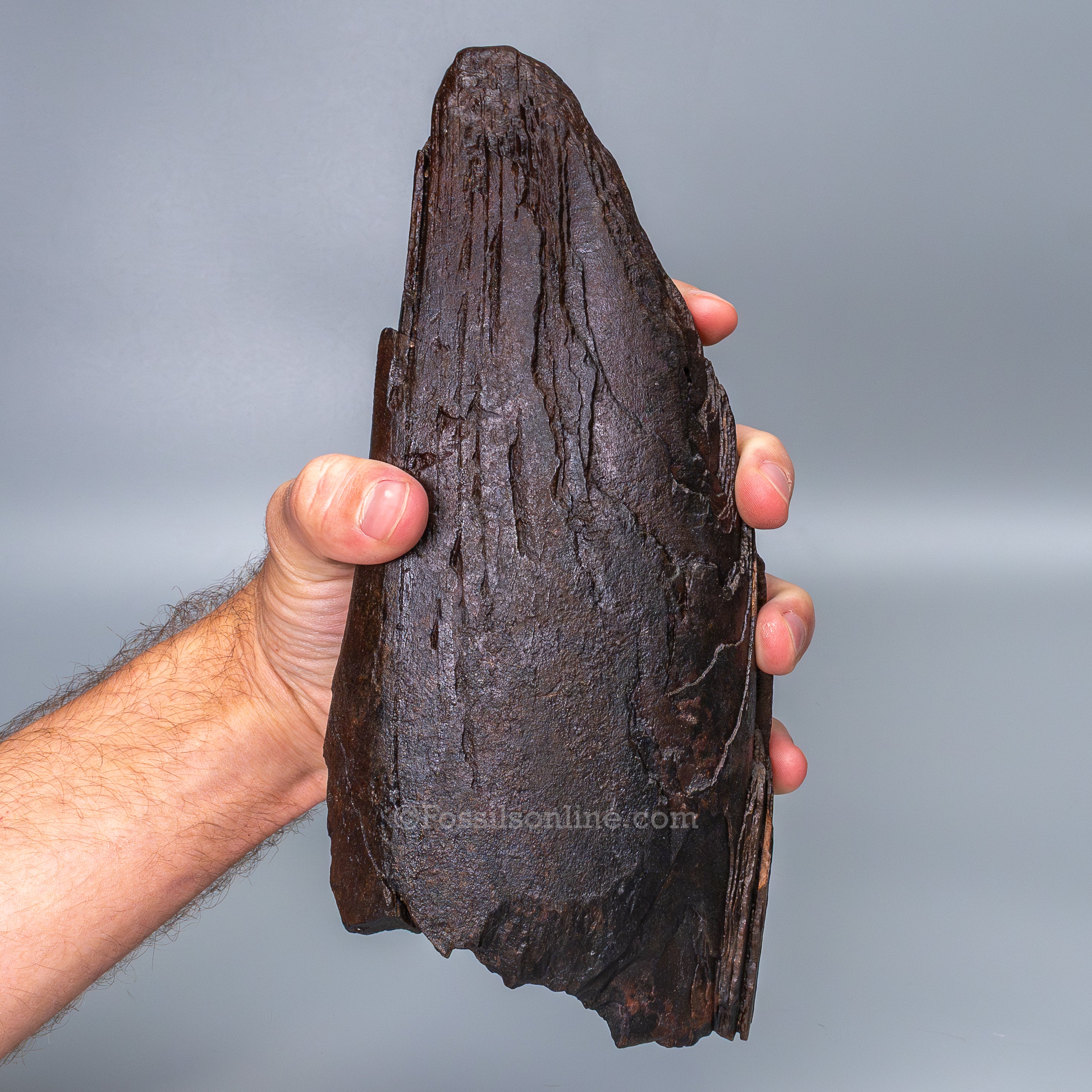
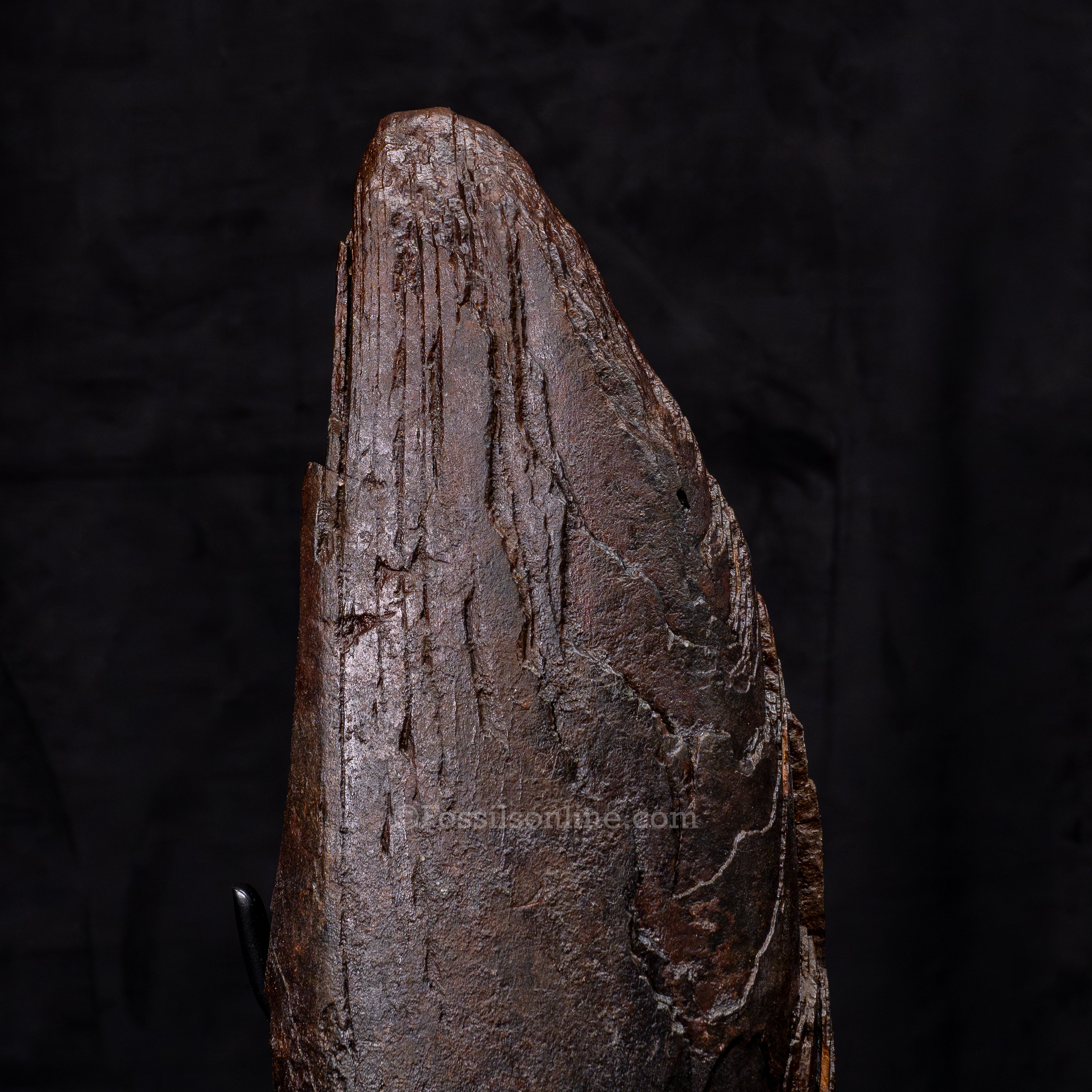
This collector’s piece was discovered in a North Florida river. It has a beautiful dark brown coloration with a stunning texture from layers of fossilized ivory. It’s dense and solid, professionally cleaned and treated. It's a perfect display piece, presented on a custom powder-coated stand. This specimen makes an eye-catching addition to your collection.
American mastodons (Mammut americanum) were massive Ice Age proboscideans that roamed North America for millions of years. Although they are often confused with mammoths, mastodons belonged to a different branch of the elephant family tree and had their own distinctive appearance, lifestyle, and habitat preferences.
When They Lived and When They Went Extinct
Mastodons first appeared in North America roughly 3–4 million years ago during the late Pliocene. They thrived throughout the Pleistocene, sharing their world with mammoths, giant ground sloths, saber-toothed cats, and early humans.
They survived until the very end of the last Ice Age, finally going extinct around 10,000–11,000 years ago. Their disappearance lines up with major climate warming at the close of the Pleistocene and the spread of human hunting across North America, and scientists still debate how much each factor contributed to their extinction.
Tusks and Teeth:
Like modern elephants, American mastodons didn’t just have one set of teeth for life. Their tusks and molars tell a complex story of growth, wear, and replacement that lasted from calfhood into old age.
Mastodons started life with a small set of “milk tusks”—deciduous tusks that grew in when they were young. These baby tusks were relatively short and slender and helped the growing animal learn to use its trunk and mouth effectively. As the mastodon matured, these milk tusks were shed and replaced by a single set of permanent adult tusks, which continued to grow throughout the animal’s life. In older individuals, these adult tusks could become long, heavy, and deeply worn, recording years of use in forests and swamps.
Their chewing teeth followed an even more dramatic pattern. Instead of just one baby set and one adult set like humans, mastodons cycled through multiple sets of molars over their lifetime. New teeth formed at the back of the jaw and slowly moved forward like a conveyor belt as the front teeth wore down and eventually dropped out. Over decades, an individual mastodon could go through several generations of molars, each one taking over the hard work of grinding branches, twigs, and tough plant material.
By the time a mastodon reached old age, only the last set of molars remained. When those final teeth became too worn to chew effectively, the animal’s ability to feed declined—often marking the natural end of its life. For collectors and paleontologists, this replacement pattern is incredibly important. Jaws showing multiple tooth positions, heavily worn molars, or early “milk” teeth can reveal the age and life history of the animal.
Owning a mastodon tooth or jaw fragment isn’t just owning a fossil—it’s holding part of a biological timeline. Each tooth represents a specific chapter in that animal’s life, from the first delicate milk tusks of a young calf to the massive, worn-down molars of a seasoned Ice Age giant.
Where Mastodons Lived
Unlike mammoths—which often favored open, grassy steppe and tundra environments—mastodons preferred wetter, forested landscapes. They were especially common in:
-
Woodlands and swamps filled with conifer trees, shrubs, and undergrowth
-
River valleys, bogs, and lowlands where vegetation was dense and water was plentiful
Their remains have been found across much of North America, from the Great Lakes and the northeastern United States down through the Southeast, and westward into parts of the Midwest and even as far as Alaska in some regions. Many classic mastodon sites come from bogs, peat deposits, and river systems, where bones and tusks were quickly buried in muddy, oxygen-poor conditions that helped preserve them.
How Mastodons Lived and What They Ate
Mastodons were browsers, not grazers. Instead of primarily eating grasses like many mammoths, mastodons specialized in:
-
Twigs and branches
-
Leaves and shrubs
-
Conifer needles and small woody plants
Their teeth tell this story clearly. Mastodon molars have high, conical cusps that look almost like rows of little peaks—perfect for crushing and shredding branches and tougher plant material. Mammoth teeth, by contrast, have flat, ridged surfaces better suited for grinding grass.
Mastodons likely lived in family groups led by older females, similar to modern elephants. Young animals would have been protected within these herds, while large males may have spent more time alone or in loose bachelor groups, especially as they matured. Their lives would have revolved around finding food and water, navigating seasonal changes, and avoiding predators like large Ice Age carnivores and, eventually, human hunters.
How Mastodons Differ from Mammoths
Although both mastodons and mammoths had trunks and tusks, they would have looked quite different standing side by side:
-
Body shape: Mastodons tended to be more compact and barrel-bodied, with a straighter back. Mammoths often had more of a sloping back with a pronounced shoulder hump.
-
Tusks: Mastodon tusks could be long and curved, but they generally lacked the extreme spiral curve seen in some mammoths.
-
Skull and head: Mastodons had lower, longer skulls, while mammoths had higher, more dome-shaped skulls.
-
Teeth: Mastodon teeth have pointed, bumpy cusps for browsing on branches; mammoth teeth have flat, plate-like ridges for grinding grass.
-
Habitat: Mastodons favored forests and wetlands; mammoths more commonly occupied open grasslands and tundra.
Because of these differences, mastodon fossils provide a window into a very different part of Ice Age North America: the cool, wet forests and swamps that existed alongside the open “mammoth steppe.”
Why Mastodon Fossils Are Less Common Than Mammoth Fossils
On the commercial and collector market, mastodon material is generally less common than mammoth, and often more sought after. There are several reasons for this:
-
Collecting conditions: Many mammoth remains are more commonly found. Mastodon remains are frequently found in swamps, creeks, rivers, and construction sites—places that are more challenging to access and excavate.
-
Regulations and land use: Some classic mastodon-bearing sites are in protected wetlands, private land, or areas with development restrictions, which limits collecting compared to some mammoth localities.
All of this makes well-preserved mastodon material, especially tusks and large teeth, less commonly seen and more “special” to collectors than mammoth pieces.
Why People Love Collecting Mastodon Fossils
Mastodon fossils have a unique appeal to collectors, museums, and anyone fascinated by Ice Age life:
-
Distinct look: Mastodon ivory and teeth often show beautiful banding, rich browns, blacks, and creams, and a layered texture that stands out from mammoth ivory. Cut or polished pieces can reveal striking growth lines and color contrasts.
-
Connection to American prehistory: American mastodons are deeply tied to the story of North America’s Ice Age, early human hunters, and the great extinction at the end of the Pleistocene. Owning a piece of mastodon feels like holding a direct link to that lost world.
-
Relative scarcity: Because mastodon material is less common on the market than mammoth, it carries an added sense of rarity and prestige for collectors.
-
Display presence: Dense, solid mastodon tooth and tusk sections have real weight and presence. On a custom stand, they make an immediate statement piece in an office, study, or natural history collection.
-
Educational value: Mastodon pieces are perfect for teaching the difference between mastodons and mammoths, explaining Ice Age ecology, and sparking curiosity about paleontology and deep time.
Additional Interesting Mastodon Facts
-
Coexistence with humans: Mastodons were still roaming North America when the first human groups arrived. Some archaeological sites show evidence that people hunted or scavenged mastodons, leaving cut marks on bones or tools associated with their remains.
-
Wide range of sizes: While not quite as tall as the largest mammoths, adult mastodons could still stand around 8–10 feet tall at the shoulder and weigh several tons—impressive animals by any standard.
-
Iconic discoveries: Famous mastodon finds in bogs, gravel pits, and construction sites helped early scientists realize that Earth’s history included entire worlds of animals that no longer exist. Mastodons played an important role in the birth of paleontology as a science.
Mastodons and Their Proboscidean Relatives
American mastodons were part of a much larger and older family of trunk-bearing mammals known as proboscideans—a group that includes mammoths, modern elephants, and several extinct lineages that most people have never heard of. Together, these animals trace a story that stretches back over 50 million years.
The best-known proboscideans besides mastodons are the mammoths. Mammoths belonged to the genus Mammuthus and were generally more adapted to open, grassy environments. The famous woolly mammoth wore a thick coat of hair, had long, dramatically curved tusks, and high-crowned, ridged molars built for grinding abrasive grasses and sedges. In contrast, mastodons had lower, more heavily cusped teeth built for chewing branches and shrubs, reflecting their forest-and-swamp lifestyle.
Modern African and Asian elephants are the last surviving proboscideans. Although they’re distant cousins of mastodons and mammoths, they still share many of the same basic features: a muscular trunk for feeding and communication, large tusks used for digging, stripping bark, and fighting, and complex social behavior centered around long-lived, experienced matriarchs. Studying elephants today helps paleontologists make educated guesses about how mastodons and mammoths might have behaved in the past.
Beyond mammoths and elephants, the proboscidean family tree also includes more ancient and now-extinct groups such as gomphotheres and stegodonts. Some of these species had four tusks—two in the upper jaw and two in the lower—and very different tooth shapes, showing how experimental proboscidean evolution was over tens of millions of years. Many of these lineages lived in Africa, Europe, Asia, and the Americas long before mastodons and mammoths evolved.
For collectors and educators, mastodon fossils offer a tangible link into this broader proboscidean story. A single mastodon tooth or tusk section can be used to compare with mammoth teeth, modern elephant ivory, and photos of ancient gomphotheres, helping to illustrate how one remarkable group of mammals diversified, spread across the globe, and then almost entirely disappeared. Owning a mastodon piece isn’t just about one animal—it’s about holding a chapter from the entire saga of trunk-bearing giants that once shaped ecosystems on multiple continents.
Species
Mammut americanum
AGE
Pleistocene
LOCATION
Florida River
Size
13"x6" on stand
Choose options