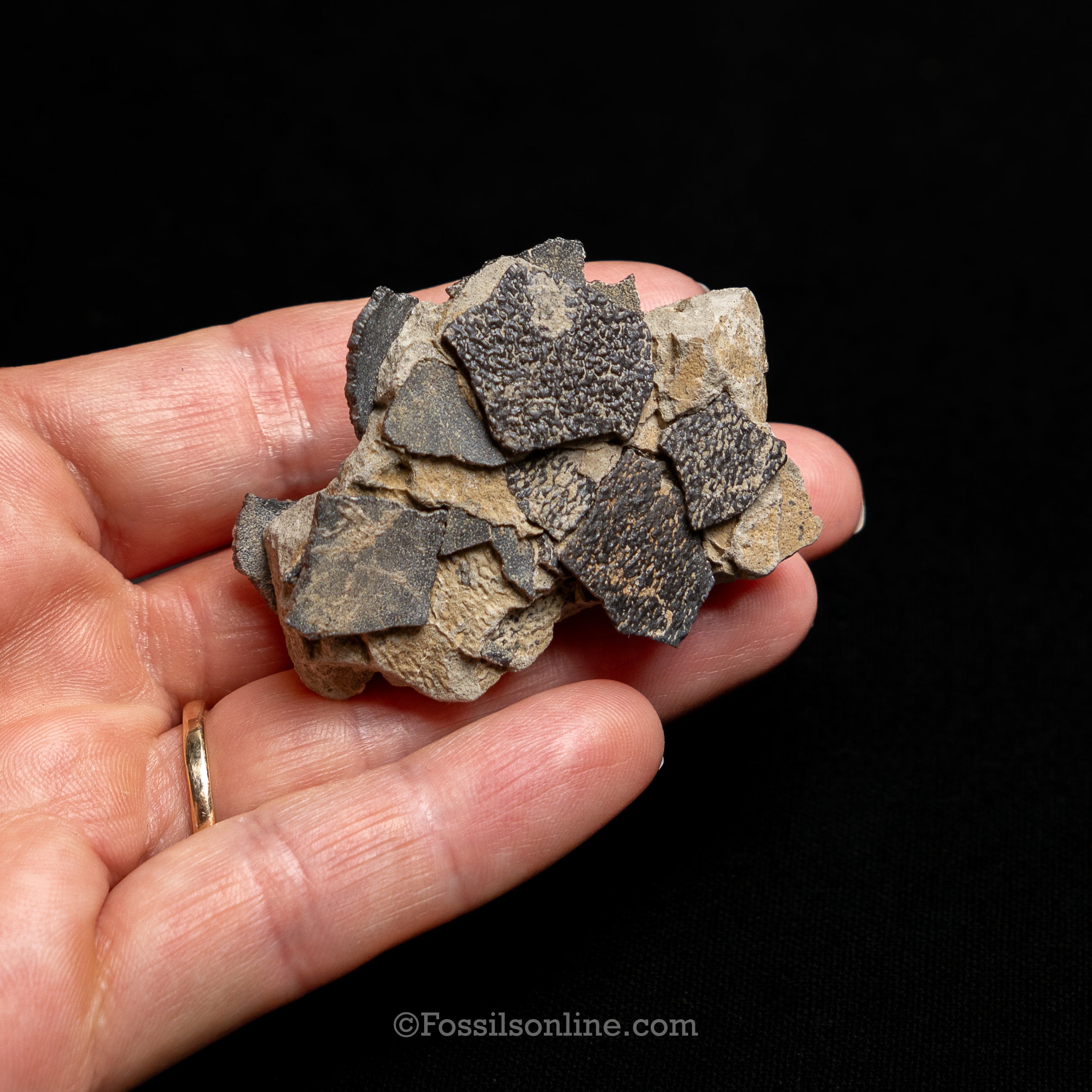
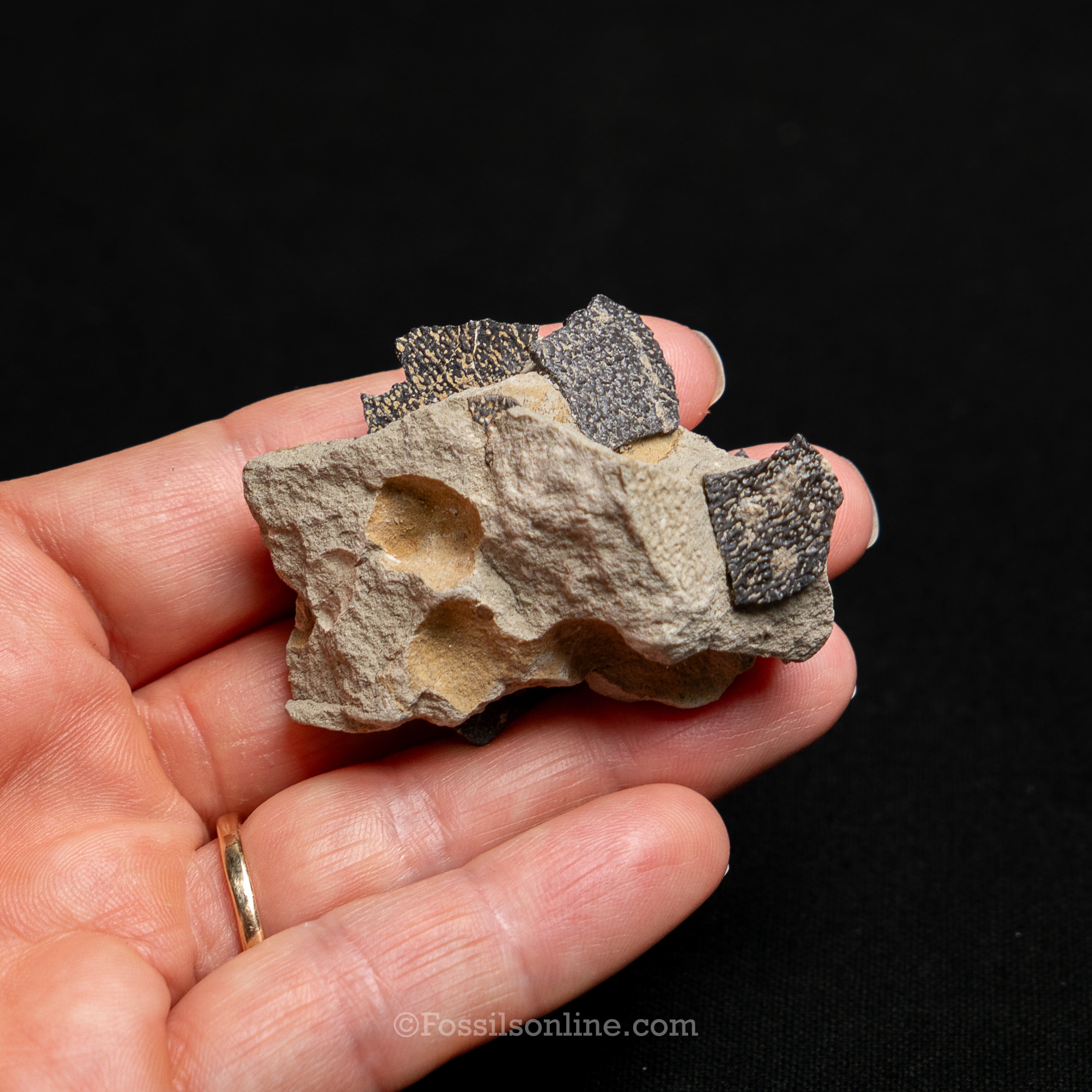
Maiasaura Dinosaur Eggshell cluster in matrix
This Maiasaura eggshell cluster was recovered from the Cretaceous-age Two Medicine Formation of Montana, the same region that produced one of paleontology's most celebrated discoveries. Maiasaura was a large herbivorous hadrosaur, commonly known as a duck-billed dinosaur, that roamed what is now Montana approximately 76.7 million years ago. Adults reached around 30 feet in length and weighed close to three tons, moving both on all fours and upright on their hind legs, using their distinctive duck-billed snout to crop vegetation. The name Maiasaura means "good mother lizard," drawn from the Greek word for mother, a name that proved fitting in every sense.
In the mid-1970s, near Choteau, Montana, Marion Brandvold Trexler uncovered fossilized Maiasaura eggs at what would become known as Egg Mountain, a site that later drew the attention of paleontologist Jack Horner. The nests found there contained multiple eggs, some preserving fossilized embryos alongside the remains of young dinosaurs at various stages of development. The nesting grounds revealed that Maiasaura returned to the same sites repeatedly, living and raising their young in large, organized communal groups, behavior far more commonly associated with birds and mammals than with dinosaurs.
That discovery fundamentally changed how science views dinosaur biology, offering some of the first clear evidence that certain dinosaurs provided active parental care for their offspring. Fragments like this one carry that scientific legacy with them, connecting a piece of the ancient Two Medicine floodplain directly to one of the most transformative moments in paleontological history.
AGE
Cretaceous
FORMATION
Two Medicine
Size
2"W
Choose options