Genuine Sericho Meteorite in Glass Dome
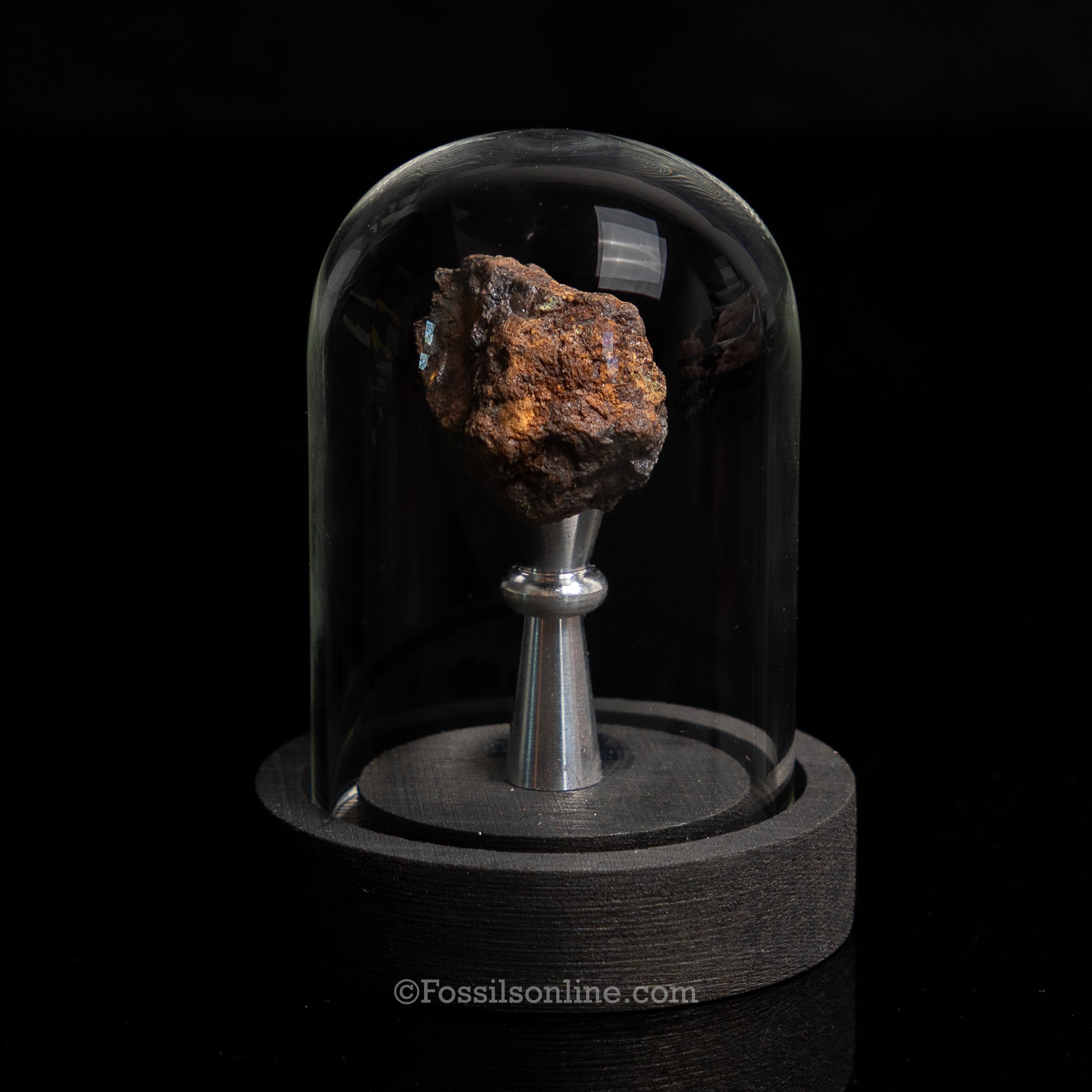
This Sericho pallasite specimen is presented under a glass dome, offering a dust-free, museum-quality presentation that protects the specimen while putting its natural beauty fully on display.
When you own a piece of Sericho, you own a fragment of a planet that no longer exists.
Own a window into the heart of a lost world.
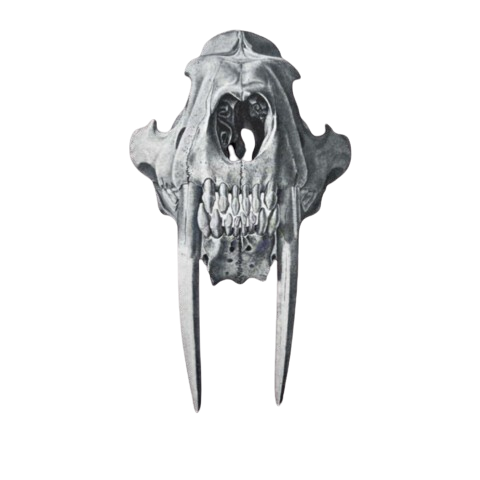
Billions of years before Earth had oceans, continents, or life, a small planet formed in the asteroid belt — large enough to develop a molten iron core, a rocky mantle, and a crust. It lived, and then it died, shattered by a catastrophic collision. What you are looking at is a piece of that lost world's interior, preserved in perfect crystalline form, a pallasite meteorite from Sericho, Kenya.
The Discovery: A Field, a Spade, and a Cosmic Secret
In 2016, villagers in Isiolo County in eastern Kenya were digging in their fields when their tools struck something unusual — large, dense, metallic masses buried in the earth. What they had found was no ordinary rock. Word spread, and the meteorite community quickly recognized what local residents had known for generations: these strange iron objects had been there as long as anyone could remember, used as landmarks, played on by children, part of the landscape. Scientific investigation confirmed they were pallasites, and the strewn field was mapped at over 45 kilometers in length, with individual pieces ranging from under a kilogram to masses as large as 500 kilograms. The total recovered weight now exceeds 2.8 metric tons.
What Exactly Is a Pallasite?
Pallasites are among the rarest and most beautiful meteorites in existence, making up less than 1% of all known meteorites. They form at the boundary between the metallic core and the rocky mantle of a differentiated asteroid — a body large enough that its interior once melted and separated into distinct layers, just like Earth. When that asteroid was destroyed, core material and mantle material fused together under extreme pressure, creating the extraordinary structure you see in a pallasite: olivine crystals locked inside a metallic iron-nickel framework.
Sericho's olivine crystals are particularly prized. They range from translucent gem green to warm amber-orange, and in polished cross-section they glow when held to the light like stained glass. The surrounding metal matrix displays fully developed Widmanstätten patterns — a latticework of interlocking iron-nickel crystals that can only form through cooling so slow it defies imagination: roughly one degree Celsius per million years. No forge, no laboratory, no process on Earth can replicate it. It is the unmistakable fingerprint of deep space and deep time.
How Old Is It?
This meteorite is approximately 4.56 billion years old — as old as the Sun, as old as Earth itself. Scientists determine this through radiometric dating, a process that works like a precise atomic clock. Certain unstable elements within the meteorite, such as uranium, decay into stable elements like lead at a fixed, measurable rate. By calculating the ratio of parent to daughter elements, researchers can determine with remarkable accuracy when the iron and olivine in this specimen first crystallized inside that long-destroyed asteroid. It has spent most of its existence as a cold fragment drifting through the solar system, and it ended its journey in a quiet field in Kenya.
Size
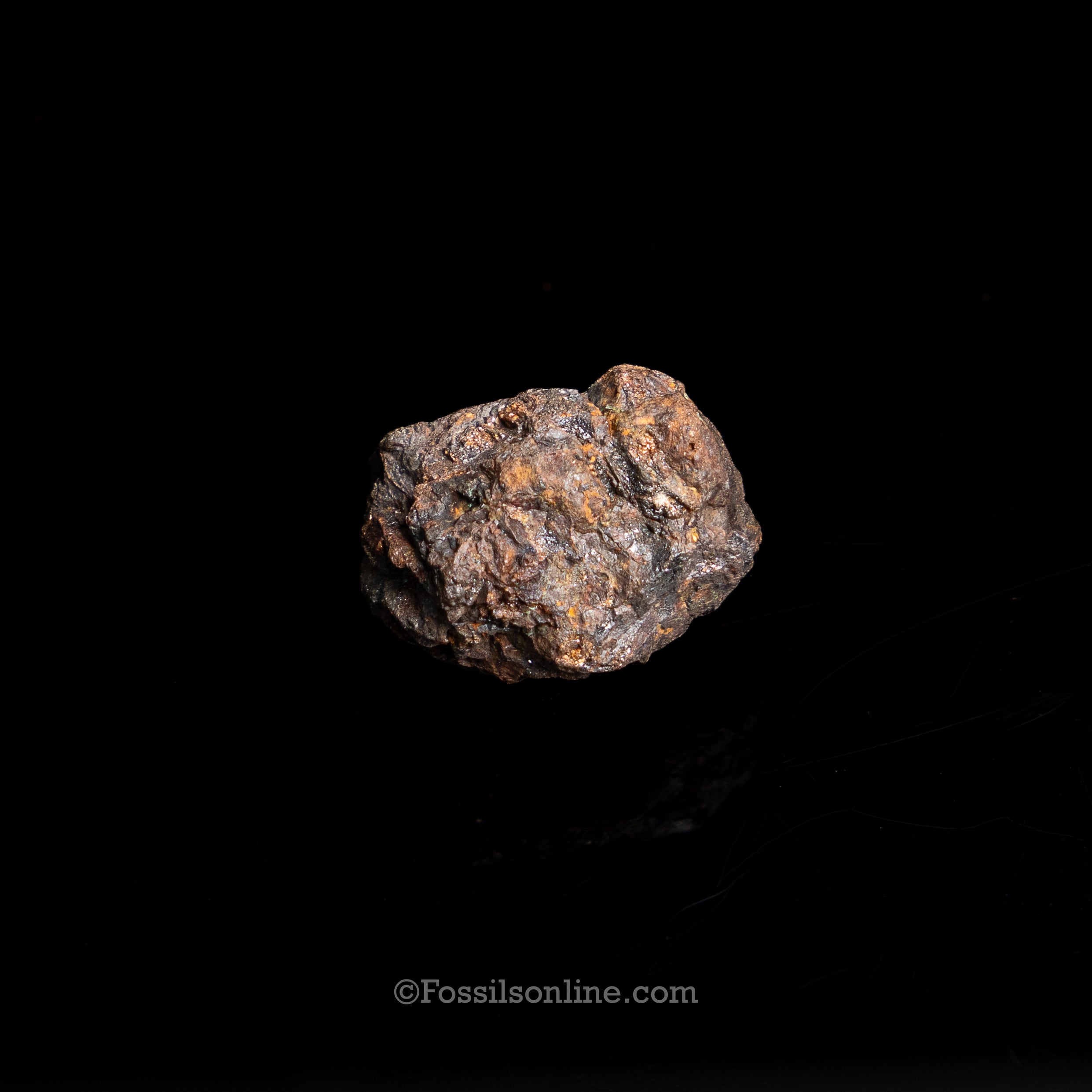
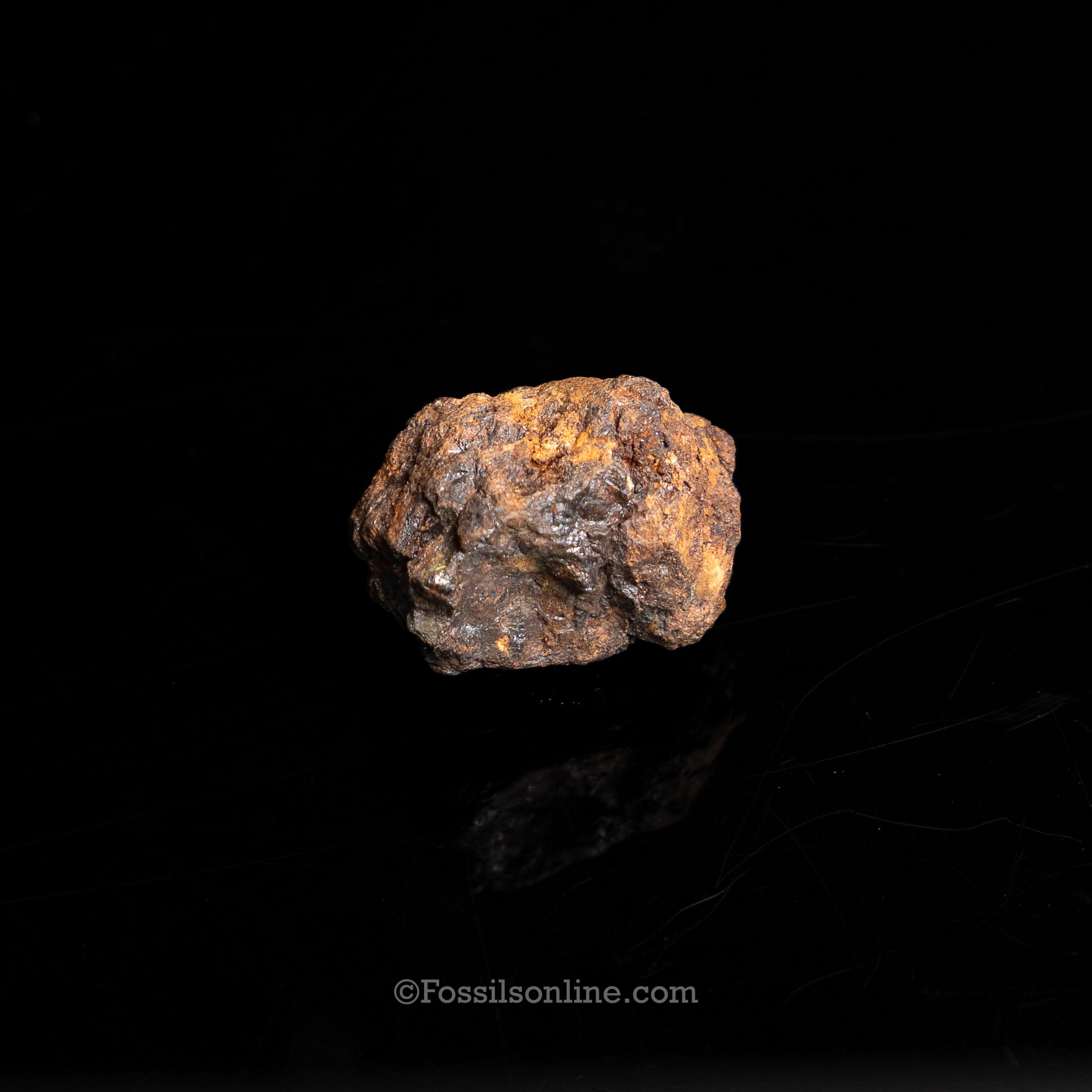
The meteorite weighs 27 grams and measures 31x24mm. The dome measures 3.25" high. The base is 2.41" in diameter.
Care guide
Choose options