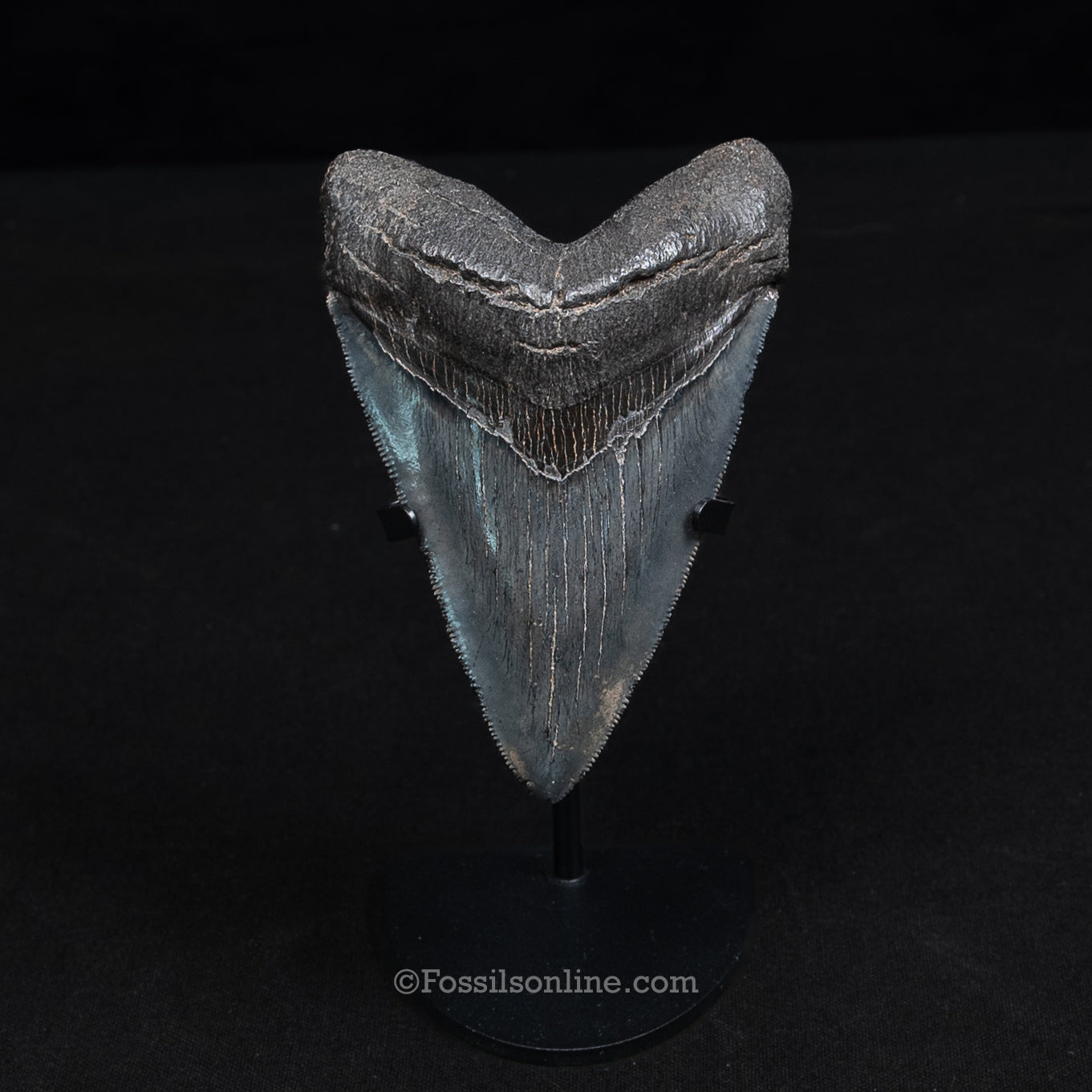
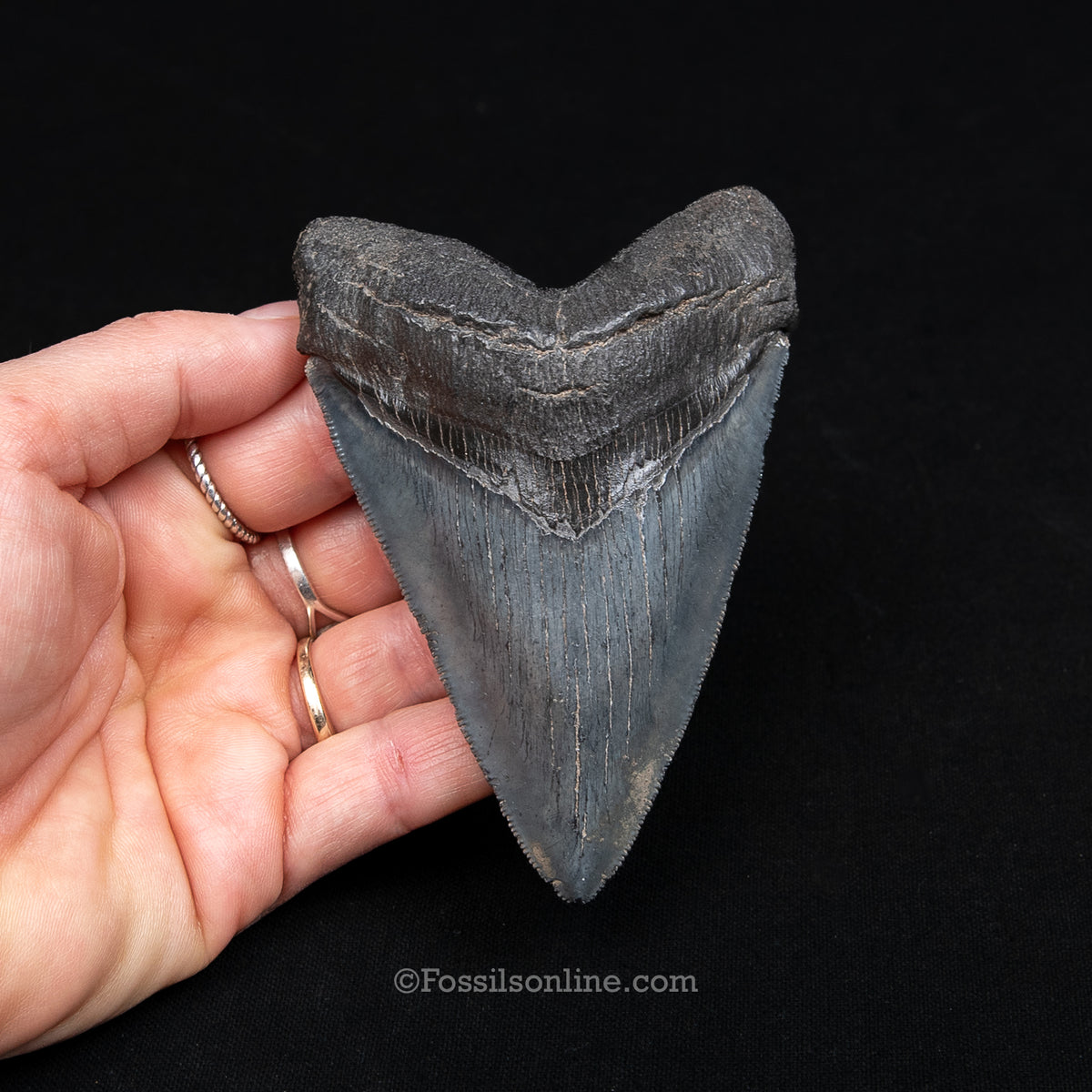
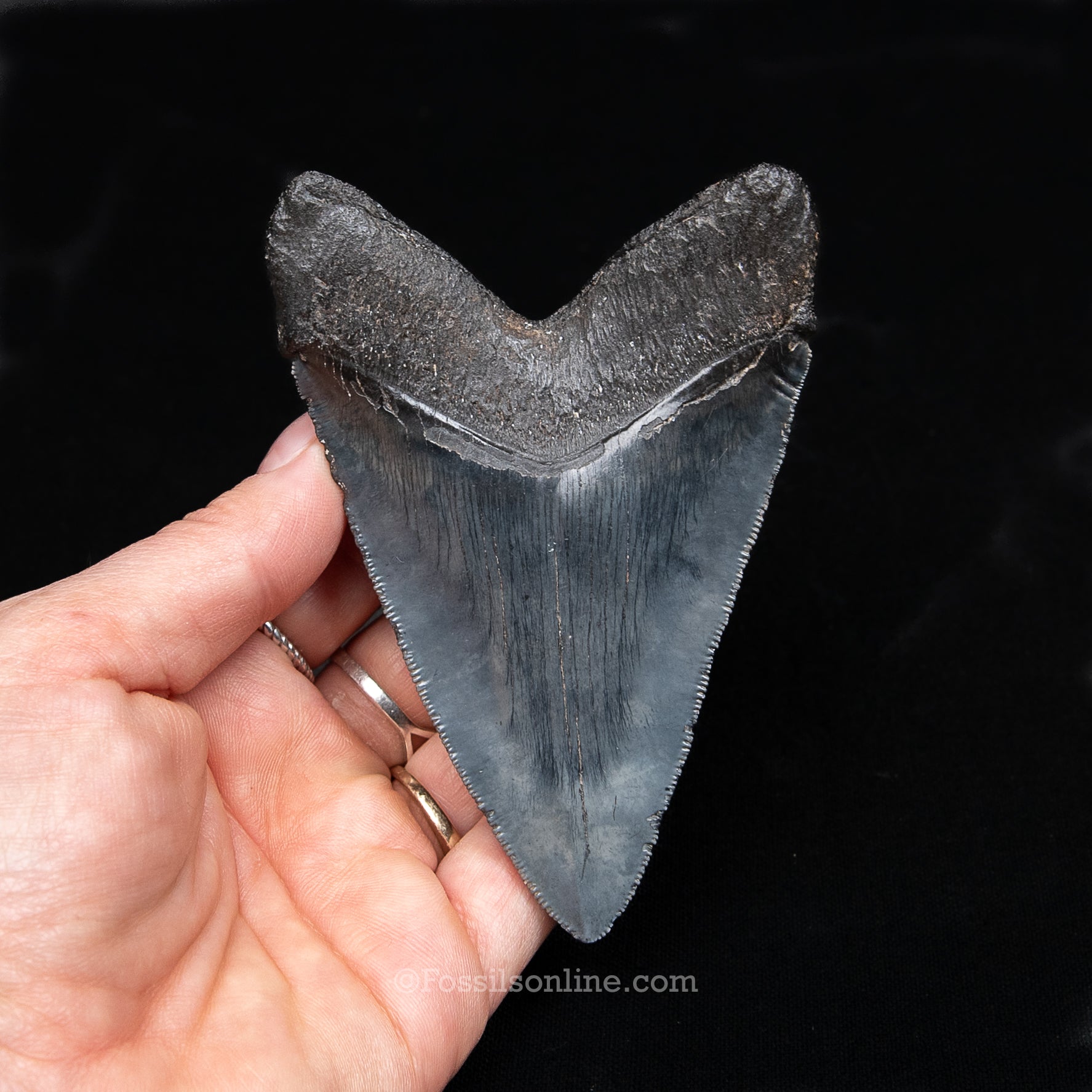
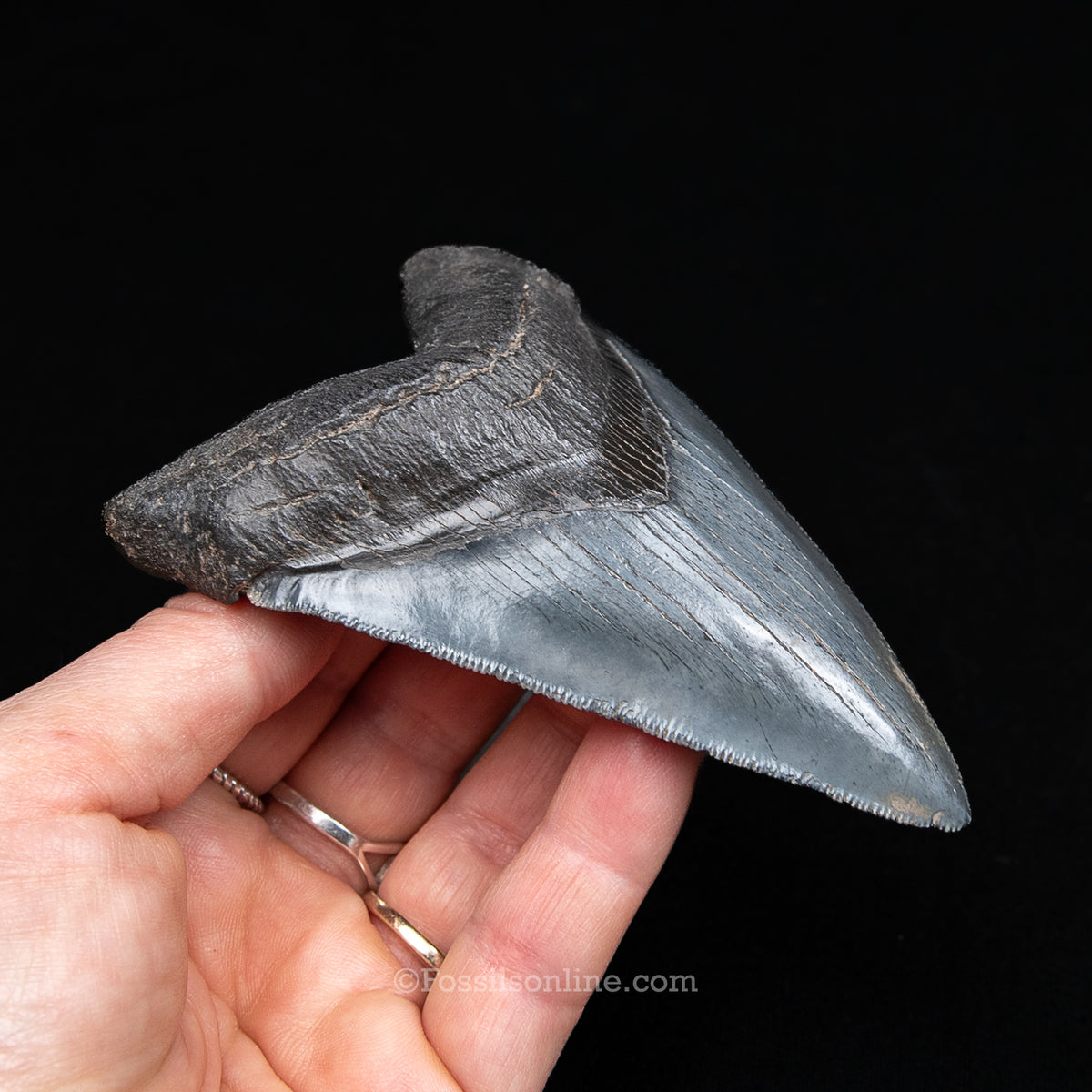
GENUINE PREHISTORIC FOSSIL TOOTH — Chub 4.17", South Carolina
Stunning Chubutensis tooth from South Carolina. It features razor-sharp serrations, an intact tip, and a glossy blue gray enamel and jet-black bourlette. Comes with a handmade in house Meg Stand, ready to display as a striking new addition to your collection.
Otodus chubutensis
Otodus chubutensis is a key transitional species in the evolution of giant predatory sharks, bridging the gap between the earlier Otodus obliquus and the massive Otodus megalodon. Its fossils are prized worldwide for combining primitive and advanced features in one tooth.
When It Appeared
Lived during the Miocene Epoch, roughly 23 to 5.3 million years ago — squarely between O. obliquus and O. megalodon in the megatooth lineage.
Evolutionary Significance
O. chubutensis is one of the clearest examples of gradual evolution in the fossil record:
- Often retains lateral cusplets, like its ancestors
- Shows well-developed serrations, like its descendants
Size & Tooth Morphology
- Estimated length: 30–45 feet (9–14 meters)
- Broad, triangular, robust teeth with coarse-to-moderate serrations
- Distinct lateral cusplets and a thick, sturdy root
Diet & Habitat
An apex predator of warm, shallow seas, likely feeding on early whales, large fish, and other sharks. Fossils are found on nearly every continent.
Stunning Chubutensis tooth from South Carolina. It features razor-sharp serrations, an intact tip, and a glossy blue gray enamel and jet-black bourlette. Comes with a handmade in house Meg Stand, ready to display as a striking new addition to your collection.
Otodus chubutensis
Otodus chubutensis is a key transitional species in the evolution of giant predatory sharks, bridging the gap between the earlier Otodus obliquus and the massive Otodus megalodon. Its fossils are prized worldwide for combining primitive and advanced features in one tooth.
When It Appeared
Lived during the Miocene Epoch, roughly 23 to 5.3 million years ago — squarely between O. obliquus and O. megalodon in the megatooth lineage.
Evolutionary Significance
O. chubutensis is one of the clearest examples of gradual evolution in the fossil record:
- Often retains lateral cusplets, like its ancestors
- Shows well-developed serrations, like its descendants
Size & Tooth Morphology
- Estimated length: 30–45 feet (9–14 meters)
- Broad, triangular, robust teeth with coarse-to-moderate serrations
- Distinct lateral cusplets and a thick, sturdy root
Diet & Habitat
An apex predator of warm, shallow seas, likely feeding on early whales, large fish, and other sharks. Fossils are found on nearly every continent.
Species
Otodus chubutensis
AGE
Miocene-Pliocene
LOCATION
South Carolina
Size
4.17"
Choose options