Crocodile Scute
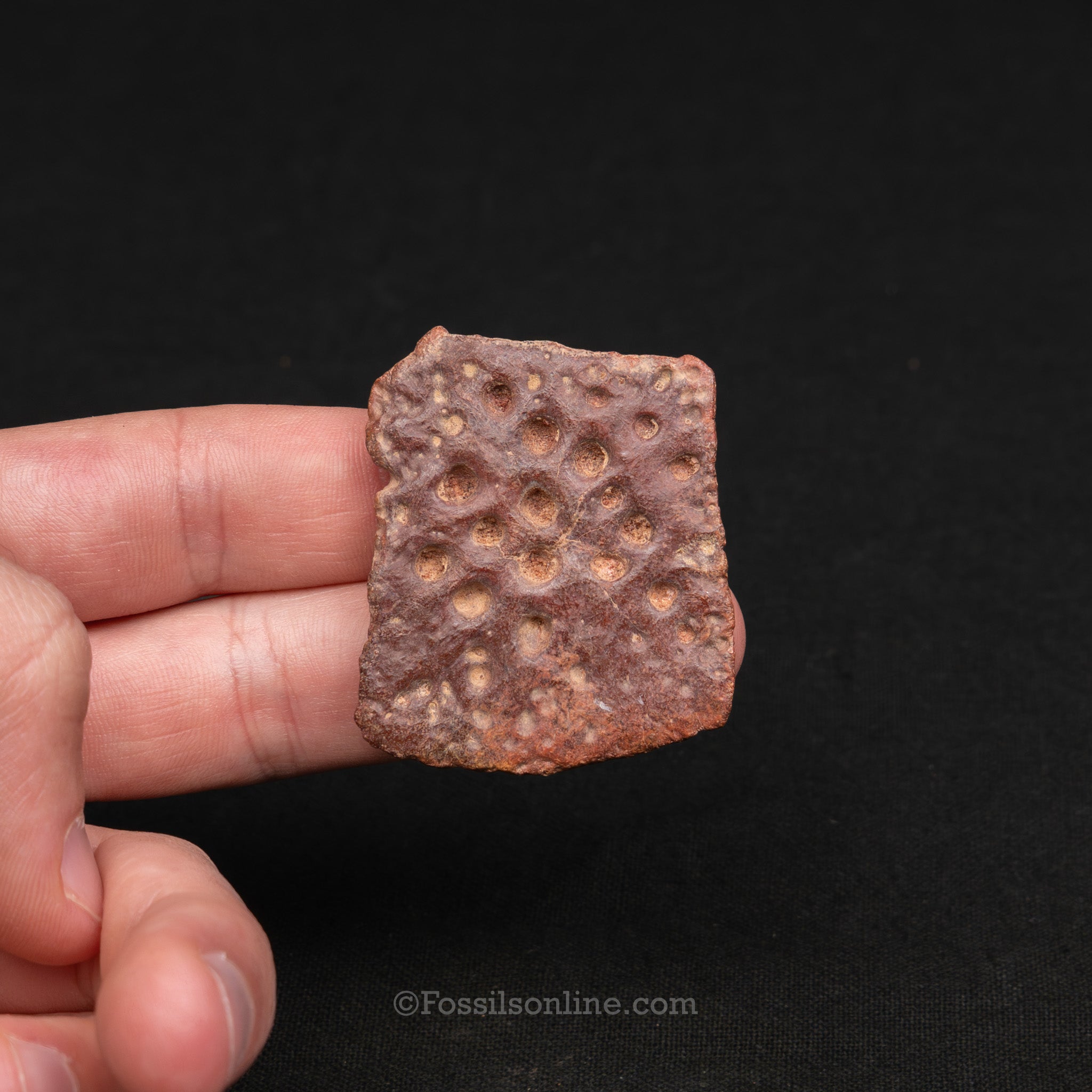
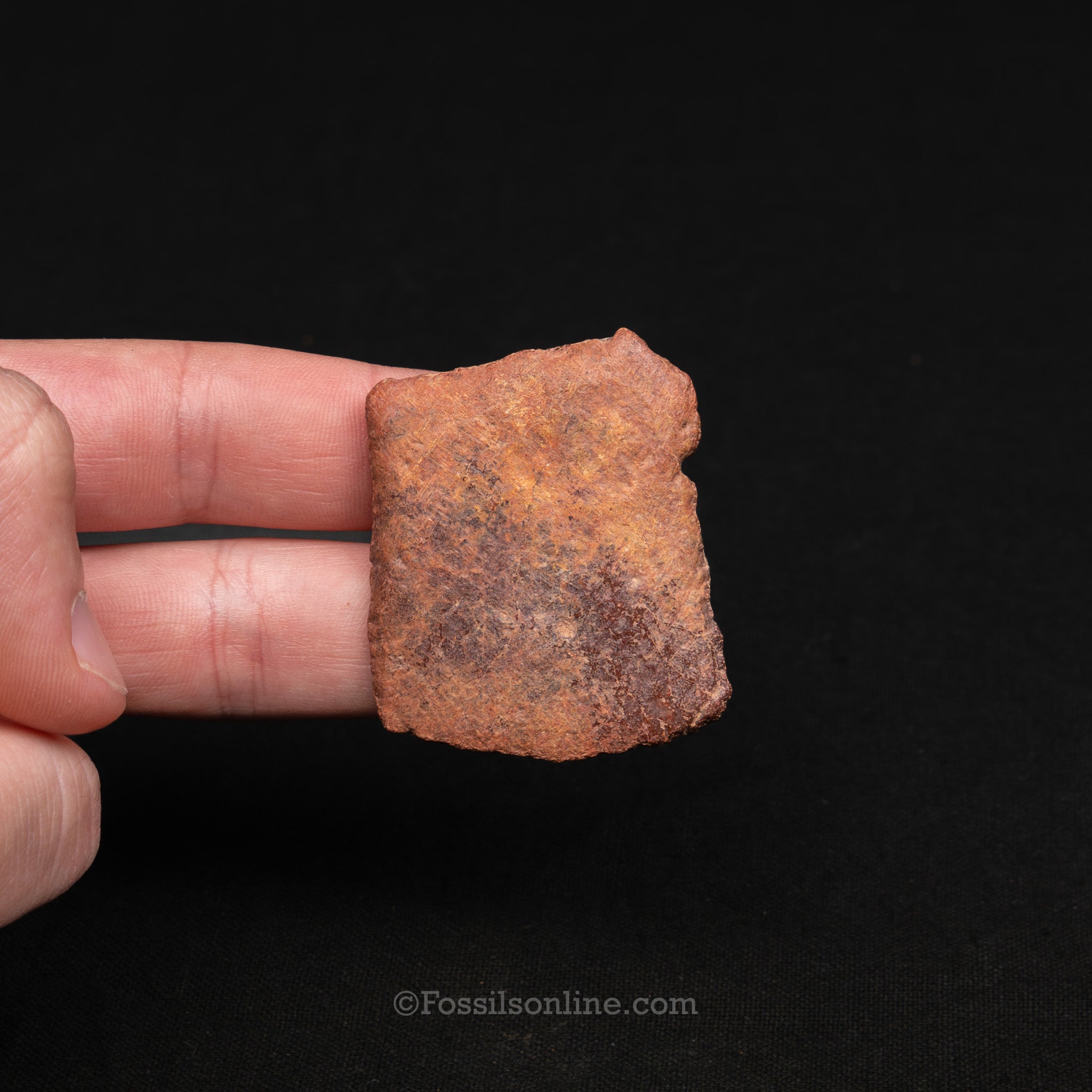
This stunning crocodile scute from Morocco is complete and unrestored. possibly from elosuchus.
Elosuchus was a long-snouted crocodile-like reptile that cruised the rivers and coastal channels of North Africa during the mid-Cretaceous, roughly 100–95 million years ago. Its fossils are known from Morocco, Algeria, and Niger, with many of the teeth and bones sold today coming from the famous Kem Kem Beds along the Morocco–Algeria border.
With a long, gharial-style snout and conical teeth, Elosuchus was built for life in the water. It likely spent most of its time lurking in rivers and shallow channels, snapping up fish and other aquatic prey with quick sideways strikes, much like modern gharials and some long-snouted crocodiles.
Discovery and identity
The best-known species, Elosuchus cherifiensis, was first described in the 1950s from Cretaceous rocks in Morocco and Algeria and originally placed in the crocodile genus Thoracosaurus. Decades later, in 2002, French paleontologist France de Lapparent de Broin re-examined the material and recognized it as distinct, giving it the new genus name Elosuchus.
Since then, additional skull pieces and teeth from the Kem Kem region have helped flesh out the picture: a long, narrow rostrum packed with conical teeth, and skulls big enough to suggest animals reaching 6–8 meters (20–25 feet) in length. That makes Elosuchus one of the larger crocodyliforms in the Kem Kem ecosystem—big enough to be a serious predator even in a fauna full of large meat-eaters.
Lifestyle – a fish-snapping river hunter
Everything about Elosuchus points to a semi- to fully-aquatic lifestyle:
-
A long, narrow snout reduces drag in the water and lets the jaws whip sideways quickly.
-
Conical teeth are perfect for gripping slippery prey like fish rather than slicing meat or crushing bone.
-
Its fossils are consistently found in river and delta deposits alongside huge fish, turtles, and other aquatic animals in the Kem Kem Beds.
You can imagine Elosuchus lying low in murky Cretaceous channels, body and tail hidden beneath the surface, only the snout and eyes just above the water. When a fish or small reptile came close, a rapid sideways snap of those tooth-lined jaws would end the hunt in an instant.
Teeth – what they look like and why they’re common
Elosuchus teeth have a look collectors quickly learn to recognize:
-
Long, slightly curved, and conical rather than blade-like.
-
Usually smooth-sided or with very fine texture, not big serrations like a theropod tooth.
-
Often with a strong, expanded root and a more slender, glossy crown.
In the Kem Kem Beds, these teeth are fairly common for a few reasons:
-
Rivers and deltas are excellent at preserving and concentrating hard parts like teeth.
-
Like modern crocodilians, Elosuchus would have replaced teeth throughout its life, shedding many into the water.
-
The Kem Kem Beds are heavily collected today, so a lot of teeth make their way into the fossil market.
Because of this, Elosuchus teeth tend to be much more affordable than dinosaur teeth from the same area. For the price of a small theropod tooth, you can often get a larger, more impressive crocodile tooth—still from a big predator, just one that hunted in the rivers instead of on land.
Kem Kem color and preservation
Teeth from Elosuchus in the Kem Kem Beds often show beautiful desert-influenced colors:
-
Deep red-browns and maroons from iron-rich sediments.
-
Chocolate browns, dark oranges, and sometimes almost black tones.
-
Occasional lighter banding or mottling where minerals soaked into the enamel and root differently.
Many specimens are water-worn, with the tips slightly rounded from rolling around in ancient channels and more recent erosion. Others, especially larger rooted teeth, can retain sharper details at the tip and along the crown. Either way, each Elosuchus tooth carries that distinctive Kem Kem patina—a mix of color, polish, and texture that immediately says “Cretaceous Morocco.”
Why collectors like Elosuchus
For collectors, Elosuchus hits a nice balance between uniqueness and accessibility:
-
It’s a large, long-snouted crocodilian from a world-famous dinosaur locality.
-
Its teeth are visually striking—long, conical, and often richly colored.
-
They’re genuine predator fossils that are still reasonably priced compared to comparable dinosaur material.
-
Each tooth ties into the broader Kem Kem story: Spinosaurus, Carcharodontosaurus, giant sawfish and coelacanths, and a whole river ecosystem of Cretaceous North Africa.
Species
Elosuchus?
AGE
late Cretaceous
LOCATION
Kem Kem Basin, Morocco
FORMATION
Kem Kem Beds
Size
1.74"X1.43"
Choose options