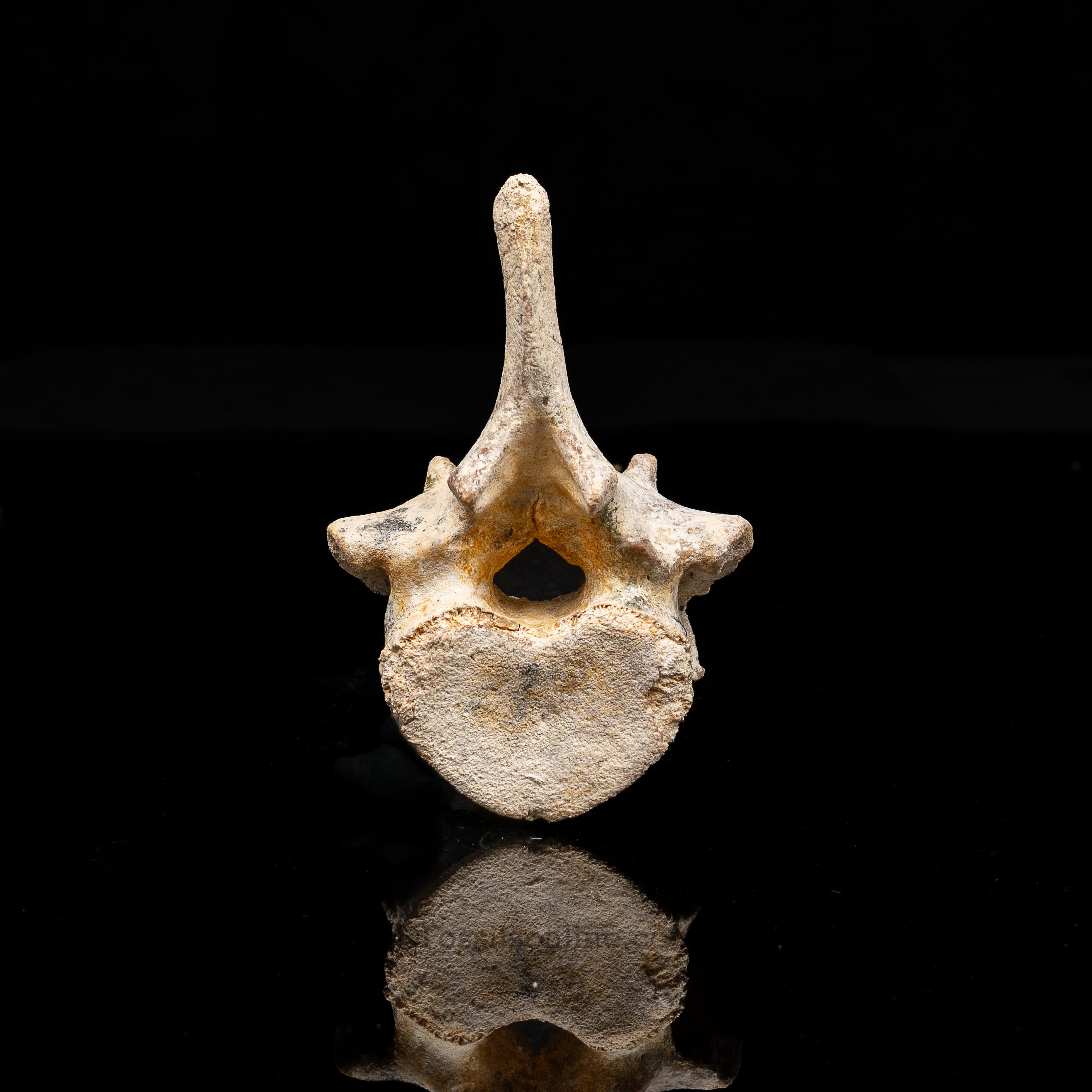
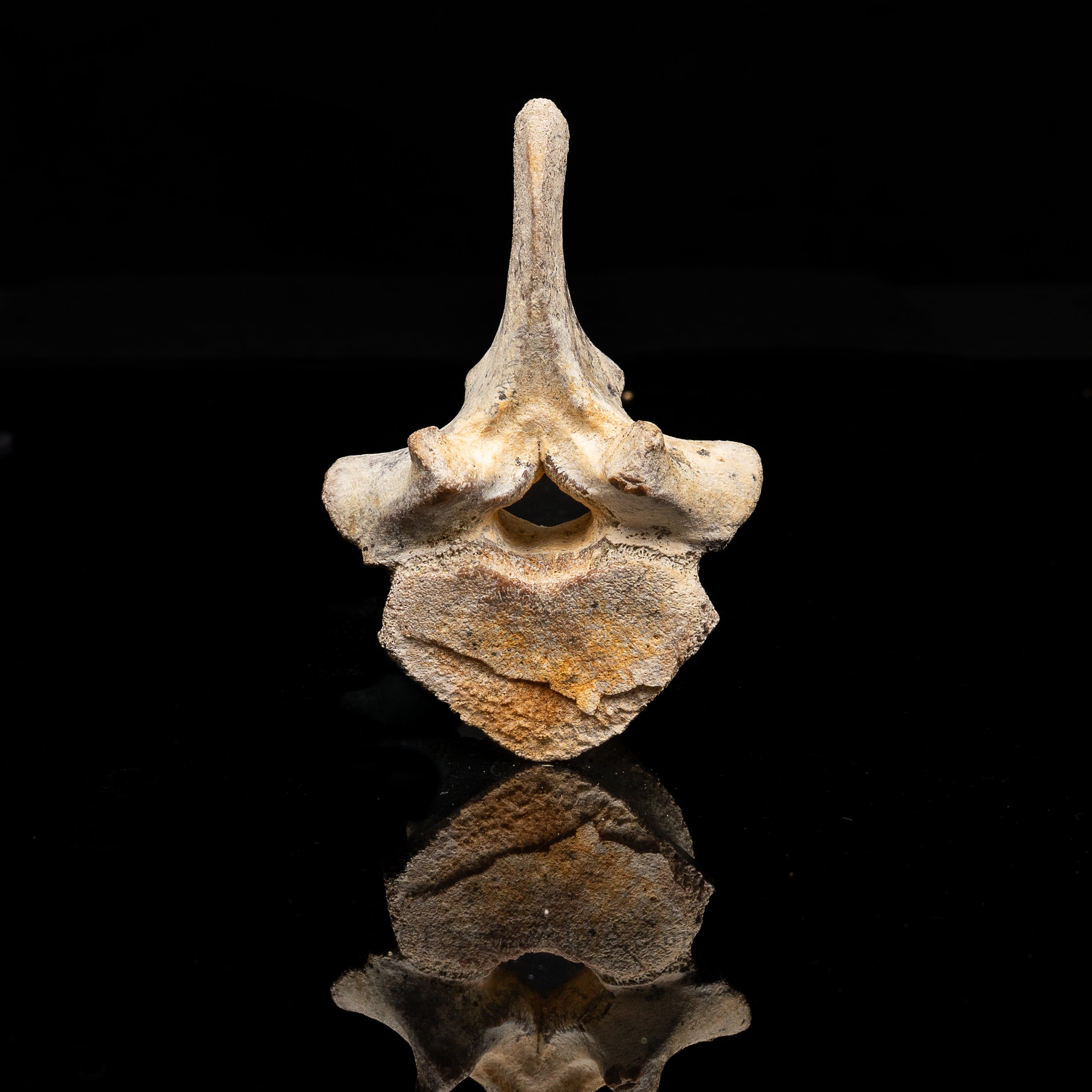
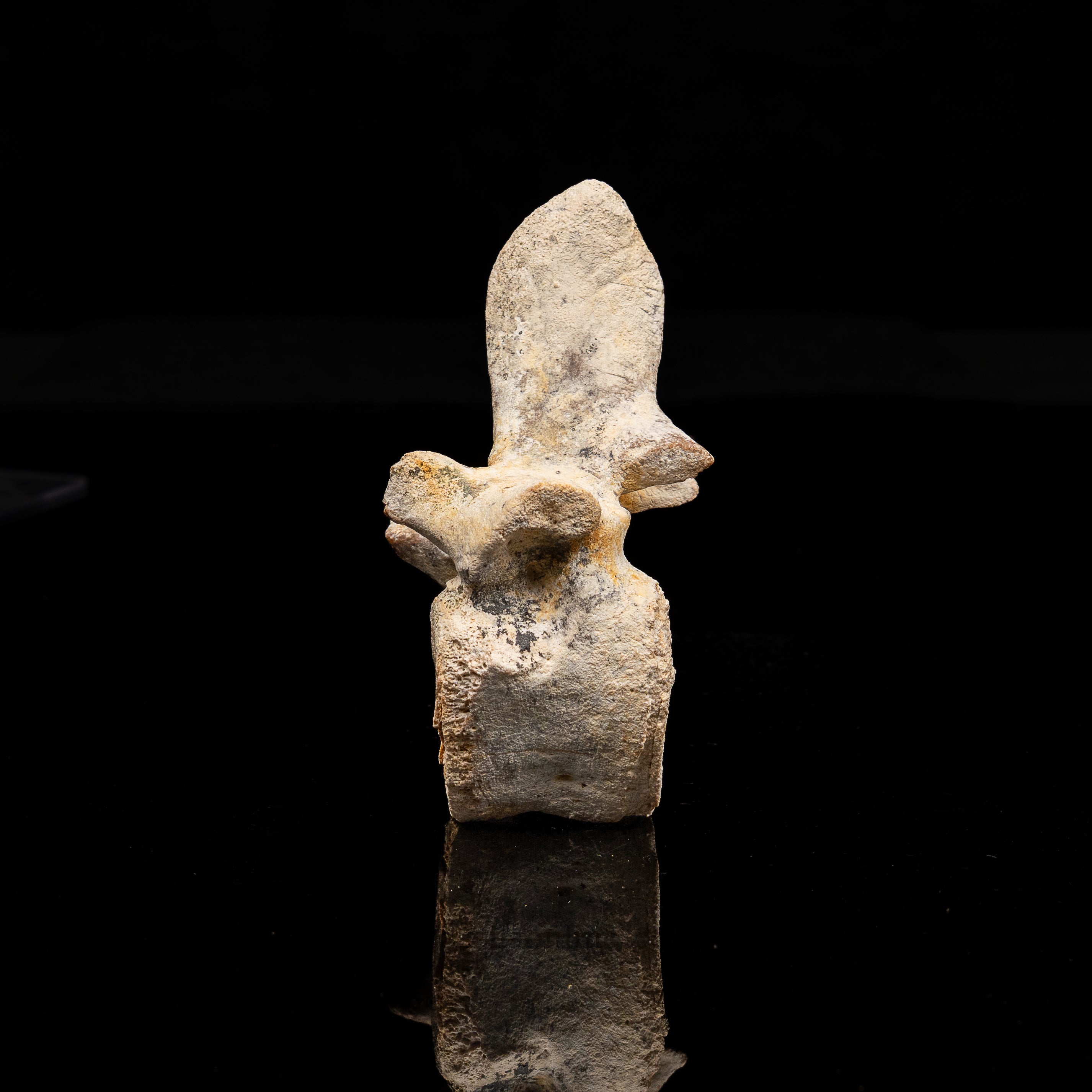
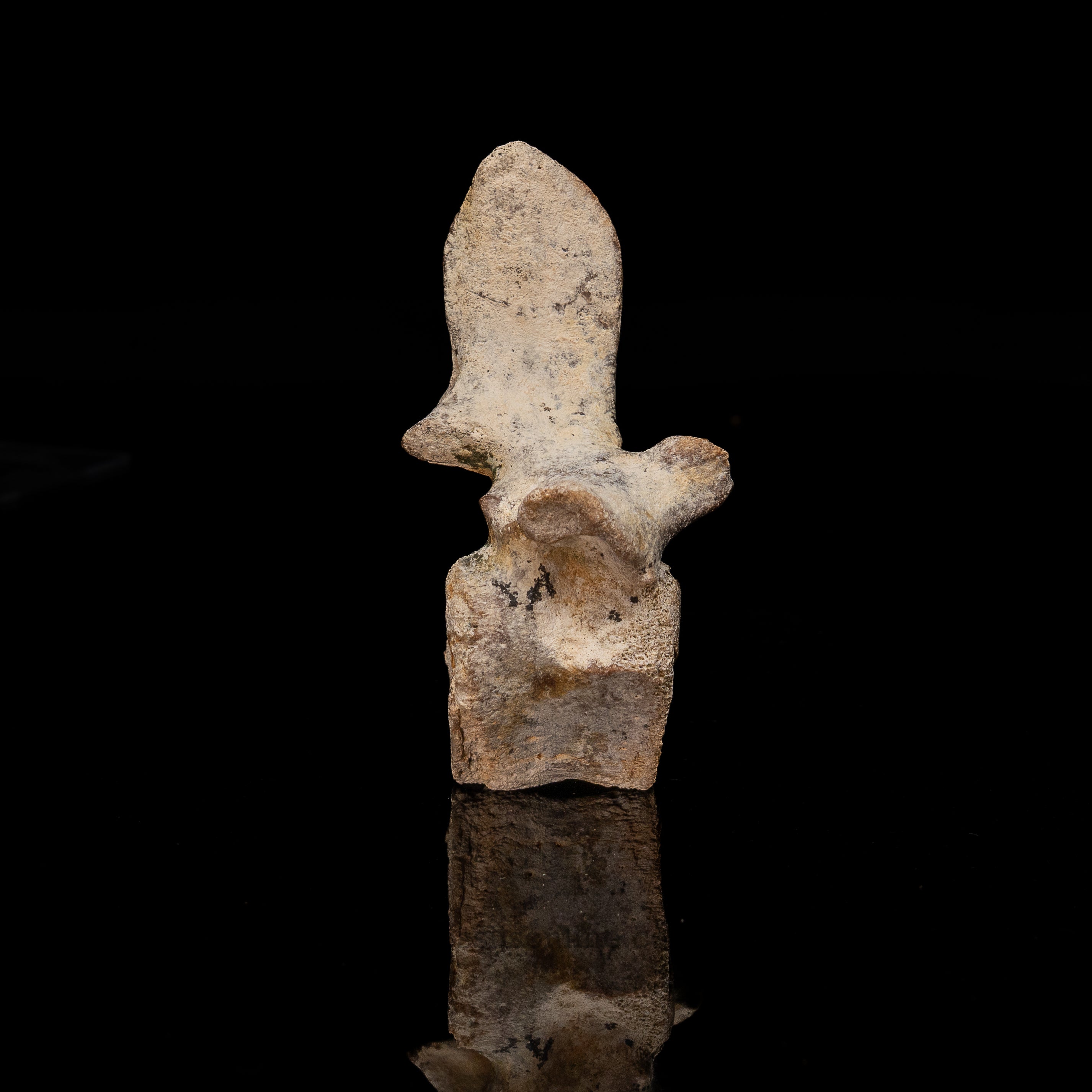
Fossil Dugong Vertebra Oligocene Florida
Beautifully preserved prehistoric dugong vertebra, with the body naturally shaped like a heart. Nearly perfect and rarely offered, this 30-million-year-old fossil comes from an ancient marine mammal that once grazed seagrass beds in Florida's warm coastal waters during the Oligocene epoch.
Prehistoric dugongs were once widespread and common in ancient seas, including what is now Florida. Fossil remains of dugongs—especially from the Dugongidae family—have been found in several locations across Florida, dating back to the Miocene and Pliocene epochs (roughly 5 to 20 million years ago). These prehistoric relatives were part of a diverse group of sirenians, which included not only dugongs but also now-extinct sea cows.
Notable fossil locations in Florida:
- Bone Valley Formation (Central Florida): Rich in marine fossils, including dugong ribs and vertebrae.
- Calvert Formation (along the Atlantic coast, extends into other states but has Florida analogs): Known for sirenian fossils.
- Peace River: A popular fossil hunting site where dugong rib fossils (often mistaken for "petrified wood") are commonly found.
- Tampa Bay area: Miocene marine sediments have yielded dugong fossils.
- Florida phosphate mines: Known for exceptional fossil preservation, including dugong material.
- Suwannee Formation (North/Central Florida): An Oligocene-age marine deposit that has yielded well-preserved sirenian material, including dugong bones.
Prehistoric dugong bones, especially the dense, compact ribs (called pachyostotic ribs), are commonly found by fossil hunters in Florida's rivers and quarries. These bones helped the animals stay neutrally buoyant while grazing on seafloor vegetation.
Species
Metaxytherium sp.
AGE
Oligocene
LOCATION
Vulcan Mine, Brooksville FL
FORMATION
Suwannee Limestone
Size
4"x3"x1.25"
Choose options