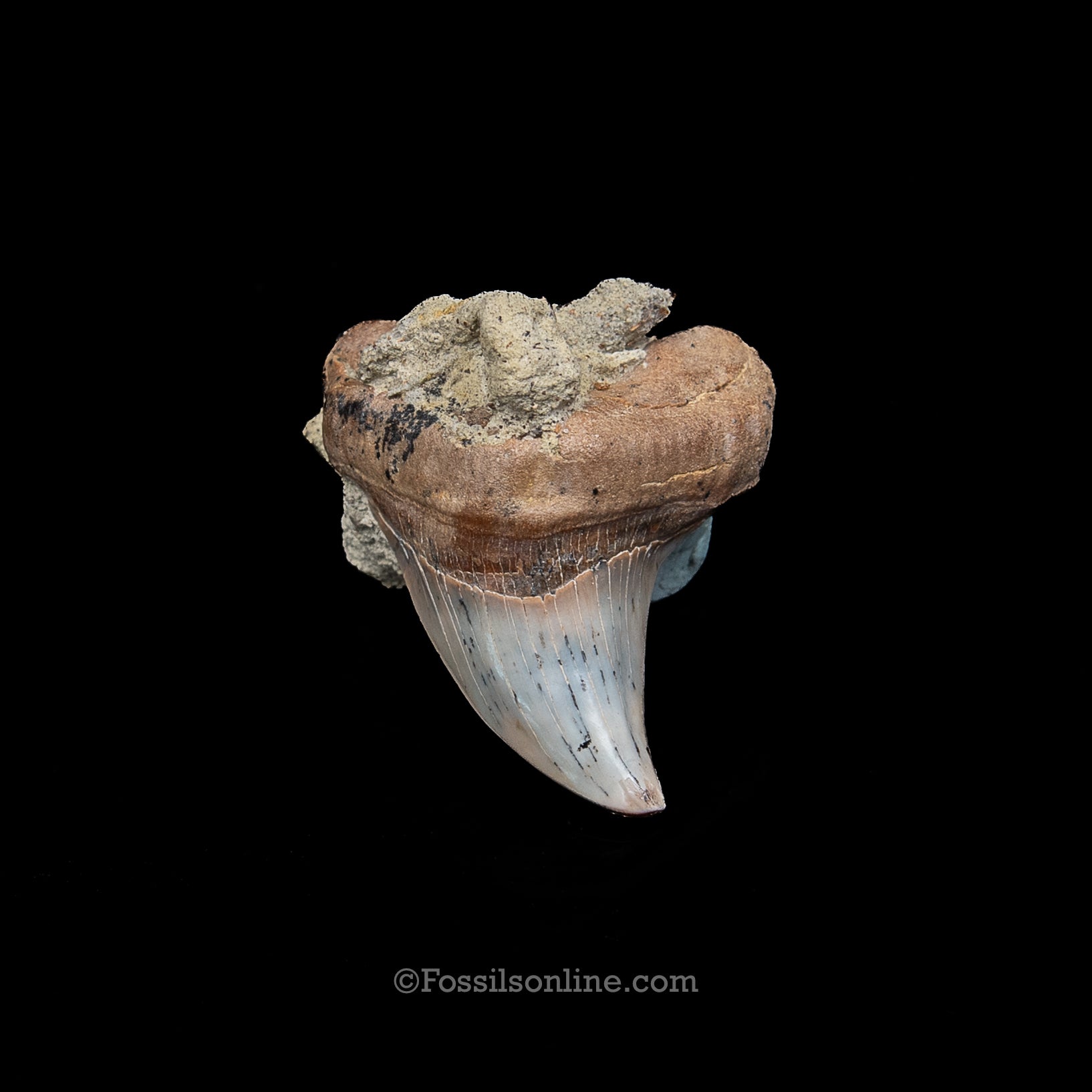
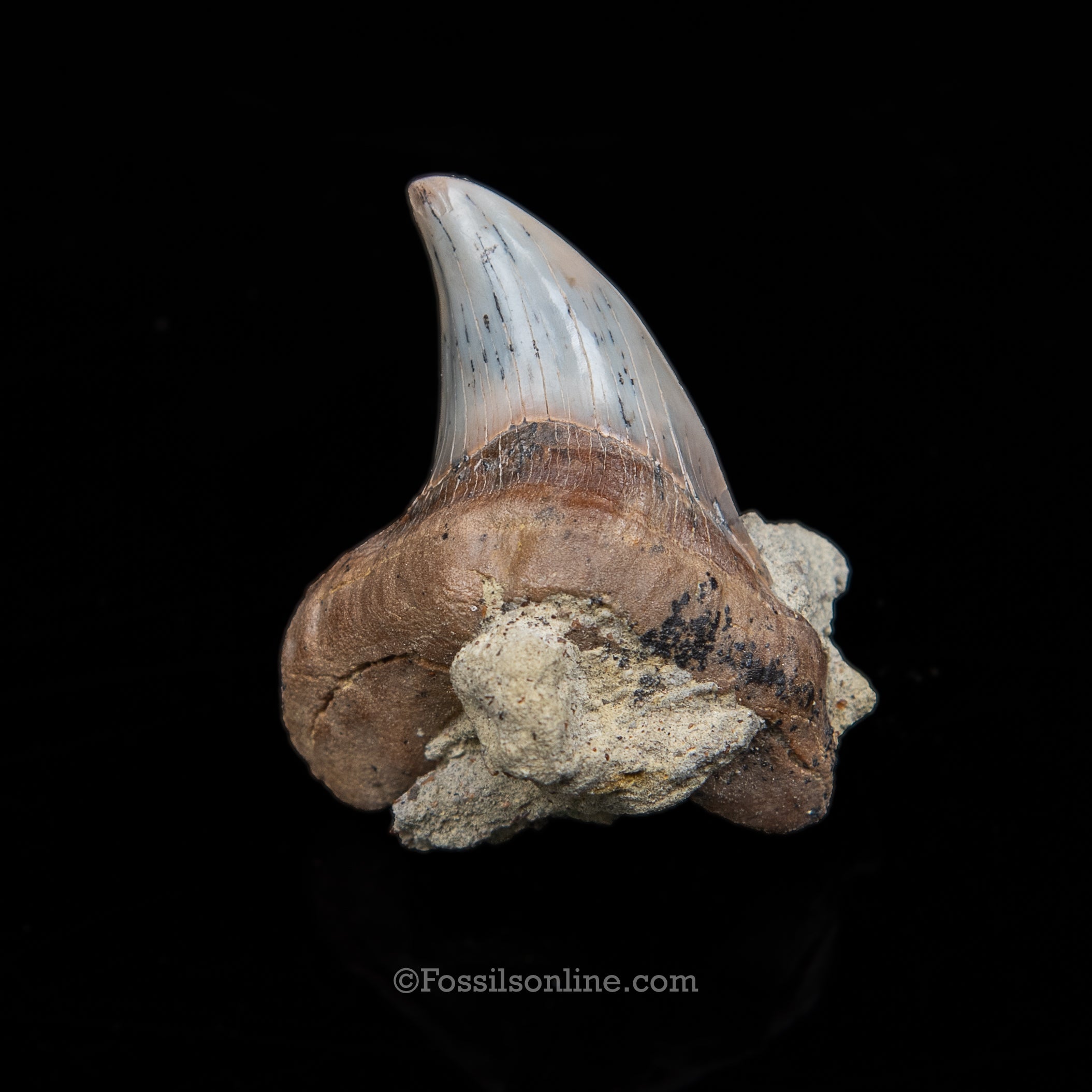
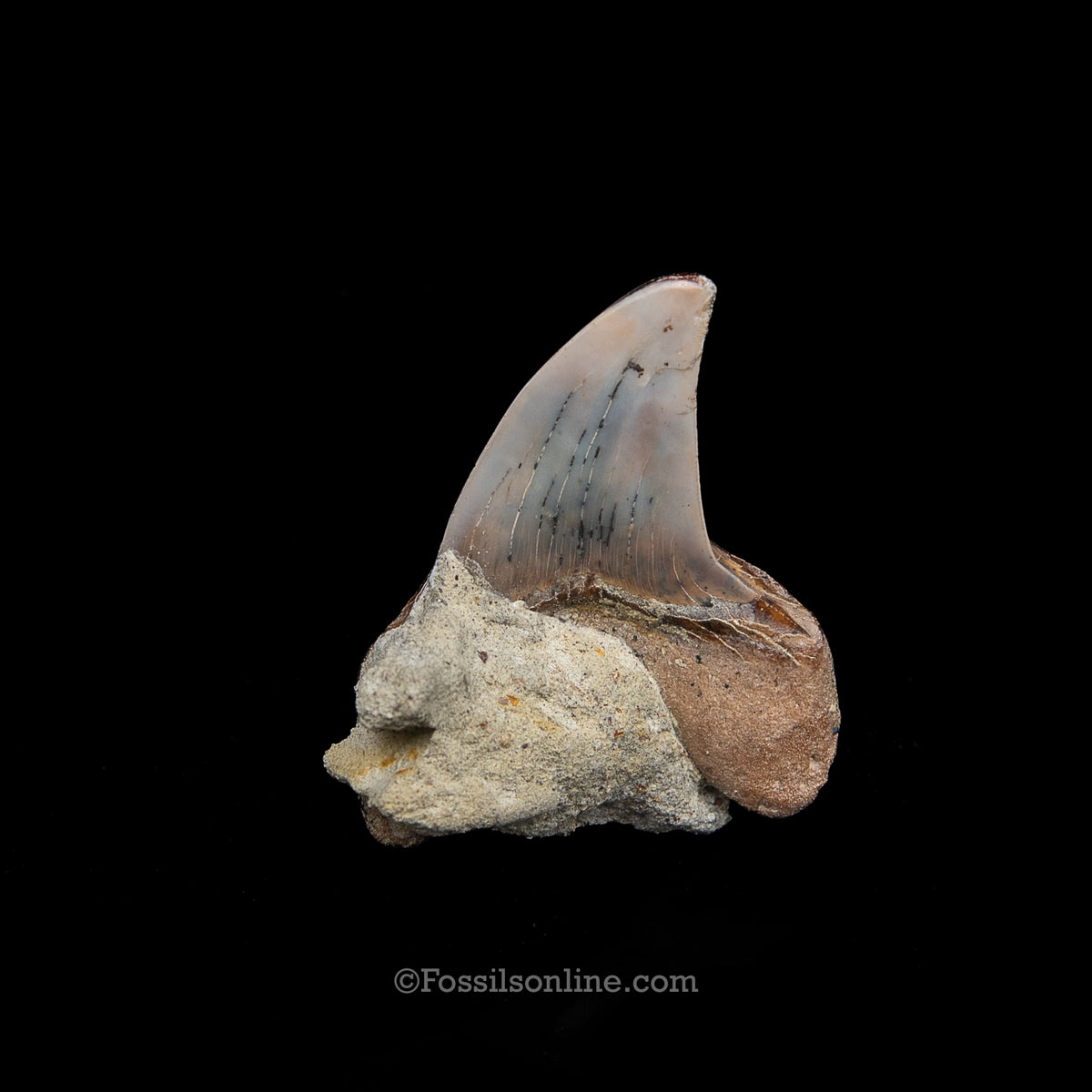
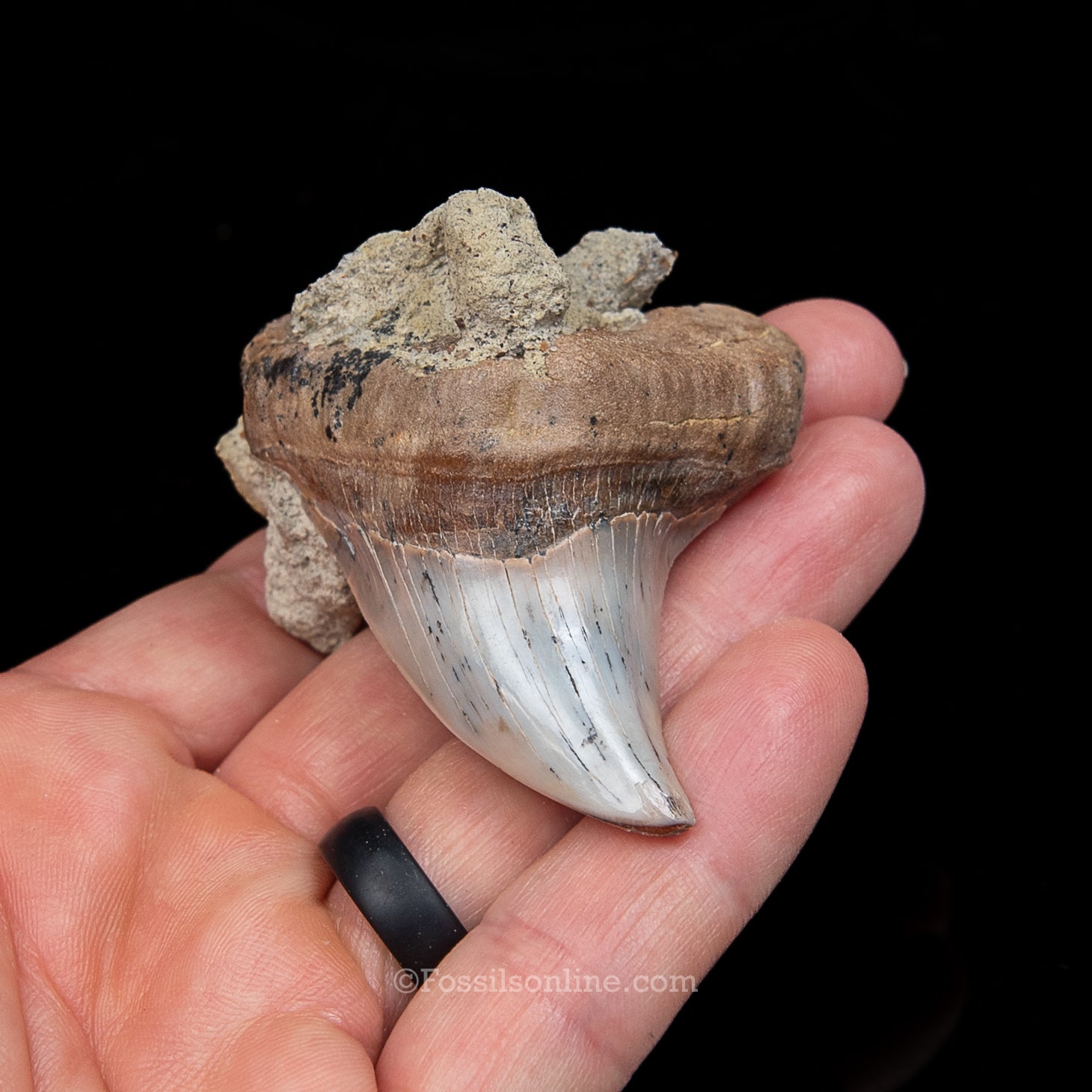
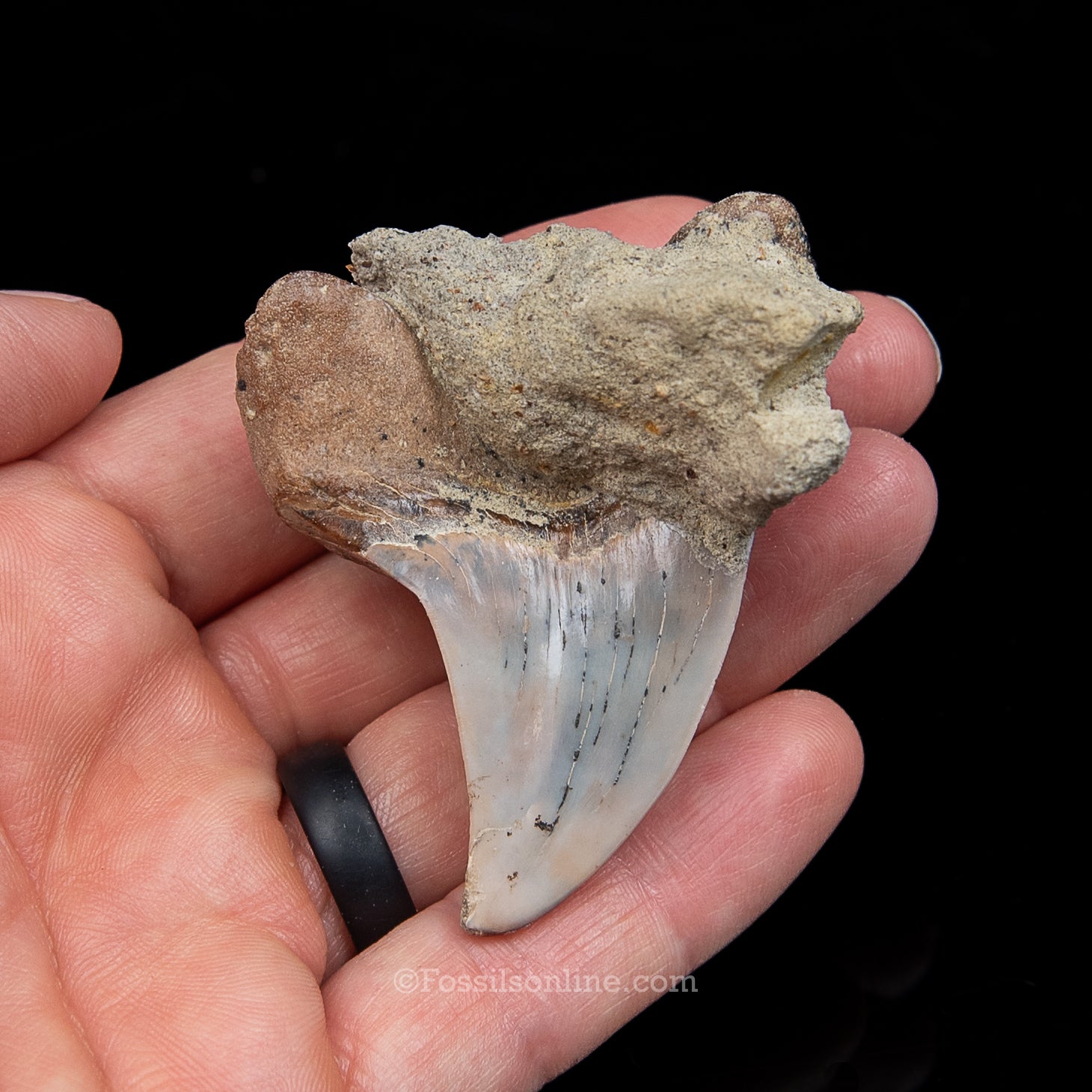
Bakersfield Benedeni in Matrix 2.43"
Stunning Parotodus benedeni (False Mako) tooth in matrix. It has beautiful coloration, with a solid, dense root and a naturally worn tip. There is a small area of natural edge loss along the smaller curve near the tip, as pictured. Found in Bakersfield, California.
No repair or restoration.
Parotodus benedeni
Parotodus benedeni, commonly known as the False Mako, is an extinct species of lamniform shark that ranged from the Oligocene through the Pliocene (roughly 30–2 million years ago), with its best-known material coming from Miocene and Pliocene deposits. Despite the name, it was not a true mako (Isurus) but a separate lineage that evolved a similar tooth shape independently.
Diet and habitat
Parotodus benedeni was a pelagic, open-ocean shark that rarely ventured into shallow coastal waters, which is part of why its teeth are found far less often than those of coastal species. Current research suggests it fed at a high trophic level, likely taking other sharks and large, soft-bodied marine animals, relying on a powerful bite rather than a serrated cutting edge.
Tooth morphology compared to other sharks
Parotodus benedenii teeth are easy to recognize once you know the key features. They are smooth-edged with no serrations, thick and robust in cross-section, and curved into a distinct hooked, claw-like shape. A hallmark identifying feature is the lingual root face, which lacks the nutrient groove seen in true mako (Isurus) teeth — this is one of the main ways collectors tell False Mako teeth apart from genuine mako teeth of a similar age.
Compared to other sharks:
- Cosmopolitodus (Carcharodon) hastalis has broader, flatter, more symmetrical teeth with a straighter profile and no hooked curvature
- Carcharodon carcharias has wide, triangular teeth with pronounced serrations
- Otodus megalodon has massive, thick, serrated teeth built for cutting and crushing
Parotodus benedeni stands apart for its thick, curved, claw-like crown, complete lack of serrations, and absent nutrient groove, making it one of the more distinctive and sought-after lamniform teeth once you know what to look for.
Notable features
Because Parotodus benedeni lived and hunted almost entirely offshore, its teeth are recovered far less frequently than those of shallow-water species from the same time periods, which contributes to their scarcity in the fossil record.
Color and preservation
Teeth of Parotodus benedeni vary in color by locality, ranging from gray and tan to darker brown, blue-gray, or black. Their thick, dense structure tends to preserve well, often retaining sharp, unworn edges and a solid crown and root even after millions of years.
Species
Parotodus benedenii
AGE
Miocene
LOCATION
Bakersfield, CA
Size
2.43"
Choose options