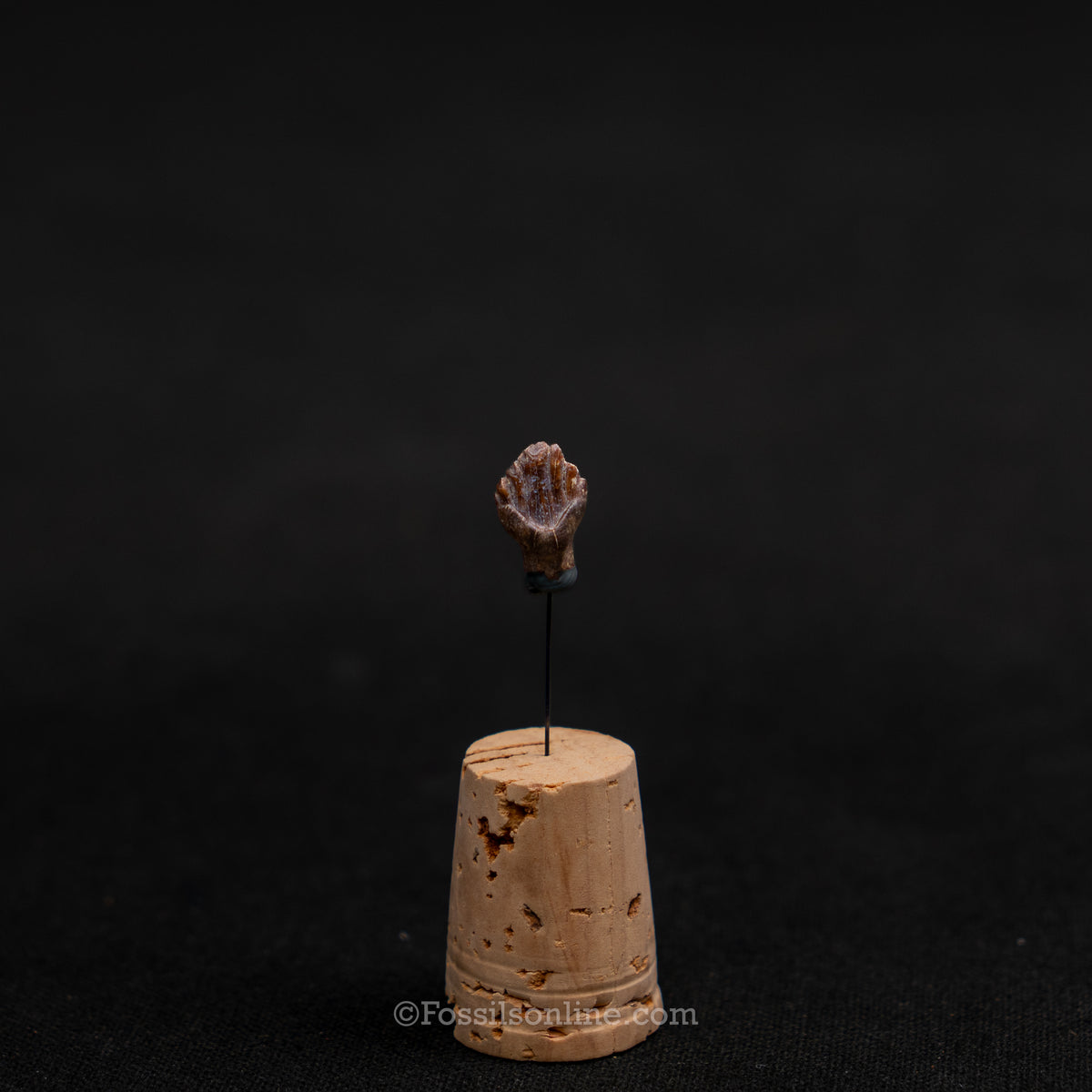
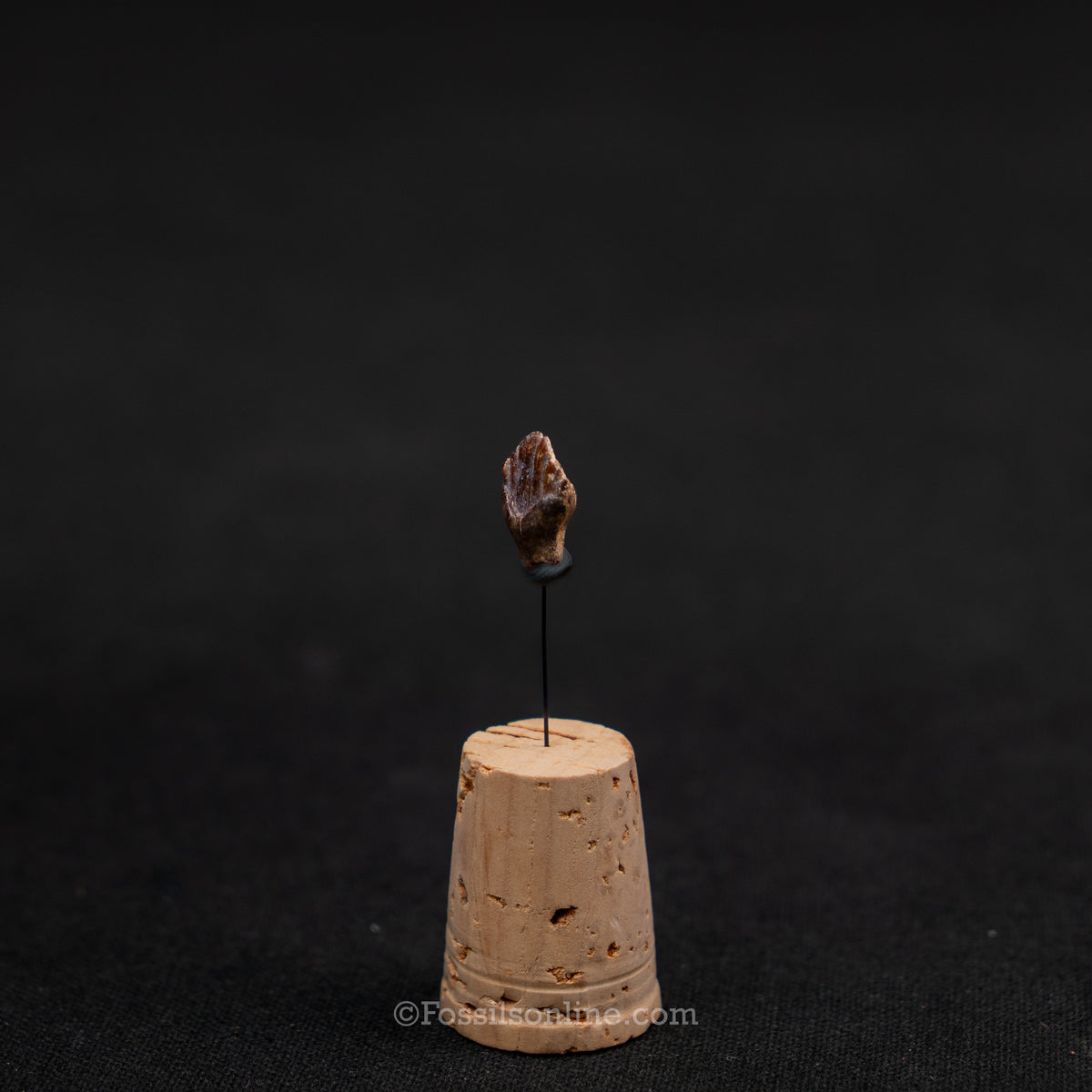
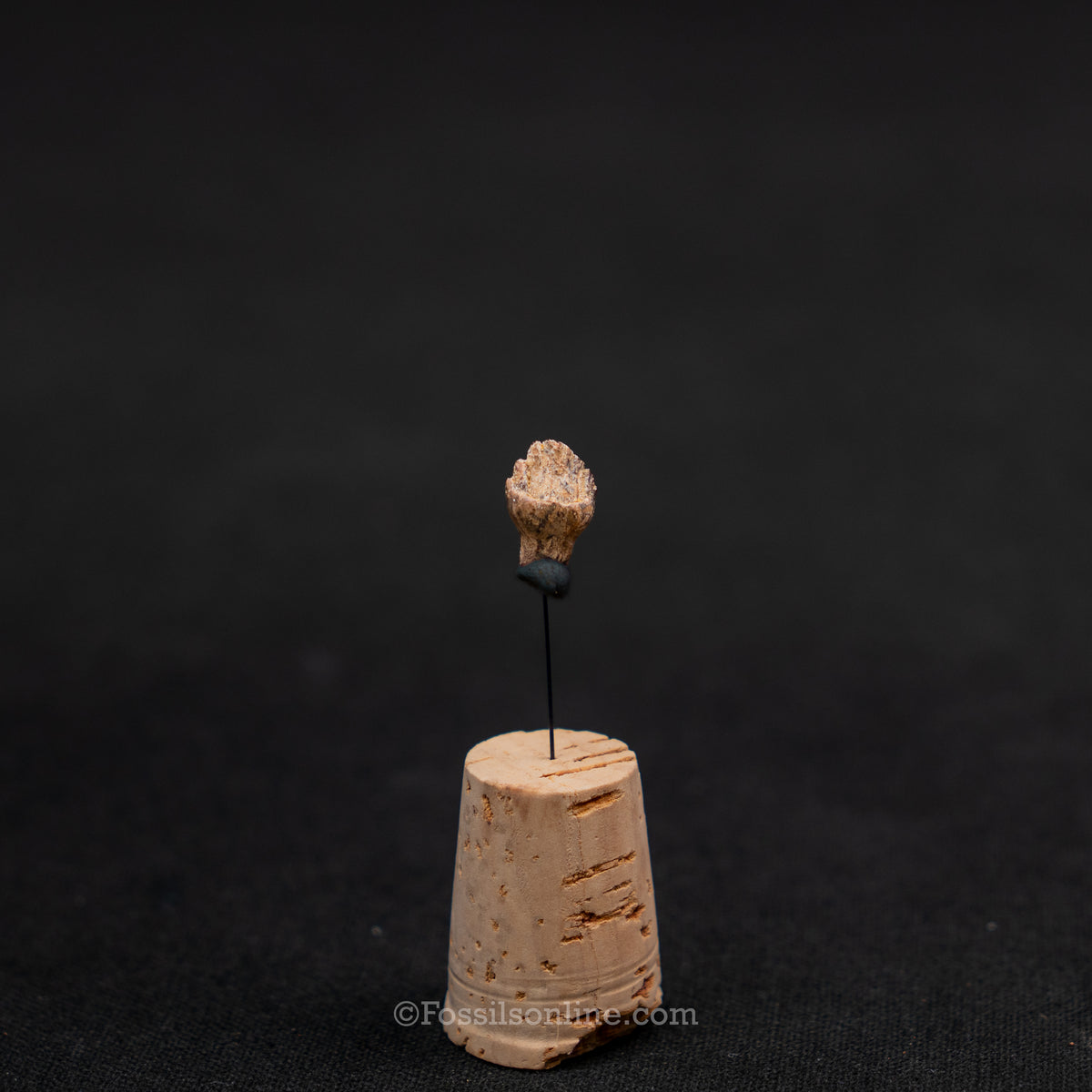
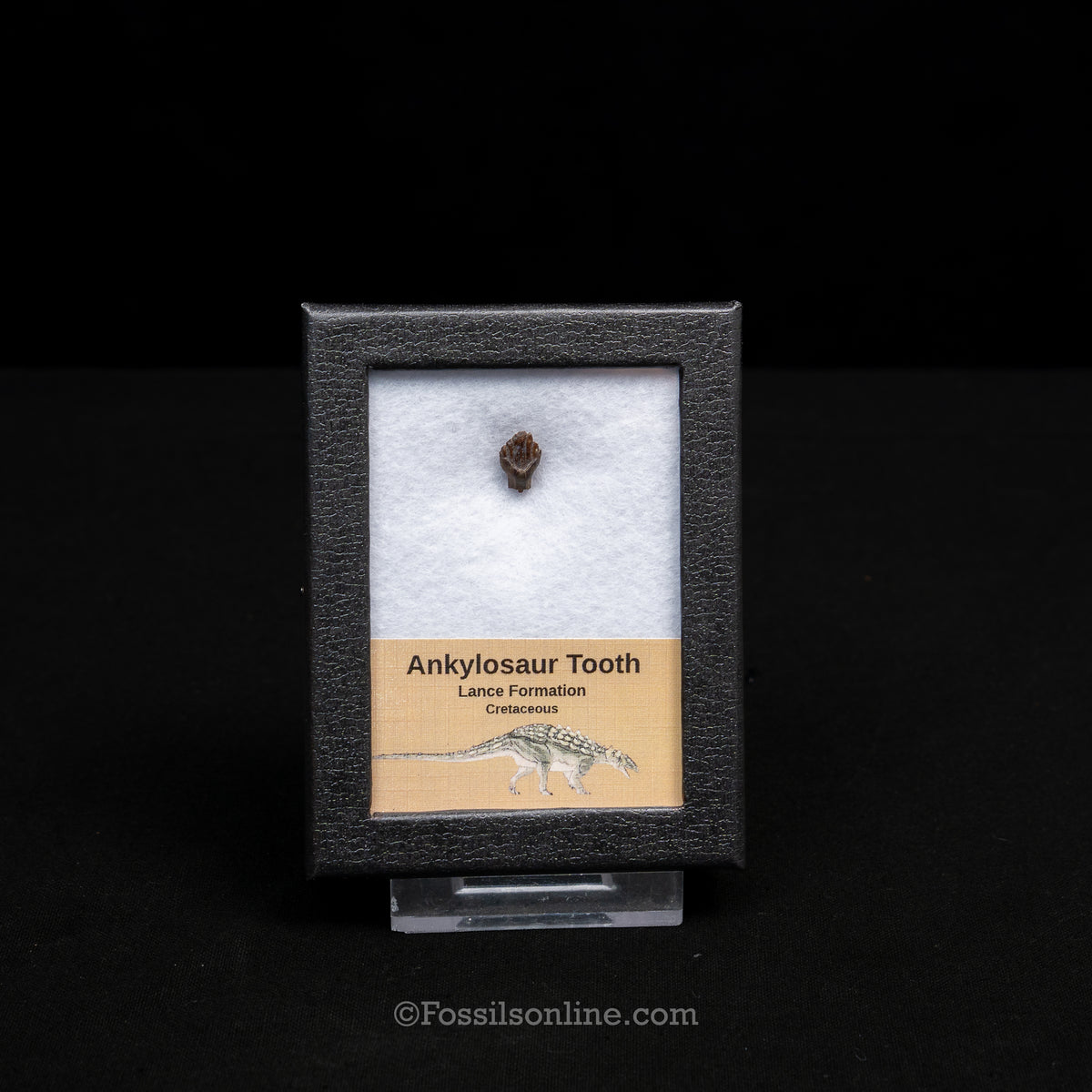
Ankylosaur (Denversaurus) Tooth In Display Case
Beautiful Ankylosaur (Denversaurus?) From the Lance Formation of Wyoming.
Ankylosaur teeth are much more uncommon than other dinosaur teeth, such as Hadrosaurs and Ceratopsians.
.47" tall
Ankylosaurus vs. Denversaurus: What’s the Difference?
The Lance Formation of Wyoming produced two types of armored dinosaurs, and they belong to two different families. Ankylosaurus was an ankylosaurid, while Denversaurus was a nodosaurid. Both were heavily armored plant eaters, but they defended themselves in different ways.
Ankylosaurus had a tail club, a true bony weapon at the end of a stiffened tail.
- It was low and wide, built to take hits and strike back.
- The last part of its tail had interlocking vertebrae that formed a rigid handle for swinging the club.
Denversaurus had no tail club. Its tail was armored but flexible.
- It relied on spikes and side armor for defense. Its close relative Edmontonia had large spikes projecting from the shoulders, and Denversaurus likely had a similar build.
- Its skull was narrower and longer than that of Ankylosaurus.
In simple terms, Ankylosaurus carried a club and Denversaurus carried spikes. These were two different solutions to the same problem of surviving alongside Tyrannosaurus rex.
Ankylosaurus
Ankylosaurus magniventris was named by Barnum Brown in 1908 and is the largest known armored dinosaur, reaching about 6 to 8 meters long. It lived at the very end of the Cretaceous, about 68 to 66 million years ago, in the Lance and Hell Creek Formations of the western United States and the Scollard Formation of Alberta. Despite its fame, it is known from only a few partial skeletons, and isolated teeth and armor pieces make up much of its fossil record.
Denversaurus
Denversaurus schlessmani was named by Robert Bakker in 1988 from a skull found in the Lance Formation of South Dakota. It was about 5 to 6 meters long and is one of the last nodosaurs known. Like Ankylosaurus, it lived alongside Triceratops, Edmontosaurus, and Tyrannosaurus rex. It is closely related to Edmontonia, and some researchers have suggested the two may belong to the same genus.
What They Ate
Both were low-level plant eaters that fed close to the ground. Their diet likely included:
- Ferns and low shrubs
- Flowering plants, which were common by the end of the Cretaceous
- Leaves and shoots growing near waterways
They used a broad beak to crop plants. Their teeth were small and leaf-shaped, built for shredding plant material rather than heavy grinding. Ankylosaurus had very small teeth for its body size. Denversaurus, with its narrower snout, may have been a more selective feeder.
Armor and Spikes
The defining feature of both animals was their armor. Osteoderms, bony plates formed in the skin, covered the neck, back, and sides and acted as a natural shield.
- Rows of larger knobs and plates protected the most exposed areas.
- Ankylosaurus even had bony plates fused to its skull and armor on its eyelids.
- In nodosaurs like Denversaurus, large side and shoulder spikes made the animal difficult to bite or grab.
Neither animal relied on speed. Instead, they relied on being too difficult and too dangerous to attack.
The Tail Club
The tail club of Ankylosaurus is one of the most recognizable features of any dinosaur. It was made of large osteoderms fused together at the end of the tail. The vertebrae in front of the club were locked together by bony tendons, forming a stiff handle. Studies of tail clubs in related ankylosaurids suggest a full swing could break bone. Even a large predator would need to be careful around an animal that could turn and swing a club into its legs.
AGE
Cretaceous
LOCATION
Montana
FORMATION
Judith River
Size
Teeth measure .40-.60" Case 3"-4"
Choose options